

Conformis Files Prospectus Amid Competition with Johnson & Johnson and Smith & Nephew in Custom 3D-Printed Joint Replacement Market

AK Medical
Orthopedic Implant R&D and Production Company

Smith and Nephew
Medical Device Manufacturer

Excellent
Digital Orthopedic Medical Products and Solutions Service Provider

ConforMIS
Joint Replacement Implant Manufacturer
On April 15 (local time), the journal *Science Advances* published an article stating that Israeli researchers successfully created the world’s first structurally complete heart using 3D printing technology, with the patient’s own adipose tissue as the raw material. Roughly the size of a cherry, this heart contains cells, blood vessels, ventricles, and atria. While the cells exhibit contractile function, the organ does not yet have the ability to pump blood.
Although this heart is still too small for humans, this technology, regarded as a “major breakthrough” in the medical field, is expected to help treat cardiovascular diseases in the future.
However, before 3D-printed heart technology fully matures, we can still look forward to the role of 3D printing technology in other niche areas of the medical industry, such as 3D-printed joint replacement implants.
One Patient, One Implant
With the intensifying aging of the population and rising obesity rates, osteoarthritis is affecting a growing number of people, making joint replacement implants a significant demand in the elderly health market. However, most existing joint replacement implants on the market are standardized and mass-produced, offering limited options for surgeons and patients in terms of implant size, specifications, and shape.
During implantation surgery, surgeons typically need to resect portions of the patient’s bone tissue to accommodate the implant. Postoperatively, patients endure a prolonged period of pain and a recovery phase lasting approximately six weeks, during which mobility is restricted, preventing them from returning to the same level of physical activity as before the surgery.
“One Patient, One Implant.” Guided by this vision, the U.S. medical technology company ConforMIS leverages 3D printing technology to develop, manufacture, and sell customized joint replacement implants. In other words, through its proprietary Image-to-Implant™ technology platform, iFit®, along with 3D printing, ConforMIS creates tailor-made joint replacement implants for every patient in need.
It is also because of this vision that the company’s name and its product names share a certain connection. It is said that ConforMIS evolved from “MIS,” the English acronym for “minimally invasive surgery,” while each of ConforMIS’s products is named with “individuation” in mind, meaning that every product name begins with the letter “i.”
“Our company began with a simple idea: to adapt joint replacement implants to patients, rather than forcing patients to adapt to the implants,” said Mark Augusti, current CEO and President of ConforMIS.
ConforMIS was founded in March 2004 by Philipp Lang, M.D., in California. Following the company’s establishment, Dr. Lang served as Chairman of the Board and Chief Executive Officer, overseeing corporate strategy formulation and the prioritization of product development.
Prior to founding his startup, Philipp Lang served as the Director of Musculoskeletal Radiology at Brigham and Women’s Hospital in Boston. He also possesses extensive experience in the medical device industry and holds more than 80 individual invention patents filed in the United States and other countries. The core technology underpinning ConforMIS was developed by Philipp Lang.
ConforMIS was formerly led by Patrick Hess, M.D., as its Chief Executive Officer. Under his leadership, the company launched the iJig™ surgical delivery system and three patient-specific knee implants, namely iForma™, iUni™, and iDuo™, securing six FDA clearances and two CE marks for its products.
After leading the company from the R&D stage to product commercialization and achieving revenue generation, Patrick Hess resigned as CEO of ConforMIS in 2008. Founder Philipp Lang personally took over the reins, assuming multiple leadership roles including Chairman of the Board, Chief Executive Officer, and President. In the same year, ConforMIS relocated its headquarters from California to Massachusetts.
During Philipp Lang’s tenure, ConforMIS went public on the NASDAQ in July 2015, offering 9 million shares at $15 per share and raising a total of $135 million, with the stock ticker symbol CFMS.
In November 2016, industry veteran Mark Augusti joined ConforMIS, succeeding founder Philipp Lang as Chief Executive Officer and President. Philipp Lang stepped into a background role, becoming a member of the company’s Board of Directors.

ConforMIS CEO and President Mark Augusti (Image from the company's official website)
Over his 27-year career, Mark Augusti has held leadership positions at companies including GE, Smith & Nephew, Bioventus LLC, and Integra LifeSciences Corporation. He possesses extensive experience in corporate management, particularly in strategic management and marketing, as well as in executive management within the medical technology sector, with a specific focus on orthopedics.
Core to Image-to-Implant Technology
Despite changes in leadership, ConforMIS has remained true to its original mission, centering on iFit™ technology to deliver customized 3D-printed joint replacement implants for patients.
ConforMIS’s image-to-implant technology platform, iFit, comprises three elements: iFit Design, iFit Printing, and iFit Just-in-Time.
iFit Design reconstructs three independent anatomical curves of the patient’s medial, lateral, and patellofemoral compartments based on preoperative MRI or CT scan data, corrects deformities, and generates a 3D model of the patient’s knee joint to design implants and single-use patient-specific instruments (iJigs) that precisely fit the areas requiring repair.
Meanwhile, iFit Design converts the patient’s unique anatomical measurements into a comprehensive, personalized preoperative plan, which is uploaded to an application connected to the iFit technology platform prior to surgery. Before performing the procedure, surgeons can use this plan to access information such as 3D images of the patient’s bone surface, implant positioning, and surgical guidance for key incisions.
iFit Printing is a three-dimensional (3D) printing technology used to manufacture implants and single-use specialized instruments. 3D-printed replacement implants fit the target site precisely. Under the navigation guidance of the iFit™ technology platform, surgeons match the implants during surgery, eliminating the need for subsequent adjustments such as modifying the implant or resecting patient bone tissue.
This technology not only reduces the time required for surgical procedures, but also spares patients from prolonged postoperative pain caused by ill-fitting implant size or shape.
iFit Just-in-Time enables real-time manufacturing and delivery, significantly enhancing surgical efficiency in hospitals. By collaborating with healthcare institutions such as hospitals and clinics, ConforMIS fulfills product orders. Upon completion of production, ConforMIS places all supplies required for joint replacement surgery—including patient-specific implants and disposable surgical instruments—into the iJig Instrumentation Delivery System, which is then delivered to the healthcare facility prior to the scheduled procedure.

iJig Instrumentation can reduce inventory requirements and streamline healthcare professionals' workflows (Image source: ConforMIS official website)
Products developed on the iFit™ technology platform offer irreplaceable advantages over standardized, mass-produced joint replacement implants.
For patients, implants that conform to their skeletal structure, adhering to the unique shape and contours of their joints, are better suited to their joint anatomy, offer greater stability, and reduce the risk of cross-infection associated with the reuse of surgical instruments. Meanwhile, ConforMIS’s joint replacement system maximizes the preservation of patients’ native bone tissue, thereby reducing postoperative pain duration and shortening recovery time.
For hospitals, outpatient clinics, or other medical institutions, ConforMIS directly ships pre-sterilized, patient-labeled instrument kits to surgical centers. Its customized nature ensures that all implants and surgical tools involved in the procedure are 3D-printed based on the patient’s unique data, eliminating the need for medical institutions to maintain excess inventory for surgeries.
When performing surgery, surgeons need only open the patient-specific surgical kit and arrange it with minimal setup, thereby streamlining their preoperative preparation process. Meanwhile, the toolkit delivered by ConforMIS includes the iView preoperative plan, which provides guidance to surgeons, reduces the number of required surgical steps, and enhances procedural precision.
For ConforMIS itself, the on-demand production model facilitates faster capital turnover and drives the company to continuously improve existing products while developing new ones, thereby enriching its product portfolio.
Building a Product Matrix for Joint Replacement Implants
Looking back at ConforMIS’s more than ten years of development, it is evident that the company has neither engaged in large-scale acquisitions nor frequently established partnerships with other enterprises.
ConforMIS’s greatest confidence in operating independently stems from its ownership of core patented technologies. Supported by its iFit image-to-implant technology platform, ConforMIS has developed a series of minimally invasive, bone- and cartilage-preserving knee implants and instruments designed to address osteoarthritis at all stages. Its product portfolio includes iTotal, iUni, iDuo, iPoly, and iPoly XE.
ConforMIS’s iTotal product line includes the surgical instruments, custom cutting blocks, and knee implants required for the procedure. Currently, the line comprises two models: iTotal® CR and iTotal® PS. In contrast to standardized, mass-produced knee replacement implants, every femoral and tibial implant in the iTotal total knee arthroplasty system is custom-made for each patient.
The femoral and tibial implants in this product line mimic the shape, flexion angle, and extension pattern of the patient’s knee. Tailored to the unique anatomical structure of each patient’s knee, they provide a specific fit and correct deformities, thereby avoiding issues such as overhang, under-coverage, and improper sizing.
According to ConforMIS, the iTotal CR is currently the only cruciate-retaining total knee replacement implant on the market. Launched in 2011, the iTotal CR was updated and upgraded by ConforMIS in 2012, 2013, and 2015, respectively. The iTotal CR system comprises a femoral component, a tibial tray, two polyethylene tibial inserts (medial and lateral), and a polyethylene patellar component. The tibial insert serves as a cushion and is inserted between the femoral and tibial components.
Compared with traditional joint replacement implants, iTotal CR delivers superior clinical outcomes and higher patient satisfaction, making it a best-selling product for ConforMIS.
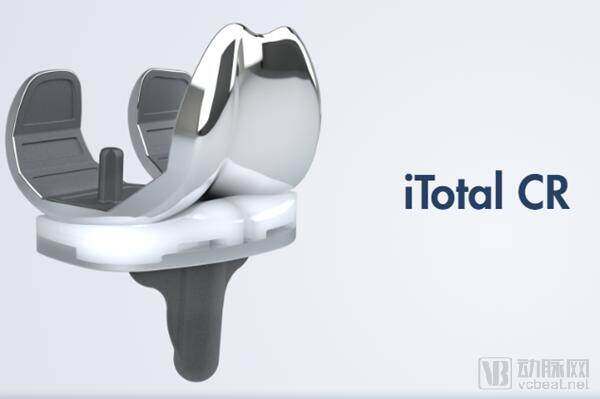
iTotal CR Total Knee Replacement Implant is ConforMIS’s Best-Selling Product (Image from ConforMIS Official Website)
According to the ConforMIS official website, a study by William Kurtz, M.D., showed that the average total volume of bone resection was 27% less with the iTotal CR joint replacement implant than with off-the-shelf implants. This means that patients undergoing surgery with the iTotal CR joint replacement system have less bone removed during the procedure.
iTotal PS is a posterior-stabilized total knee arthroplasty implant, launched in 2015 and officially marketed in March 2016. Compared with iTotal CR, iTotal PS not only incorporates all the features of the latter but also provides patients with a femoral component featuring a metal cam, an improvement that enhances implant stability. In addition, the polyethylene tibial tray of the iTotal PS includes a plastic post, which reduces mechanical issues caused by component wear and impingement.
It is reported that this product quickly captured the majority of the market share in the knee arthroplasty sector upon its launch.
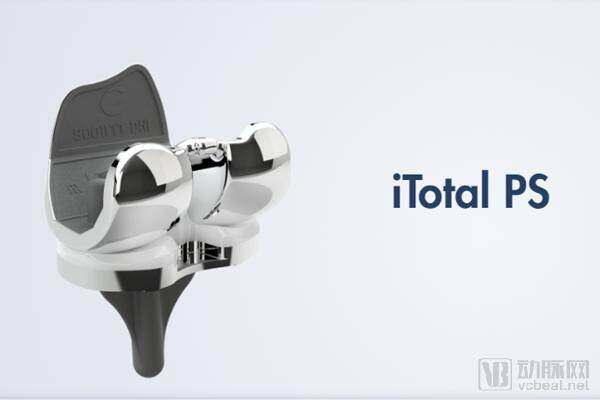
iTotal PS is the only truly customized posterior-stabilized total knee arthroplasty (Image from ConforMIS official website)
iUni and iDuo are customized partial knee replacement implants. These two products help restore the natural shape of the patient's knee, allowing for a natural feel and potential for movement. They are also defined as bicruciate-retaining knee replacement systems because surgeons can preserve both the anterior cruciate ligament (ACL) and posterior cruciate ligament (PCL) simultaneously.
iDuo is a bicompartmental knee replacement implant. iDuo was launched in 2007, and the second-generation iDuo was introduced in 2010. The iDuo system comprises a femoral implant, a tibial tray, a polyethylene tibial insert, and a polyethylene patella.
iUni is a unicompartmental knee arthroplasty implant designed to treat pain in the medial or lateral compartment of the knee. iUni was first launched in 2007, and its second-generation product was introduced in 2009. The iUni system comprises a femoral component, a tibial tray, and a polyethylene tibial insert.
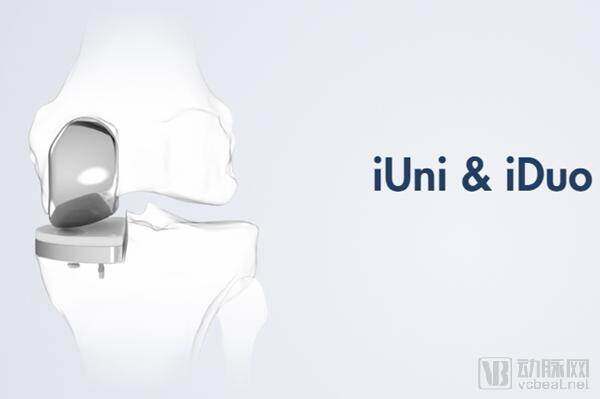
Customized Partial Knee Replacement Implants iUni and iDuo (Image from ConforMIS Official Website)
The tibial insert, serving as a tray between the femoral and tibial components made of two polyethylene materials, iPoly and iPoly XE, is custom-manufactured to match the patient’s unique bone anatomy. These two materials are characterized by their robustness and durability, which help reduce wear rates and extend the service life of the implant.
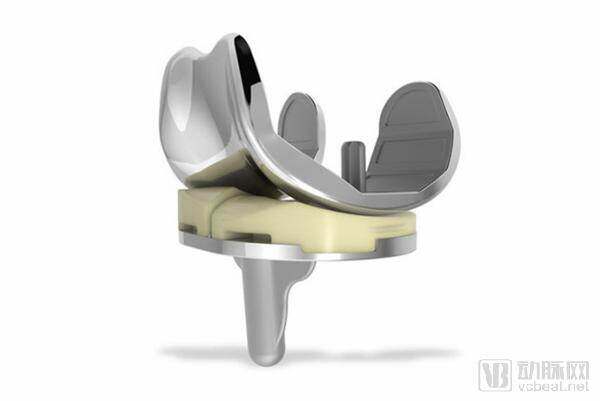
Polyethylene Materials Used by ConforMIS: iPoly and iPoly XE (Image from the ConforMIS Official Website)
As a complement to its existing product line, ConforMIS’s iTotal Hip replacement system received FDA 510(k) clearance in June 2017 and was launched in July 2018. It is the only total hip replacement system on the market designed using 3D imaging technology, providing sizing for both the femoral stem and the acetabular cup.
Mark Augusti, CEO and President of ConforMIS, stated, “The FDA’s approval of iTotal Hip demonstrates that our proprietary image-to-implant technology platform, iFit, has the capability to expand into other joint products. Meanwhile, personalized joint replacement surgery is becoming a trend, and patients deserve personalized treatment.”
In addition to knee and hip replacement implants, ConforMIS also plans to extend its product portfolio to the shoulder, extremities, and spine, aiming to create a complementary range of customized and off-the-shelf implants across multiple orthopedic segments to expand its product offerings.
From Less Than 1% Market Share to Joining the Ranks of Industry Giants
If one focuses solely on ConforMIS’s product portfolio and its status as a publicly listed company, it is easy to believe that ConforMIS is thriving in the joint implant market by leveraging its core technologies.
In fact, ConforMIS has encountered numerous setbacks along its journey: its core technology has been called into question, its products underwent five recalls within seven years, and it became embroiled in a patent dispute with Smith & Nephew. More importantly, ConforMIS has failed to achieve profitability for many years.
Fortunately, ConforMIS ultimately proved itself with the strength of its products.
The Orthopaedic Data Evaluation Panel (ODEP), an authoritative body in the field of orthopedics, has awarded the iTotal CR a “3A” rating based on three-year data regarding implant survival rates and performance in patients, as well as the low revision rates demonstrated by the UK National Joint Registry. All of ConforMIS’s joint replacement products have also received FDA approval or CE marking.
As of the end of 2018, ConforMIS had sold more than 90,000 knee replacement implants, including over 70,000 total knee replacement implants and more than 20,000 partial knee replacement implants. The newly developed iTotal Hip has not yet been widely commercialized; however, by the end of February 2019, more than 25 surgeons had implanted over 200 iTotal Hip total hip replacement systems in patients.
As for the patent dispute with Smith & Nephew, it was ultimately resolved through a settlement between the two parties. According to the settlement agreement, Smith & Nephew is required to pay ConforMIS $10.5 million, and both parties have also entered into a limited cross-license agreement for patents.
For ConforMIS, all other issues are minor; its greatest regret has been its continued inability to achieve profitability.
Due to the highly personalized nature of its products, ConforMIS incurs twice the production cost for custom implants compared to its peers, yet prices them comparably. This implies that ConforMIS achieves a lower return on investment than its competitors.
To this end, ConforMIS announced a strategic adjustment at the end of 2018: concentrating resources to prioritize the development of its market-impactful iTotal series of knee implants and the newly developed Hip System hip implants, while reducing its workforce by 10% and lowering its debt from $30 million to $15 million.
ConforMIS CEO Mark Augusti stated, “We hope that through these actions, the company can achieve profitability in 2021.”
Stripping away non-core businesses and reducing labor costs, ConforMIS is poised for its moment in the spotlight. After all, from an industry development perspective, the market size for customized 3D-printed joint replacement implants is expanding, driven by the increasing maturity of 3D printing technology and growing patient demand for personalized implants.
According to the Global Knee Implant Market Report released by Credence Research, the global knee implant market is projected to reach a value of $13.5 billion by 2025.
Even major players in the mass production of “off-the-shelf” implants of various sizes, such as Zimmer Biomet Holdings, Stryker Corp, DePuy Synthes (a subsidiary of Johnson & Johnson), and Smith & Nephew, have successively leveraged 3D printing technology to launch customized joint replacement implant businesses, thereby maintaining their market positions.
In March 2016, Smith & Nephew launched the REDAPT Acetabular System with CONCELOC Technology, a fully porous cup that marked the company’s first 3D-printed titanium hip implant. The fully porous structure of this 3D-printed device mimics bone architecture to support bone ingrowth, thereby enhancing implant fixation.
Following Smith & Nephew, Stryker Corp launched its first 3D-printed hip implant, the Trident II Acetabular System, in March 2018. The implant similarly mimics bone structure and promises numerous clinical benefits, such as improved joint stability and range of motion. Prior to this, Stryker Corp’s knee implant portfolio already included many 3D-printed components, such as patellar and tibial baseplates.
William J. Plovanic, a medical device analyst at investment bank Canaccord Genuity, stated that Zimmer Biomet Holdings, Stryker Corp, Johnson & Johnson’s DePuy Synthes, and Smith & Nephew collectively account for over 90% of the joint replacement implant market.
Today, ConforMIS, which focuses on 3D-printed customized joint replacement implants, has emerged to compete globally with the aforementioned giants for market share. From holding less than 1% of the market initially to now standing shoulder to shoulder with industry leaders in this sector, ConforMIS is leveraging its strong market expansion capabilities to extend its business presence across the United States, Germany, the United Kingdom, Austria, Ireland, Switzerland, Singapore, Hong Kong, Malaysia, Monaco, Hungary, Spain, and Australia.
Supported by its core image-to-implant technology, it remains to be seen whether ConforMIS can identify a suitable profitability model and achieve further growth while staying true to its original mission.
China's 3D Printing Shifts from Technology Introduction to Independent R&D
As foreign companies compete fiercely in the 3D printing market, the domestic 3D printing market in China is also quietly gaining momentum.
In the late 1980s, China introduced 3D printing technology into the healthcare sector. Initially, its role was to assist physicians in creating three-dimensional models of pathological lesions for preoperative planning and patient communication. Domestic enterprises entered the 3D printing market through technology licensing and collaborations. Xi'an Bright Laser Technologies Co., Ltd. was among the first companies in China to focus on metal 3D-printed implants.
With the advancement of 3D printing technology and its deep integration with the healthcare industry, 3D printing has gradually expanded into the manufacturing of dental prosthetics, customized prostheses, surgical guides, and implants in China.
Currently, a large number of companies in China have entered the market. Beijing Instant Medical Imaging Technology Service Co., Ltd. and Zhejiang Delta Medical Technology Co., Ltd. have focused on preoperative planning; Bonen Bio and Xi'an Bright Laser Technologies Co., Ltd. have entered the field of dental restoration; while AK Medical and Shenzhen Excellent Technology Co., Ltd. have ventured into orthopedic implants, among others. Notably, AK Medical has successfully obtained the CFDA medical registration certificate by manufacturing orthopedic implants such as hip joints and vertebral bodies using Electron Beam Selective Melting (EBSM) technology.
REVOTEK CO., LTD is a representative domestic enterprise specializing in bio-3D printing. Focusing on the research and development of stem cell application technologies, the company’s R&D team has successfully developed 3D-bioprinted blood vessels and implanted them into rhesus monkeys. In the future, the company will accelerate the clinical translation of stem cell technologies for applications in organ repair and tissue regeneration.
On January 5, 2018, Tianjin Qingyan Zhishu Technology Co., Ltd. released its latest generation of open-source electron beam metal 3D printers, QbeamLab. This marks a breakthrough achievement for China in the field of Electron Beam Selective Melting (EBSM) and signifies enhanced autonomy in China's 3D printing technology, gradually narrowing the technological gap with foreign counterparts.
According to data from SmartTech Market, a 3D printing market research firm, North America holds the largest share of the global medical 3D printing market at 39.7%, followed by Europe, while the Asia-Pacific region accounts for a relatively small share of only 14.4%. However, with rising economic development in the Asia-Pacific region and the gradual adoption of 3D printing technology in the healthcare industry, the Asia-Pacific region is poised to become the fastest-growing market for medical 3D printing.
As the largest healthcare consumer in the Asia-Pacific region, China holds immense potential for the development of its medical 3D printing market. Domestic 3D printing is already showing a trend toward integration with biomedicine. In the future, China may achieve the printing of simple living tissues, such as cell-based structures, and even the fabrication of complex organ tissues like livers and hearts.