


On June 14, Hansoh Pharma (listed under the name “Hansoh Pharmaceutical”) was officially listed on the Hong Kong Stock Exchange. Morgan Stanley and Citibank served as the sponsors and underwriters for Hansoh Pharma. According to Futu Securities, approximately 551 million new shares were initially offered. The Hong Kong public offering was moderately oversubscribed, with a total of 454 million Hong Kong offer shares subscribed, representing approximately 11.77 times the initial number of 38.59 million Hong Kong offer shares available for subscription in the Hong Kong public offering.
Hansoh Pharma’s final IPO price was set at the upper end of the indicative range, at HK$14.26 per share. Without the exercise of the over-allotment option, the net proceeds amounted to HK$7.64 billion. The offering ranked second among new listings in the Hong Kong market this year, slightly below Shenwan Hongyuan’s US$1.2 billion IPO.
I. Significant Subscription by Cornerstone Investors
Hansoh Pharma is no stranger to investors and industry peers alike. On one hand, the company’s product pipeline focuses on six major therapeutic areas: central nervous system disorders, oncology, anti-infectives, diabetes, gastrointestinal diseases, and cardiovascular diseases. These areas represent the core segments of pharmaceutical consumption in China, accounting for 62.5% of total sales in the Chinese pharmaceutical market in 2018.
On another note, information such as the marital relationship between Zhong Huijuan, the company’s founder and Group Chairperson, and Sun Piaoyang, the actual controller and Chairman of Hengrui Medicine, as well as the fact that Sun Yuan, daughter of Zhong Huijuan and Sun Piaoyang, is the beneficiary of Sunrise Trust (the actual controller holding 75.66% of Hansoh International’s shares), is frequently discussed by industry insiders and investors.
Hansoh Pharma’s pre-IPO placement attracted multiple cornerstone investors, with total subscriptions amounting to USD 344 million. Among the nine cornerstone investors, Singapore’s Government of Singapore Investment Corporation (GIC) subscribed the most rapidly, committing USD 70 million, followed by Boyu Capital with a USD 60 million subscription. Other cornerstone investors participating in the placement included Boyu Capital, Hillhouse Capital, and OrbiMed.
On January 25 this year, Boyu Capital strategically invested in Hansoh Pharma for approximately HK$1.95 billion, implying a valuation of around HK$65 billion (approximately US$10 billion). This valuation represents an increase of about 38% compared to the HK$47 billion valuation when Hillhouse Capital invested in early 2016.

II. A Series of Good News on the Eve of the IPO
For an innovative pharmaceutical company on the verge of an initial public offering (IPO), nothing excites corporate management and investors more than “new drug approvals.” The prospectus reveals that four Class 1.1 new drugs are scheduled to be launched between 2019 and 2020.
However, less than one month after submitting its IPO application on April 11, its long-acting weekly formulation for the treatment of type 2 diabetes, pegylated loxenatide, was approved for market launch on May 7.
On May 28, Viela Bio and Hansoh Pharma announced the signing of a collaboration agreement for the development in China of the CD19 monoclonal antibody inebilizumab for the treatment of neuromyelitis optica spectrum disorders (NMOSD) and other autoimmune diseases and hematologic malignancies.
Other drugs from Hansoh Pharma nearing launch include flumatinib mesylate, a Bcr-Abl protease inhibitor for the treatment of chronic myeloid leukemia; HS-10234, a nucleoside reverse transcriptase inhibitor for the treatment of hepatitis B (Phase III clinical trials, with an NDA planned for 2019); and HS-10296, a third-generation EGFR tyrosine kinase inhibitor for the treatment of non-small cell lung cancer (NSCLC), which primarily targets the EGFR T790M resistance mutation and for which an NDA was submitted in April 2019.
III. The Ministry of Finance and the National Healthcare Security Administration Will Conduct Financial Audits
Leveraging its product portfolio of “first-to-market generics + innovative drugs,” Hansoh Pharma has maintained a gross profit margin above 92% over the past three years.
The prospectus shows that from 2016 to 2018, Hansoh Pharma achieved revenues of RMB 5.433 billion, RMB 6.186 billion, and RMB 7.722 billion; gross profits were RMB 5.036 billion, RMB 5.730 billion, and RMB 7.119 billion respectively; gross profit margins were 92.7%, 92.6%, and 92.2% respectively; net profits were RMB 1.476 billion, RMB 1.595 billion, and RMB 1.903 billion respectively; and net profit margins were 27.2%, 25.8%, and 24.6% respectively.
Among these, R&D expenses were RMB 403 million, RMB 576 million, and RMB 881 million, accounting for 7.4%, 9.3%, and 11.4% of revenue, respectively; sales and distribution expenses were RMB 2.378 billion, RMB 2.704 billion, and RMB 3.209 billion, accounting for 43.8%, 43.7%, and 41.6% of revenue, respectively.
Hansoh Pharma plans to allocate 45% of the funds raised from this offering to R&D projects, expansion of its R&D team, and technological investments; 25% to its production system, including the construction of new production lines, upgrading of existing production facilities, and enhancement of automation levels; 20% to strengthening sales and academic promotion; and 10% as working capital and for other general corporate purposes.
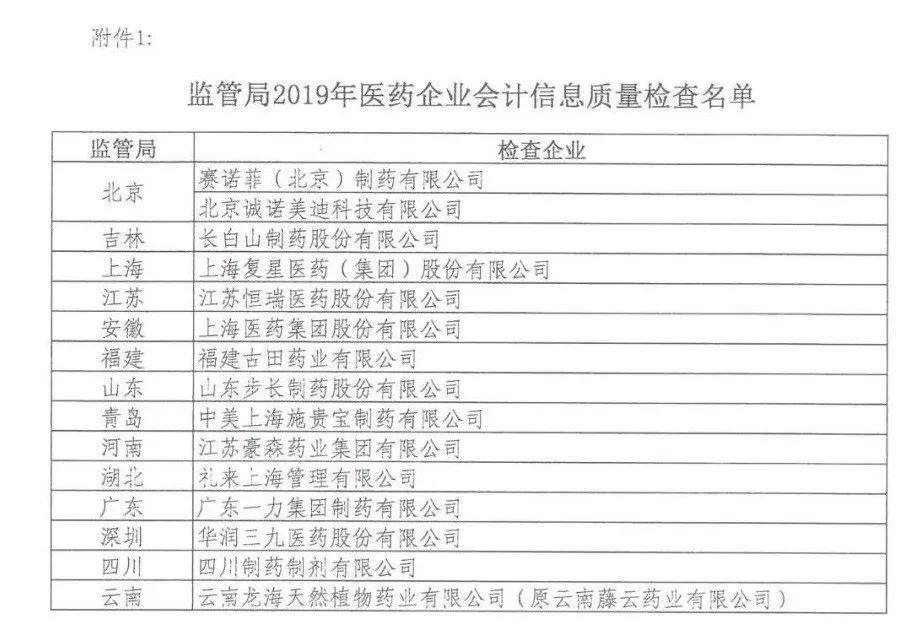
On June 4, the Ministry of Finance and the National Healthcare Security Administration announced a joint initiative to conduct accounting information quality inspections at 77 pharmaceutical companies. Among these, the Henan Regulatory Bureau will carry out an accounting information quality inspection of Jiangsu Hansoh Pharmaceutical Co., Ltd.
In its Hong Kong IPO prospectus, Hansoh Pharma also provided disclosures regarding the degree of business overlap with Hengrui Medicine. Hansoh Pharma stated that, except for three products including the antibiotic Hengte, none of its currently marketed products or those in late-stage development overlap with Hengrui Medicine’s products in terms of disease categories or disease severity.