

Cosentyx® Demonstrates Long-Term Inhibition of Radiographic Progression in Psoriatic Arthritis in Phase III FUTURE 5 Trial
Jun 14, 2019 12:15
CST Updated
12:15

Novartis
Drug Development and Manufacturing
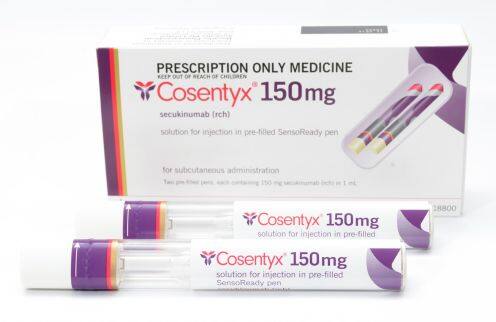
June 14, 2019 News /BioValleyBIOON/ -- Swiss pharmaceutical giantNovartisNovartis recently announced new data from the Phase III FUTURE 5 study evaluating the anti-inflammatory drug Cosentyx (secukinumab, commonly known as “Su Jin Dan Kang”) for the treatment of psoriatic arthritis (PsA). The study investigated the impact of Cosentyx on the symptoms and signs of PsA, as well as its inhibitory effect on radiographic progression in PsA. The results showed that nearly 90% of patients treated with Cosentyx for two years demonstrated no radiographic progression (mTSS < 0.5).
FUTURE 5 was a randomized, double-blind, placebo-controlled Phase III study that enrolled 996 patients with active psoriatic arthritis (PsA) to evaluate the impact of Cosentyx treatment on radiographic progression. In the study, patients were randomized to receive subcutaneous injections of Cosentyx 300 mg (with a 300-mg loading dose [LD]), 150 mg (with a 150-mg LD), 150 mg (without LD), or placebo once weekly for 4 weeks, followed by dosing every 4 weeks thereafter. Based on physician judgment, the Cosentyx dose could be increased from 150 mg to 300 mg starting at Week 52. The primary endpoint was ACR20 response at Week 16. Radiographic progression was assessed by the mean change in the modified total Sharp score (mTSS) according to van der Heijde at Week 24; the erosion and joint space narrowing components of this score (based on hand/foot/wrist X-rays) constituted a key secondary endpoint. Other endpoints included ACR50, PASI75/90/100, and resolution of dactylitis and enthesitis.
The results showed that at 2 years of treatment, 89.5%, 82.3%, and 81.1% of patients receiving Cosentyx 300 mg, 150 mg, and 150 mg (without loading dose), respectively, demonstrated no radiographic progression. Clinical remission (such as ACR20/50 and PASI 90/100) was also maintained during the 2-year treatment period. Among patients treated with Cosentyx 300 mg, the ACR20 response rate was 77%, the ACR50 response rate was 51.9%, the PASI 90 response rate was 70.1%, and the PASI 100 response rate was 49.5%. Patients treated with the lowest dose of Cosentyx (150 mg) also achieved consistent results: an ACR20 response rate of 79.4%, an ACR50 response rate of 52.6%, a PASI 90 response rate of 59.2%, and a PASI 100 response rate of 44.2%.
Dr. Philip J. Mease, Director of Rheumatology Research at the University of Washington School of Medicine, stated, “Approximately half of patients with psoriatic arthritis (PsA) experience bone erosion within about two years. If left untreated, this can lead to irreversible joint damage and disability, significantly impacting quality of life. Data from the FUTURE 5 study confirm the efficacy of Cosentyx in inhibiting PsA progression over a two-year treatment period, providing physicians and patients with additional therapeutic options for managing this debilitating disease.”
NovartisEric Hughes, Head of Global Development for Immunology, Hepatology, and Dermatology, stated: “We are continuing to reimagine the treatment of psoriatic arthritis (PsA) to improve patients’ lives and provide a therapeutic option that addresses multiple symptoms and inhibits disease progression. The data presented further reinforce the capability of Cosentyx as a comprehensive treatment approach, supported by more than 100 studies, including five-year data in psoriasis, PsA, and ankylosing spondylitis.”
Psoriatic arthritis (PsA) is a complex disease with multiple manifestations driving patient symptoms. It is estimated that PsA affects up to 50 million people worldwide. This condition belongs to a category of chronic inflammatory diseases (spondyloarthritis) characterized by joint involvement. PsA is closely associated with psoriasis, with up to 40% of psoriasis patients developing PsA. If left untreated, patients with PsA will continue to develop irreversible radiographic structural damage. Radiographic damage is defined as joint inflammation, erosions, and narrowing of the joint space, particularly in the hands and feet. More than half of patients with PsA report radiographic progression.
Cosentyx is the first and only fully human monoclonal antibody that specifically targets and inhibits interleukin-17A (IL-17A). It selectively blocks the activity of circulating IL-17A, reduces immune system activity, and improves disease symptoms. Studies have revealed that IL-17A drives the body’s response in variousAutoimmunityplay a crucial role in the immune response of autoimmune diseases, including psoriatic arthritis (PsA), psoriasis (PsO), and ankylosing spondylitis (AS).
Cosentyx was approved for market launch in January 2015 and has currently been approved for three indications (PsO, PsA, AS). In 2018, global sales of Cosentyx reached $2.837 billion, representing a 37% increase compared to 2017. Pharmaceutical market research firm EvaluatePharma predicts that Cosentyx will become the driving force behindNovartisAs one of the key products for future growth, Cosentyx’s sales are expected to grow steadily in the coming years with a steady expansion of indications, with global sales projected to reach $5.5 billion in 2024. (Bioon.com)