

Lilly Presents Five-Year Sustained Efficacy and Safety Data for IL-17A Inhibitor Taltz (ixekizumab) in Moderate-to-Severe Plaque Psoriasis
Jun 14, 2019 12:14
CST Updated
12:14
Eli Lilly
Global Pharmaceutical R&D and Production Company
June 14, 2019 News /BioValleyBIOON/ -- US pharmaceutical giantEli Lilly(Eli Lilly) recently announced the 5-year data from the Phase III UNCOVER-1 study of the anti-inflammatory drug Taltz (ixekizumab) at the 24th World Congress of Dermatology (WCD) held in Milan, Italy. The results showed that patients with moderate-to-severe plaque psoriasis who continued treatment with Taltz maintained high levels of skin plaque clearance over up to 5 years of therapy, with no new safety findings identified.
Craig Leonardi, Associate Professor of Dermatology at Saint Louis University School of Medicine and the study’s principal investigator, stated, “During the extension phase of this study, among patients who continued treatment with Taltz for five years, more than 90% maintained significant clearance of skin plaques (PASI 75), and nearly half maintained complete clearance of skin plaques. These results indicate that patients treated with Taltz can achieve durable clearance of skin plaques over a five-year treatment period.”
In the UNCOVER-1 study, patients who achieved sPGA 0/1 clearance at Week 12 and completed 60 weeks of treatment were eligible to enter the open-label extension period (n=110). During the extension period, among patients who continued to receive open-label Taltz treatment (initial dose of 160 mg, followed by 80 mg every 2 weeks [Q2W] through Week 12, then 80 mg every 4 weeks [Q4W] thereafter), Taltz demonstrated sustained clearance from Week 60 to Week 264. Clearance rates were maintained over 5 years; at Week 264, the PASI 75, 90, and 100 response rates were 94.3%, 81.8%, and 46.6%, respectively.
During weeks 60–264, treatment-emergent adverse events were consistent with those observed in the Taltz studies within the prior UNCOVER program. Furthermore, no new or unexpected safety findings emerged during the extension period. Four-year data from the UNCOVER-3 study will also be presented at WCD.Meetingpublished above.
To date, the safety of Taltz has been established in 13 studies of moderate-to-severe plaque psoriasisClinical Trialstudied, with total exposure to Taltz in clinical programs exceeding 17,000 patient-years.
Later this year,Eli LillyPlans were announced to release data from the IXORA-R head-to-head clinical study, which aimed to evaluate the superiority of Taltz (an IL-17 inhibitor) over Johnson & Johnson’s anti-inflammatory drug Tremfya (guselkumab, an IL-23 inhibitor) in adult patients with moderate-to-severe plaque psoriasis. Notably, this study is the first head-to-head trial comparing an IL-17 inhibitor with an IL-23 inhibitor using the Psoriasis Area and Severity Index (PASI) 100 response as the primary endpoint.
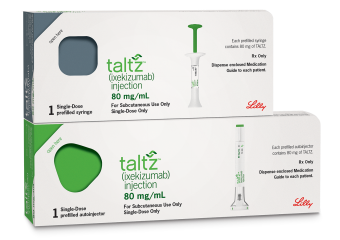
Taltz isEli LillyA novel anti-inflammatory drug has been developed, with ixekizumab as its active pharmaceutical ingredient. Ixekizumab is a monoclonal antibody that exhibits high affinity and specificity for the pro-inflammatory cytokine interleukin-17A (IL-17A), thereby inhibiting the binding of IL-17A to the IL-17 receptor. Ixekizumab does not bind to the cytokines IL-17B, IL-17C, IL-17D, IL-17E, or IL-17F. IL-17A is a naturally occurring cytokine involved in normal inflammatory and immune responses. In patients with psoriasis, IL-17A plays a crucial role in driving the hyperproliferation and activation of keratinocytes (skin cells).
Taltz is administered via subcutaneous injection. In the U.S. market, the drug was first approved in March 2016, becoming the secondNovartisThe Second IL-17A Inhibitor Launched in the U.S. After the Blockbuster Anti-inflammatory Drug Cosentyx (secukinumab)Monoclonal Antibody DrugsCurrently, the approved indications for Taltz include: (1) treatment of adult patients with active psoriatic arthritis (PsA); (2) treatment of adult patients with moderate-to-severe plaque psoriasis who are candidates for systemic therapy or phototherapy.
The industry holds a highly optimistic view of Taltz’s commercial prospects. The pharmaceutical market research firm Evaluate previously released a report forecasting that Taltz’s sales would reach $2.707 billion in 2024. (Bioon.com)