

AstraZeneca's Lokelma (Sodium Zirconium Cyclosilicate) Demonstrates Efficacy in Maintaining Normal Serum Potassium Levels in End-Stage Renal Disease Patients on Dialysis
Jun 20, 2019 09:17
CST Updated
09:17

AstraZeneca
Biopharmaceutical Manufacturer
June 20, 2019 /BioonBIOON/ -- UK pharmaceutical giantAstraZeneca(AstraZeneca) recently announced positive data from the DIALIZE Phase IIIb clinical study of Lokelma (sodium zirconium cyclosilicate), a medication for hyperkalemia.Lokelma is a highly selective oral potassium binder that has been approved in the United States for the treatment of hyperkalemia in adults. Data from the DIALIZE study will support a label update in the United States, as the dosing regimen used in the trial is not currently approved.
In late March this year, the Center for Drug Evaluation of the National Medical Products Administration released the second batch of the List of Overseas New Drugs in Urgent Clinical Need, comprising a total of 30 drugs. This list includes Lokelma, which was included due to the following reasons: the only existing therapeutic options are sodium polystyrene sulfonate and calcium polystyrene sulfonate, leaving clinical needs unmet, whereas Lokelma demonstrates clinical advantages.
DIALIZEThe study evaluated the efficacy and safety of Lokelma in treating hyperkalemia in patients with end-stage renal disease (ESRD) receiving stable dialysis. The results showed that 41.2% of patients treated with Lokelma maintained normal pre-dialysis potassium levels (4–5 mmol/L) after a prolonged interdialytic period, compared to only 1.0% of those receiving placebo, representing a statistically significant (p < 0.001) and clinically meaningful improvement. The safety profile of Lokelma observed in this study was consistent with that reported in previous studies.
Elisabeth Björk, Senior Vice President and Head of Late-Stage Development for Cardiovascular, Renal, and Metabolism at the AstraZeneca Biopharmaceuticals R&D Centre, stated, “These positive results demonstrate that Lokelma can normalize potassium levels during dialysis in patients with hyperkalemia and end-stage renal disease. There is a high unmet medical need in this patient population, and we believe that Lokelma can play a pivotal role in addressing it.”
Steven Fishbane, MD, Chief Investigator of the DIALIZE study and Professor at the Hofstra/Northwell Zucker School of Medicine, stated, “It is estimated that up to 2 million people worldwide have end-stage renal disease (ESRD), placing them at higher risk for hyperkalemia. Despite undergoing dialysis, many patients still experience elevated potassium levels, which can be life-threatening if left untreated. The results from the DIALIZE study will provide important insights to the clinical community and patients, with the potential to transform treatment paradigms.”
Hyperkalemia (serum potassium level >5.0 mEq/L) is a serious condition characterized by elevated potassium levels in the blood, which can be caused by cardiovascular, renal, and metabolic disorders, as well as the use of certain medications (such as renin-angiotensin-aldosterone system [RAAS] inhibitors).
Many patients with end-stage renal disease still experience hyperkalemia despite undergoing hemodialysis. The prevalence and severity of hyperkalemia are highest after long dialysis intervals (the maximum number of days between dialysis sessions).
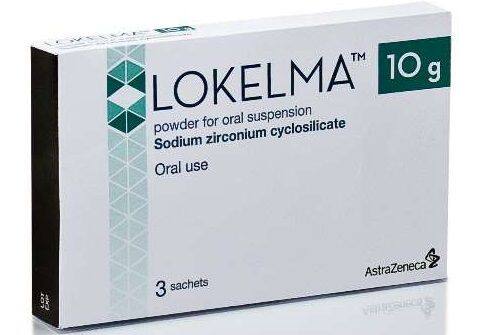
Lokelma is a novel, insoluble, non-absorbed selective cation exchanger, structurally designed to preferentially bind potassium ions. As a potassium binder, Lokelma is developed for the treatment of hyperkalemia, which is common in patients with chronic kidney disease or heart failure. Currently, Lokelma has been approved by the United States and the European Union for the treatment of hyperkalemia in adults.(Bio Valley Bioon.com)