

Bayer Advances Eylea (Aflibercept) into Phase III Trial for Retinopathy of Prematurity (ROP)
Jun 24, 2019 13:27
CST Updated
13:27

Bayer
Pharmaceutical Product R&D Developer
June 24, 2019 /Bio ValleyBIOON/ -- German pharmaceutical giantBayer(Bayer) recently announced the initiation of a Phase IIIClinical Trial, to evaluate the ophthalmic drug Eylea (aflibercept, aflibercept injection) for the treatment of retinopathy of prematurity (ROP), an eye disease occurring in premature infants that can lead to irreversible blindness.
This study is a multicenter, randomized trial designed to evaluate the efficacy, safety, and tolerability of intravitreal Eylea injections for the treatment of retinopathy of prematurity (ROP). Approximately 100 infant patients with ROP will be enrolled across 34 countries worldwide and randomly assigned to receive either intravitreal Eylea injections or laser photocoagulation.
Due to incomplete or abnormal development of retinal blood vessels, premature infants may develop retinopathy of prematurity (ROP), which can lead to scarring and retinal detachment, resulting in visual impairment and irreversible blindness. Although treatments are currently available, childhood blindness is still estimated to account for 6–18% of cases in developed countries. Given the prevalence and severity of childhood blindness, addressing it—including ROP—is a priority of “Vision 2020: The Right to Sight,” a global joint initiative between the World Health Organization (WHO) and the International Agency for the Prevention of Blindness (IAPB).
Dr. Joerg Moeller, Member of the Executive Committee of Bayer’s Pharmaceuticals Division and Head of Research and Development, stated, “Visual impairment and blindness in children have profound consequences, affecting all aspects of child development. We have initiated Phase III studies to evaluate the potential for providing additional treatment to premature infants. This trial represents a significant step forward in our commitment to addressing the most critical unmet needs in ophthalmology.”
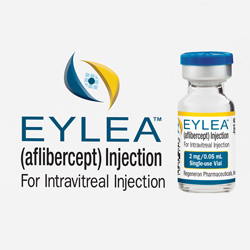
Eylea is a novel intravitreal VEGF inhibitor, a recombinant fusion protein composed of the extracellular domains of human vascular endothelial growth factor (VEGF) receptors 1 and 2 fused to the Fc portion of human immunoglobulin G1. Eylea functions as a soluble decoy receptor for members of the VEGF family (including VEGF-A) and placental growth factor (PlGF), binding these factors with high affinity to prevent their interaction with endogenous VEGF receptors, thereby inhibiting abnormal angiogenesis and vascular leakage.
For patients with visual impairment due to various retinal diseases, Eylea is an effective treatment option that has consistently demonstrated favorable therapeutic outcomes in reducing preventable vision loss, both in randomized clinical trials and in real-world clinical settings.
To date, Eylea has been approved in more than 100 countries worldwide for the treatment of five ophthalmic indications: wet age-related macular degeneration (wet AMD), macular edema (ME) secondary to retinal vein occlusion (RVO),DiabetesDiabetic Macular Edema (DME),DiabetesDiabetic Retinopathy (DR), Myopic Choroidal Neovascularization (myopic CNV).
Eylea is one of the best-selling products globally, with worldwide sales reaching $6.746 billion in 2018. The drug was co-developed by Regeneron and Bayer; Regeneron holds exclusive rights to the U.S. market, while Bayer has been granted exclusive marketing rights in countries and regions outside the United States. Since its global launch, approximately 25 million vials of Eylea have been sold, accumulating 3.6 million patient-years of treatment experience. (Bioon.com)