

GSK's PARP Inhibitor Zejula (Niraparib) Receives FDA Priority Review for New Indication in Late-Stage Ovarian Cancer
Jun 26, 2019 10:57
CST Updated
10:57

GSK
Pharmaceutical R&D Manufacturer

TESARO
Tumor Therapy Developer

June 26, 2019 /BioonBIOON/ -- UK pharmaceutical giantGlaxoSmithKline PLC.(GSK) recently announced that the United StatesFDAAccepted underTumorthe supplemental new drug application (sNDA) submitted by Tesaro, Inc. for the targeted anticancer drug Zejula (Chinese brand name: Zele; generic name: niraparib) for the treatment of advanced ovarian cancer, and granted priority review, with its Prescription Drug User Fee Act (PDUFA) target date set for October 24, 2019.
This sNDA seeks approval for a new indication for Zejula for the treatment of patients with advanced ovarian cancer, fallopian tube cancer, or primary peritoneal cancer who have received three or more prior chemotherapy regimens and whose cancer is associated with either of the following two conditions: (1) harboring a BRCA mutation; or (2) harboring homologous recombination deficiency (HRD) and experiencing disease progression more than 6 months after the last platinum-based chemotherapy regimen.
This sNDA is based on data from the QUADRA study. Results from this study were recently published in the medical journal The LancetTumorStudy》. Dr. Mary Lynne Hedley, President and Chief Operating Officer of Tesaro, stated, “The results of the QUADRA study demonstrate that Zejula is also an effective treatment option for patients with advanced disease beyond those with BRCA mutations. Through this study, we continue to advance our mission to provide more ovarian cancer patients with the opportunity to benefit from Zejula therapy.”
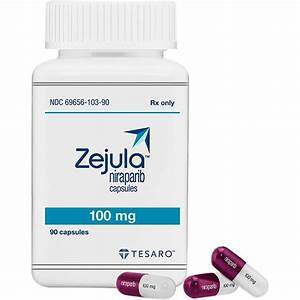
The active pharmaceutical ingredient of Zejula is niraparib, an oral, small-molecule poly(ADP-ribose) polymerase (PARP) inhibitor that leverages defects in DNA repair pathways to selectively kill cancer cells. This mechanism of action confers upon the drug the potential to treat a broad range of tumors with DNA repair deficiencies. PARP is involved in a wide variety ofTumorType-related, especiallyBreast Cancerand ovarian cancer.
Zejula was developed by TESARO, Inc.GlaxoSmithKline PLC.In December 2018, Tesaro was acquired for $5.1 billion (approximately £4 billion). In late September 2016, Zai Lab entered into a licensing agreement with Tesaro, securing the rights to Zejula in mainland China, Hong Kong, and Macau. In Hong Kong, Zejula (Zele) was approved in October 2018, and Zai Lab is currently actively engaged in its commercial sales. In mainland China, the National Medical Products Administration (NMPA) accepted the new drug application for Zejula in late January 2019 and granted it priority review status.
Zejula is a potential best-in-class PARP inhibitor due to its differentiated efficacy, once-daily dosing, and superior pharmacokinetic profile, including the ability to cross the blood-brain barrier. In addition to ovarian cancer, Zejula is currently being evaluated as monotherapy and in combination regimens for the treatment of lung cancer, breast cancer, and prostate cancer. (Bioon.com)