June 28, 2019 /
BioonBIOON/ -- U.S. biotechnology giant Amgen and its partner UCB recently announced that they had been notified that the Committee for Medicinal Products for Human Use (CHMP) of the European Medicines Agency (EMA) had issued a negative opinion on the Marketing Authorization Application (MAA) for Evenity (romosozumab) for the treatment of severe osteoporosis. The two parties plan to submit a written request asking the CHMP to re-examine the application.
Evenity is co-developed globally by Amgen and UCB. In January this year, Evenity received the world’s first regulatory approval in Japan for reducing fracture risk and increasing bone mineral density in postmenopausal women with osteoporosis and men at high risk of fracture. In April this year, Evenity was approved in the United States
FDAApproved for the treatment of osteoporosis in postmenopausal women at high risk for fracture. This approval makes Evenity the first and only new dual-action osteoporosis medication in the U.S. market: it both increases bone formation and reduces bone resorption, thereby lowering fracture risk. Additionally, Evenity has been approved in South Korea for the treatment of osteoporosis in men and postmenopausal women at high risk for fracture, and in Canada for the treatment of osteoporosis in postmenopausal women at high risk for fracture.
Evenity is a monoclonal antibody administered via subcutaneous injection once monthly for a 12-month treatment course. In the U.S. market, Evenity is priced at $1,825 per dose, totaling $21,900 for the full 12-month regimen. This price tag is 34–74% lower than that of currently available anabolic agents, which require daily injections and are administered for 18–24 months. It should be noted that upon completion of the Evenity treatment course, patients should consider continuing therapy with an antiresorptive agent, such as Prolia (denosumab).
Prolia is a blockbuster biologic for osteoporosis from Amgen. Approved for marketing in 2010, it achieved global sales of $2.28 billion in 2018, but its patent is set to expire in a few years. Evenity is positioned as the successor to Prolia, making regulatory approval in major global pharmaceutical markets critically important for this drug.
Dr. Pascale Richetta, Executive Vice President and Head of Bone at UCB, stated: “We are disappointed by the CHMP’s opinion and remain firmly convinced that the submitted dataset supports the favorable benefit-risk profile of Evenity, as well as its use in improving post-fracture care and reducing fracture risk in postmenopausal women with severe osteoporosis at high risk of fracture. We will work with Amgen to seek a re-examination of the CHMP’s opinion. The re-examination process provides an opportunity to clarify our position on the submitted data, with the aim of making Evenity available to postmenopausal women at high risk of fracture in the European Union.”
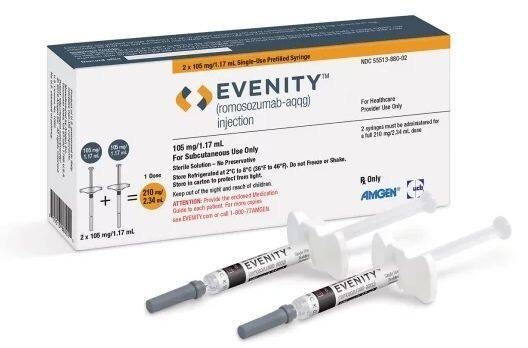
The Evenity development program comprises three pivotal Phase III clinical studies involving nearly 12,000 patients, including: FRAME, a placebo-controlled study that enrolled 7,180 postmenopausal women with osteoporosis at risk of fracture; ARCH, an active-comparator study that enrolled 4,093 postmenopausal women with osteoporosis who had previously sustained a fracture; and BRIDGE, which enrolled 245 male patients with osteoporosis at high risk of fracture.
The approval of Evenity in the United States is based on data from FRAME and ARCH. Notably, the drug label for Evenity in the U.S. contains a boxed warning indicating that the medication may increase
Myocardial Infarction(heart attack),
Strokeand the risk of cardiovascular death. This drug should not be used in patients who have had a heart attack within the past year or
Strokein patients with other cardiovascular risk factors, the benefits of treatment should be weighed against the risks. If a patient experiences a heart attack during treatment or
Stroke, Evenity treatment should be discontinued.
Furthermore,
FDAPostmarketing studies are also required to evaluate the cardiovascular safety of Evenity in postmenopausal women with osteoporosis, including a 5-year observational feasibility study, potentially followed by a comparative safety study.
Evenity is a fully human monoclonal antibody that exerts its effect by inhibiting the activity of sclerostin. As a bone-forming agent, Evenity has a dual mechanism of action: it increases bone formation while simultaneously reducing bone resorption, thereby increasing bone mineral density (BMD) and lowering the risk of fractures. Sclerostin, also known as sclerosin, is a secreted glycoprotein encoded by the SOST gene. In vivo studies have demonstrated that sclerostin is specifically expressed in osteocytes and plays a significant role in bone metabolism by acting on osteoblasts. The expression of the SOST gene is influenced by factors such as mechanical stress, hormones, and oxygen concentration. Antagonizing sclerostin can alleviate the symptoms of osteoporosis, providing new insights and approaches for the clinical treatment of osteoporosis and other related conditions. (Bioon.com)