June 29, 2019 /
BioValleyBIOON/ -- French pharmaceutical giant Sanofi and its partner Regeneron recently announced jointly that the Committee for Medicinal Products for Human Use (CHMP) of the European Medicines Agency (EMA) has issued a positive opinion, recommending the approval of an expanded indication for the anti-inflammatory drug Dupixent (dupilumab) to include adolescents aged 12 to 17 years with moderate-to-severe atopic dermatitis (AD) who are candidates for systemic therapy.
The CHMP’s assessment opinion will now be submitted to the European Commission (EC), which will take the CHMP’s opinion into account and issue a final review decision within the next 2–3 months. If approved, Dupixent will become the first biologic agent authorized in the European Union for the treatment of adolescents with moderate-to-severe atopic dermatitis (AD). Previously, Dupixent was approved in the EU for adult patients with moderate-to-severe AD who are candidates for systemic therapy, making it the first biologic agent for the treatment of adults with moderate-to-severe AD in Europe.
It is worth mentioning that this Wednesday, Dupixent was approved by the U.S.
FDAApproval of a new indication: in combination with other medicines, for the treatment of adult patients with chronic rhinosinusitis with nasal polyps (CRSwNP) whose disease is not adequately controlled. This indication was approved through the Priority Review program. Dupixent is the first biologic therapy approved for the treatment of CRSwNP. In the United States, the drug is now approved to treat three diseases driven by type 2 inflammation: moderate-to-severe AD (≥12 years of age), moderate-to-severe
Asthma(≥12 years of age), CRSwNP (adults).
The CHMP’s positive opinion is based on clinical data from the LIBERTY AD program, including a pivotal Phase III study and an open-label extension study, which evaluated the efficacy and safety of Dupixent in adolescent patients with moderate-to-severe atopic dermatitis (AD) whose disease was not adequately controlled. The results demonstrated that, compared with placebo, Dupixent led to significant improvements in both primary and secondary endpoints. The safety profile of Dupixent in adolescent patients with AD was consistent with that observed in clinical studies of adults with AD.
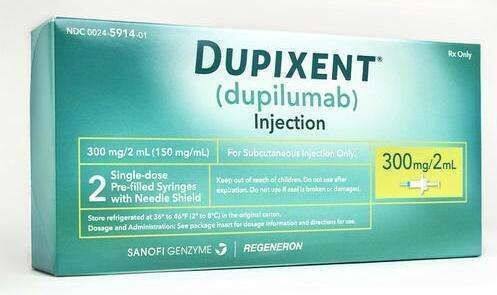
Atopic dermatitis is a severe chronic inflammatory skin disease, primarily characterized by intense pruritus, prominent eczematous changes, and xerosis. The disease often onset in infancy and childhood, with some patients affected throughout their lifetime. It can significantly impair patients' quality of life due to chronic recurrent eczematous rashes, severe pruritus, sleep deprivation, dietary restrictions, and psychosocial impacts.
Dupixent targets the key drivers of type 2 inflammation. This fully human monoclonal antibody specifically inhibits the overactivated signaling of two key proteins, IL-4 and IL-13. IL-4 and IL-13 are two inflammatory cytokines considered to be key drivers of intrinsic inflammation in allergic diseases and other type 2 inflammatory conditions, including atopic dermatitis,
Asthma, eosinophilic esophagitis, grass allergy, peanut allergy, etc.
Dupixent was approved in late March 2017, becoming the first biologic agent worldwide for the treatment of moderate-to-severe atopic dermatitis (AD), and subsequently received approvals for indications in moderate-to-severe asthma and chronic rhinosinusitis with nasal polyps (CRSwNP). Currently, Sanofi and Regeneron are also conducting an extensive clinical program to evaluate Dupixent for the treatment of diseases driven by allergies and other type 2 inflammatory processes, including: pediatric
Asthmaatopic dermatitis (ages 6–11, Phase III), pediatric atopic dermatitis (6 months to 5 years, Phase II/III), eosinophilic esophagitis (Phase III), chronic obstructive pulmonary disease (Phase III), and food and environmental allergies (Phase II). In addition, the two parties plan to conduct a clinical study to evaluate the combination of Dupixent with REGN3500, an IL-33-targeting monoclonal antibody.
Dupixent is another key product co-developed by Sanofi and Regeneron, following their PCSK9 inhibitor lipid-lowering drug Praluent, and holds promise as a game-changing therapy. In 2018, global sales of Dupixent reached $788 million. With its indications steadily expanding, the pharmaceutical market research firm EvaluatePharma predicts that Dupixent’s global sales could reach $5.1 billion by 2024. (Bioon.com)