

Libtayo (Cemiplimab) Becomes First Therapy Approved in the EU for Advanced Cutaneous Squamous Cell Carcinoma
Jul 02, 2019 10:09
CST Updated
10:09
Sanofi
Pharmaceutical R&D Developer
Regeneron
Biopharmaceutical Manufacturer

European Commission
The European Commission, abbreviated as the EU Commission, is a supranational body under the European Union. Within the EU political system, the European Commission primarily undertakes executive tasks, thus being roughly equivalent to the government in a national system. However, the European Commission has other functions as well. In particular, except for the few circumstances specified in the treaties, the European Commission is the only institution with legislative power in the EU legislative process.

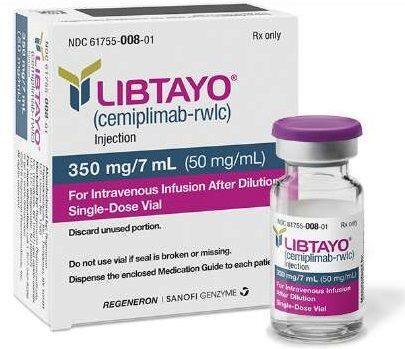
July 02, 2019/Bio ValleyBIOON/-- French pharmaceutical giant Sanofi and its partner Regeneron recently announced that the European Commission (EC) has granted conditional approval for the PD-1TumorLibtayo (cemiplimab) immunotherapy for the treatment of adult patients with metastatic or locally advanced cutaneous squamous cell carcinoma (CSCC) who are not candidates for curative surgery or curative radiation therapy.
CSCC is a common type of skin cancer. Libtayo is a fully human monoclonal antibody targeting the immune checkpoint receptor PD-1 (programmed cell death protein-1). Notably, Libtayo is the first and only drug approved in the European Union for the treatment of patients with advanced CSCC. In the United States, Libtayo was approved in September 2018FDAApproved, becoming the first drug approved for the treatment of advanced CSCC in the U.S. market.
The approval of Libtayo was based on data from the open-label, multicenter, non-randomized Phase II study EMPOWER-CSCC-1 (Study 1540) and a pooled analysis of two advanced CSCC expansion cohorts from the Phase I study (Study 1423). These trials provided the largest prospective clinical dataset for evaluating a systemic therapy in patients with advanced CSCC. The analysis included a total of 75 patients with metastatic CSCC and 33 patients with locally advanced CSCC. Data showed that the confirmed objective response rate (ORR) with Libtayo treatment was 47% (95% CI: 38–57), with a complete response (CR) rate of 4%; all complete responses occurred in patients with metastatic CSCC. At the last assessment, some patients maintained responses for more than 15 months, and 61% of patients had responses lasting at least 6 months. Regarding safety, the most commonAdverse ReactionsIncluding: fatigue, rash, and diarrhea.
As part of the conditional approval, Sanofi and Regeneron are required to provide additional data from the EMPOWER-CSCC-1 study, including results from a newly added cohort, to further confirm the benefit-risk profile of Libtayo.
CSCC is one of the most common skin cancers worldwide. In Europe, the incidence rate of CSCC isMelanomatwice as high. It is estimated that its incidence has risen sharply in some countries. In the early stages, CSCC can be cured with radical surgery or radiation therapy, resulting in a favorable prognosis. However, when CSCC invades deeper skin layers or adjacent tissues (locally advanced CSCC) or spreads to other distant sites in the body (metastatic CSCC), clinical treatment options are very limited. Advanced CSCC includes patients with locally advanced disease and those with metastatic disease; according to historical data, the life expectancy of patients with advanced CSCC is approximately one year. Libtayo will provide an important treatment option, holding promise for addressing the significant unmet medical needs in this patient population.
Libtayo is a PD-(L)1 cancer immunotherapy, a currently high-profile class of cancer immunotherapies designed to harness the body’s own immune system to fight cancer by blocking the PD-1/PD-L1 signaling pathway, thereby inducing cancer cell death, and offering treatment for various typesTumorpotential.
Libtayo was created and optimized using Regeneron’s proprietary Velocimmune® technology platform and is currently being co-developed under the global collaboration agreement between Regeneron and Sanofi for the treatment of various types of cancer. (Bioon.com)