July 03, 2019 News /
Bio ValleyBIOON/ -- British pharmaceutical giant
AstraZeneca(AstraZeneca) recently announced that the Committee for Medicinal Products for Human Use (CHMP) of the European Medicines Agency (EMA) has issued a positive opinion, recommending the use of the SGLT2 inhibitor antidiabetic drug Forxiga (dapagliflozin) for the treatment of type 2
Diabetesto amend the European marketing authorization for patients with (T2D) to include prognostic data from the landmark cardiovascular outcomes trial (CVOT) DECLARE-TIMI 58. Currently, the review and submission of these clinical data are underway in several countries, including the United States, China, and Japan.
Mene Pangalos, Executive Vice President of BioPharmaceuticals R&D at AstraZeneca, stated: “We are very pleased with the CHMP’s positive view on the cardiovascular outcomes and renal data for Forxiga. This recommendation recognizes that more type 2
Diabetes“Patients can benefit from Forxiga.”
DECLARE-TIMI 58 is the largest and most extensive cardiovascular outcomes trial (CVOT) conducted to date for SGLT2 inhibitors. This randomized, double-blind, placebo-controlled, multicenter study, sponsored by AstraZeneca, aimed to evaluate the impact of Forxiga versus placebo on cardiovascular (CV) outcomes in adult patients with type 2 diabetes (T2D) at risk of CV events, including those with multiple CV risk factors and those with established CV disease. The study involved more than 17,000 patients across 33 countries worldwide.
The results showed that, compared with placebo, Forxiga significantly reduced the composite risk of heart failure hospitalization (hHF) or cardiovascular (CV) death by 17% (4.9% vs. 5.8%; HR=0.83 [95% CI: 0.73–0.95]; p=0.005), meeting one of the two primary efficacy endpoints of the study. The reduction in the risk of hHF or CV events was consistent across the entire study population, including patients with CV risk factors and those with established CV disease.
Regarding other primary efficacy endpoints, Forxiga was associated with fewer major adverse cardiovascular events (MACE) compared with placebo, although the difference did not reach statistical significance (Forxiga 8.8% vs. placebo 9.4%; HR=0.93 [95% CI: 0.84–1.03]; p=0.17). Furthermore, for the composite renal endpoint, Forxiga reduced the incidence of new or worsening nephropathy by 24% compared with placebo in the broad population studied (4.2% vs. 5.6%; HR=0.76 [95% CI: 0.67–0.87]), and was associated with lower all-cause mortality (6.2% vs. 6.6%; HR=0.93 [95% CI: 0.82–1.04]).
The study also confirmed the established safety profile of Forxiga, demonstrating no increased risk of the composite major adverse cardiovascular events (MACE: cardiovascular death, myocardial infarction, and stroke) compared with placebo, thereby meeting the primary non-inferiority safety endpoint. Furthermore, there were no imbalances between Forxiga and placebo in other safety assessments, including amputation (1.4% vs. 1.3%), fracture (5.3% vs. 5.1%), bladder cancer (0.3% vs. 0.5%), or Fournier’s gangrene (1 case vs. 5 cases).
DiabetesThe incidence of ketoacidosis (0.3% vs 0.1%) and genital infections (0.9% vs 1.0%) were both rare.
Elisabeth Björk, Vice President of Global Drug Development for Cardiovascular, Renal, and Metabolism at AstraZeneca, stated: “There are 425 million people worldwide
DiabetesPatients, among whom those with type 2 diabetes have a 2- to 5-fold higher risk of heart failure, myocardial infarction, and
Strokeincreased risk. Moreover, the five-year survival rate after a heart failure diagnosis is only 50%, which is why the new findings from the DECLARE-TIMI 58 study are so important in expanding our understanding of how to look beyond glycemic control, thereby enabling us to better address this serious and often overlooked cardiovascular complication.”
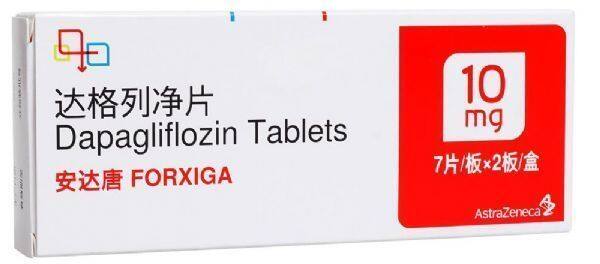
Forxiga (Andatang): The First SGLT2 Inhibitor Antidiabetic Drug Launched in China
The active pharmaceutical ingredient of Forxiga is dapagliflozin, a first-in-class selective sodium-glucose cotransporter 2 (SGLT2) inhibitor approved to improve glycemic control in adult patients with type 2 diabetes. The drug acts independently of insulin by selectively inhibiting SGLT2 in the kidneys, thereby helping patients excrete excess glucose in the urine. In addition to its glucose-lowering effects, the drug also has
Weight Lossand the additional benefit of lowering blood pressure.
In March this year, Forxiga received further approval in the EU and Japan for a new indication: as an oral adjunct to insulin for the treatment of adult patients with type 1 diabetes (T1D). The drug is the first SGLT2 inhibitor approved in Europe for the treatment of T1D and the first T1D medication to receive regulatory approval for AstraZeneca. The specific indication is as an oral adjunct to insulin to improve glycemic control in adult patients with type 1 diabetes (T1D) who are on insulin therapy but have inadequate glycemic control and have a body mass index (BMI) ≥27 kg/m² (overweight or obese).
Currently, AstraZeneca is advancing an extensive clinical development program for dapagliflozin, encompassing more than 35 Phase IIb/III clinical studies that have been completed or are ongoing, with over 35,000 patients enrolled.
In China, dapagliflozin (Chinese brand name: Forxiga) was approved in March 2017 as a monotherapy to improve glycemic control in adult patients with type 2 diabetes. This approval made dapagliflozin the first SGLT2 inhibitor approved in the Chinese market. The drug is an oral tablet, with each tablet containing 5 mg or 10 mg of dapagliflozin. The recommended starting dose is 5 mg once daily in the morning. (Bioon.com)