

AstraZeneca’s Fasenra Auto-Injector Approved in EU for At-Home Self-Administration in Severe Eosinophilic Asthma
Jul 04, 2019 09:28
CST Updated
09:28

AstraZeneca
Biopharmaceutical Manufacturer

European Medicines Agency
The European Medicines Agency (EMA) is a decentralized agency of the European Union (EU), located in London. It began operations in 1995. The agency is responsible for the scientific evaluation, supervision, and safety monitoring of medicines developed by pharmaceutical companies for use in the EU. By ensuring that all medicines available on the EU market are safe, effective, and of high quality, the EMA protects public and animal health in the 28 EU Member States and countries of the European Economic Area.

July 04, 2019/BioonBIOON/--British pharmaceutical giantAstraZeneca(AstraZeneca) recently announced that the Committee for Medicinal Products for Human Use (CHMP) of the European Medicines Agency (EMA) has issued a positive opinion approving a Type II variation to the label of Fasenra (benralizumab): adding a self-administration option to the product information in the EU, providing a new drug delivery method as a pre-filled, single-use autoinjector (Fasenra pen, i.e., the Fasenra injection pen). Due to the nature of the Type II variation, the CHMP’s opinion can be implemented without requiring a decision from the European Commission (EC).
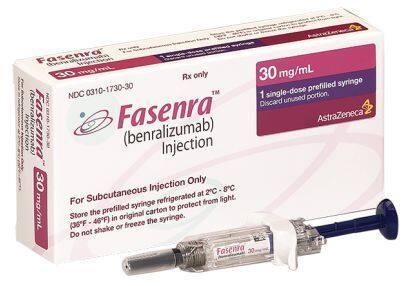
For self-administration, Fasenra is administered as a fixed 30 mg subcutaneous injection via a pre-filled syringe or the Fasenra autoinjector (both using a 29-gauge thin needle), with the first three doses given every 4 weeks and subsequent doses every 8 weeks. The Fasenra autoinjector enables patients and caregivers to manage administration through a simple two-step process. The device includes a viewing window and audible clicks at the start and end of the injection to guide patients in successful medication delivery.
AstraZeneca expects that the United StatesFDAA decision on the Fasenra self-administration option and the Fasenra injection pen, a new pre-filled, single-use autoinjector, is expected in the second half of 2019. Currently, Fasenra is approved in the United States, the European Union, Japan, and other countries as an add-on maintenance therapy for severe eosinophilicAsthmaPatient Treatment.
The CHMP’s positive opinion, supported by two Phase III clinical studies, GREGALE and GRECO, and one Phase I clinical study, AMES,The safety observed in these three studies was consistent with that of previous studies, with no new or unexpected safety findings:
—GREGALE Studyis an open-label, 28-week study that enrolled a total of 120 patients with severe uncontrolledAsthmaPatients were evaluated for subcutaneous administration of Fasenra at a dose of 30 mg once every 4 weeks using prefilled syringes, both in the clinic and at home. Data showed that at Weeks 12 and 16, the vast majority (98% and 99%, respectively) of patients or caregivers successfully administered Fasenra at home using the prefilled syringe. At Weeks 12 and 16, the vast majority (99%) of prefilled syringes returned after home use were assessed as functioning properly.
——GRECO Studyis an open-label, 28-week study enrolling 120 patients with severe uncontrolledAsthmaPatients were evaluated for subcutaneous administration of 30 mg Fasenra every 4 weeks using the pre-filled autoinjector (Fasenra pen) in both clinic and home settings. Data showed that at Weeks 12 and 16, the vast majority (97%) of patients or caregivers successfully administered the medication at home using the pre-filled autoinjector. At Weeks 12 and 16, the vast majority (97%) of pre-filled autoinjectors returned after home use were assessed as functioning properly.
——AMES StudyThis was an open-label Phase I study in healthy subjects that evaluated the pharmacokinetics (PK), or exposure, of a single 30 mg dose of Fasenra administered via either a prefilled syringe or a prefilled autoinjector. The results demonstrated comparable PK exposure of subcutaneously administered Fasenra between the two delivery methods, with both groups exhibiting a rapid reduction in eosinophil counts.
Mene Pangalos, Executive Vice President of BioPharmaceuticals R&D at AstraZeneca, stated: “Fasenra is the only respiratory biologic administered every eight weeks following an initial loading dose regimen. The CHMP’s positive opinion brings us closer to delivering Fasenra in a more meaningful way that offers convenience for many patients. We hope that self-administration and the Fasenra pen injector will help physicians enable more patients with severe eosinophilicAsthma"...plays an important role in facilitating patient access to biologic therapies."
The active pharmaceutical ingredient of Fasenra is benralizumab, a monoclonal antibody that directly binds to the alpha subunit of the interleukin-5 receptor (IL-5Rα) on eosinophils and uniquely recruits natural killer (NK) cells throughApoptosis(Programmed cell death) induces rapid and nearly complete depletion of eosinophils.
Fasenra was licensed to AstraZeneca from BioWa, a wholly owned subsidiary of the Japanese pharmaceutical company Kyowa Hakko Kirin. In late March this year, AstraZeneca and Kyowa Hakko Kirin signed a new agreement, granting AstraZeneca the Asian rights for all indications of Fasenra. In addition to the approved eosinophilicAsthmaBeyond its approved indications, AstraZeneca is also evaluating the potential of Fasenra for the treatment of severe nasal polyps, hypereosinophilic syndrome (HES), and eosinophilic granulomatosis with polyangiitis. (Bioon.com)