

Sanofi Submits BLA for Isatuximab in Relapsed/Refractory Multiple Myeloma, Challenging J&J's Darzalex
Jul 11, 2019 13:37
CST Updated
13:37

Sanofi
Pharmaceutical R&D Developer

July 11, 2019/BioonBIOON/--French pharmaceutical giant Sanofi recently announced that the U.S. Food and Drug Administration (FDA) has accepted the Biologics License Application (BLA) for isatuximab (SAR650984) for the treatment of relapsed or refractory multiple myeloma (RRMM), and has designated the Prescription Drug User Fee Act (PDUFA) target action date as April 30, 2020. Currently, the drug is also under review by the European Medicines Agency (EMA).
Isatuximab is an IgG1 chimeric monoclonal antibody that targets a specific epitope of the CD38 receptor on plasma cells, triggering multiple unique mechanisms of action, including the induction of programmed tumor cell death (apoptosis) and immunomodulatory activity. CD38 is highly expressed on multiple myeloma (MM) cells and serves as a cell-surface receptor target for antibody-based therapies in MM and other malignancies. Isatuximab has been granted orphan drug designation for the treatment of relapsed/refractory multiple myeloma (R/R MM) in both the United States and the European Union. Currently, Sanofi is also evaluating isatuximab for the treatment of other hematologic malignancies.Tumorand the potential in solid tumors.
The BLA for isatuximab is based on positive data from the pivotal Phase III ICARIA-MM study. This was the first Phase III study to demonstrate positive outcomes with isatuximab in combination with standard of care (pomelidomide plus dexamethasone, pom-dex). The results showed that, compared to standard of care (pom-dex) alone, isatuximab combined with pom-dex significantly reduced the risk of disease progression or death by 40% and significantly improved the overall response rate.
Currently, Sanofi is advancing four Phase III clinical studies to evaluate isatuximab in combination with currently available standard therapies for the treatment of patients with RRMM or newDiagnosisMM patients. MM is the second most common hematologic malignancyTumor, globally, the number of new cases exceeds 1.38 million annually. For most patients, MM remains incurable, thus there is a significant unmet medical need in this field.
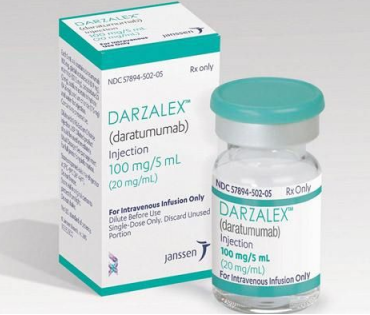
Following its market launch, isatuximab will become the first direct competitor to Johnson & Johnson’s blockbuster CD38-targeted drug Darzalex. Launched in 2015, Darzalex achieved global sales exceeding $2 billion in 2018 and is projected to reach $3 billion this year. Analysts at Jefferies, a Wall Street investment bank, predict that the annual peak sales of isatuximab post-launch will surpass $1 billion.
ICARIA-MM is a randomized, open-label, multicenter study conducted across 96 centers in 24 countries, enrolling a total of 307 patients with relapsed/refractory multiple myeloma (RRMM). These patients had previously received multiple (median, 3) anti-myeloma therapies, including at least two consecutive lines of treatment with lenalidomide and a proteasome inhibitor, administered either as monotherapy or in combination. In the study, isatuximab was administered via intravenous infusion at a dose of 10 mg/kg once weekly for 4 weeks, followed by every-other-week dosing, in combination with standard-dose pomalidomide and dexamethasone (pom-dex) throughout the treatment period.
The results showed that, compared with standard care (pom-dex), isatuximab combined with pom-dex significantly prolonged progression-free survival (median PFS: 11.53 months vs. 6.47 months; HR=0.596, 95% CI: 0.44–0.81, p=0.001), significantly improved the overall response rate (ORR: 60% vs. 35%, p<0.0001), and demonstrated therapeutic benefits across all subgroups, including patients aged ≥75 years, those with renal impairment, and lenalidomide-refractory patients.
Furthermore, compared with pom-dex, isatuximab-based combination therapy demonstrated advantages in the following outcomes: (1) a significantly higher very good partial response (VGPR) rate (31.8% vs. 8.5%, p < 0.0001), longer duration of response (DOR: 13.27 months vs. 11.07 months), and a shorter median time to first response among patients who achieved a response (35 days vs. 58 days); (2) longer time to next treatment (not reached vs. 9.1 months; HR = 0.538); and (3) at the time of data analysis, overall survival (OS) showed a trend favoring the isatuximab combination therapy, with final data to be reported upon data maturity.
In terms of safety, compared with the pom-dex group, the isatuximab combination therapy group had a higher incidence of grade ≥3 adverse events (86.8% vs 70.5%), a lower rate of treatment discontinuation due to adverse events (7.2% vs 12.8%), a lower mortality rate due to adverse events (7.9% vs 9.4%), a higher incidence of grade ≥3 infections (42.8% vs 30.2%), and a higher incidence of grade ≥3 neutropenia (84.9% [febrile 11.8%] vs 70.1% [febrile 2.0%]). The incidence of infusion reactions in the isatuximab combination therapy group was 38.2% (2.6% were grade 3-4). (Bioon.com)