

AstraZeneca's SGLT2 Inhibitor Farxiga Approved in the UK as First Oral Adjunct Therapy for Type 1 Diabetes
Jul 15, 2019 15:38
CST Updated
15:38

AstraZeneca
Biopharmaceutical Manufacturer

NICE
NICE is a non-departmental public body of the UK Department of Health, primarily responsible for: National Health Service, clinical practice of health technologies, guidelines for health promotion and disease prevention, and social care services. It serves the UK NHS.
July 15, 2019/BioValleyBIOON/--British pharmaceutical giantAstraZeneca(AstraZeneca) The oral antidiabetic drug Farxiga (Chinese brand name: Andatang; generic name: dapagliflozin) has recently received positive regulatory news in the United Kingdom. The National Institute for Health and Care Excellence (NICE) in the UK has issued a final guidance document recommending Farxiga for use in type 1Diabetes(T1D) patients, specifically those with a body mass index ≥27 kg/m² whose blood glucose levels cannot be adequately controlled with insulin monotherapy.
However, NICE has imposed a series of restrictions on this drug, limiting its use to patients with a daily insulin intake exceeding 0.5 units per kilogram of body weight. Farxiga is a selective sodium-glucose cotransporter-2 inhibitor (SGLT2i) that had previously been approved by the European Union for type 2Diabetes(T2D) Treatment for adult patients. In addition to lowering blood glucose, Farxiga provides additional benefits of reducing blood pressure and body weight.
Farxiga is the first drug approved by regulators for the treatment of type 1 diabetes (T1D) from AstraZeneca. In March this year, Farxiga received further approval from the European Union, becoming the first SGLT2 inhibitor approved in Europe for the treatment of T1D. The specific indication for this drug is: as an oral adjunct therapy to insulin, it is used to improve glycemic control in adult patients with T1D who are on insulin therapy but have inadequate blood glucose control and a body mass index (BMI) ≥27 kg/m² (overweight or obese). Currently, the indication for Farxiga in the treatment of T1D is also under review in the United States.FDAreview, with results expected in the second half of this year.
The approval of Farxiga for the treatment of type 1 diabetes (T1D) was based on data from the Phase III clinical program DEPICT. This program included two Phase III clinical studies, DEPICT-1 (NCT02268214) and DEPICT-2 (NCT02460978). Both were 24-week, randomized, double-blind, parallel-group controlled studies conducted in patients with T1D who were receiving insulin therapy but had inadequate glycemic control. The studies evaluated the effects of two doses of Farxiga (5 mg and 10 mg) as an oral adjunct to insulin on glycemic control in these patients.
Short-term (24-week) and long-term (52-week) data from DEPICT-1, along with short-term (24-week) data from DEPICT-2, demonstrated that at Weeks 24 and 52, both doses of Farxiga (5 mg and 10 mg) achieved statistically significant and clinically meaningful reductions from baseline in glycated hemoglobin (HbA1c), body weight, and total daily insulin dose compared with placebo.
In terms of safety, the safety profile of Forxiga in the DEPICT clinical program was consistent with that observed in the treatment of type 2 diabetes.Diabetes(T2D), the safety profile was consistent; however, in the treatment of T1D, a higher proportion of patients in the Farxiga group experienced events compared with the placebo group.DiabetesDiabetic Ketoacidosis (DKA) Events. DKA is a common complication of diabetes, with a higher incidence in patients with type 1 diabetes (T1D) than in those with type 2 diabetes (T2D).
Farxiga (Dapagliflozin): The First SGLT-2i Glucose-Lowering Drug Launched in China
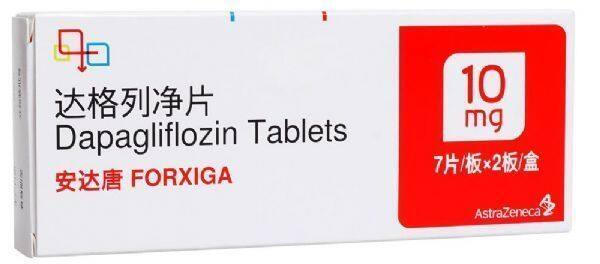
Farxiga is a first-in-class, selective SGLT2 inhibitor that primarily works by inhibiting SGLT2 (a transporter protein involved in glucose reabsorption in the proximal renal tubules of the kidney), thereby reducing renal glucose reabsorption and increasing urinary glucose excretion to lower blood glucose levels. This glucose-lowering effect is independent of β-cell function and insulin resistance.
In the Chinese market, Farxiga was approved by the China Food and Drug Administration (CFDA) in March 2017.CFDA) approval, as a monotherapy to improve glycemic control in adult patients with type 2 diabetes. This approval makes Forxiga the first SGLT-2 inhibitor marketed in China. Forxiga is an oral tablet, with each tablet containing 5 mg or 10 mg of dapagliflozin. The recommended starting dose is 5 mg once daily in the morning.
It is worth noting that, in addition to AstraZeneca, several other pharmaceutical companies are developing SGLT inhibitors for the treatment of type 1 diabetes (T1D). In December 2018, Astellas’ glucose-lowering drug Suglat (ipragliflozin L-proline, an SGLT-2 inhibitor) was approved in Japan for the treatment of adult patients with T1D. At the end of April this year, Sanofi/Lexicon’s glucose-lowering drug Zynquista (sotagliflozin, a dual SGLT-1/SGLT-2 inhibitor) received European Union approval for the treatment of type 1 diabetes; however, in the United States, the drug has been [halted/rejected] due to the risk of diabetic ketoacidosis (DKA).FDARefused.
In addition,Eli Lilly/Boehringer Ingelheim Diabetes Alliance is also developing Jardiance (empagliflozin, an SGLT-2 inhibitor) for the treatment of type 1 diabetes (T1D), and it is currently in Phase III clinical trials. Johnson & Johnson is also developing Invokana (canagliflozin, an SGLT-2 inhibitor) for the treatment of T1D. (Bioon.com)
(Bioon.com)
Original Source:NICE recommends funding for psoriasis and type 1 diabetes drugs