




On July 16, Seattle Genetics and Astellas jointly announced the submission of a Biologics License Application (BLA) to the FDA for the investigational antibody-drug conjugate enfortumab vedotin, for the treatment of patients with locally advanced or metastatic urothelial carcinoma who have previously received PD-1/PD-L1 inhibitors and platinum-based chemotherapy.
Enfortumab vedotin was granted “Breakthrough Therapy” designation by the FDA for this indication based on results from the Phase I EV-101 study. Seagen/Astellas is now seeking accelerated FDA approval based on clinical data from the first cohort of patients in the pivotal Phase II EV-201 study. Additionally, a Phase III EV-301 study is ongoing to support the global registration of enfortumab vedotin.
At the ASCO conference this June, the results of the EV-201 study on Enfortumab vedotin were released as a significant abstract, attracting considerable attention. In this study, 125 patients with urothelial carcinoma who had previously received PD-1/L1 inhibitors and platinum-based chemotherapy were treated with Enfortumab vedotin. The confirmed overall response rate (ORR) was 44%, with a duration of response of 7.6 months, meeting both the primary and secondary endpoints. The median overall survival (OS) was 11.7 months, and the median progression-free survival (PFS) was 5.8 months.
Most patients responded after the first cycle of enfortumab vedotin treatment, and the response rate was independent of prior treatment regimens: the objective response rate (ORR) was 41% (26/63) in patients who had received more than three prior lines of therapy, 41% (41/100) in patients who were non-responders to PD-1/PD-L1 inhibitors, and 38% (19/50) in patients with liver metastases.
The most common treatment-related adverse events included fatigue (50%), alopecia (49%), rash (48%), decreased appetite (44%), dysgeusia (40%), and peripheral neuropathy (50%). The most common grade ≥3 serious adverse events included neutrophil count increased (8%), anemia (7%), and fatigue (6%).
1. Urothelial Carcinoma: Extreme Scarcity of Second-Line Therapies
Urothelial carcinoma is the most common type of bladder cancer, accounting for approximately 90% of all bladder cancer cases. In 2018, there were approximately 549,000 newly diagnosed cases of bladder cancer worldwide, with about 200,000 deaths. In China, there were 82,000 new cases and 38,000 deaths.
For patients with unresectable metastatic urothelial carcinoma, first-line treatment primarily consists of platinum-based chemotherapy. However, as platinum sensitivity declines, tumor recurrence and disease progression often occur, leaving extremely limited options for second-line therapy. Even with the recently approved PD-1/PD-L1 inhibitors indicated for second-line treatment of urothelial carcinoma, the objective response rate (ORR) remains only around 20%.
On April 12 this year, the FDA approved Janssen’s Balversa (erdafitinib) for the treatment of locally advanced or metastatic bladder cancer with FGFR3 or FGFR2 mutations that has progressed following platinum-containing chemotherapy. Erdafitinib is a pan-fibroblast growth factor receptor (FGFR) tyrosine kinase inhibitor. In the Phase II BLC2001 study, it demonstrated an objective response rate (ORR) of 40%, becoming the first targeted therapy approved by the FDA for metastatic bladder cancer.
However, FGFR alterations are present in only about 20% of patients with recurrent advanced urothelial carcinoma. Because patients with urothelial carcinoma who fail first-line standard therapy have long faced a lack of effective treatment options, their overall survival has been severely impacted.
2. ADC Drugs Offer New Options for Urothelial Carcinoma
Enfortumab vedotin is an antibody-drug conjugate (ADC) that utilizes Seagen’s proprietary linker technology to conjugate enfortumab, a monoclonal antibody targeting Nectin-4, with the microtubule-disrupting cytotoxic agent MMAE.
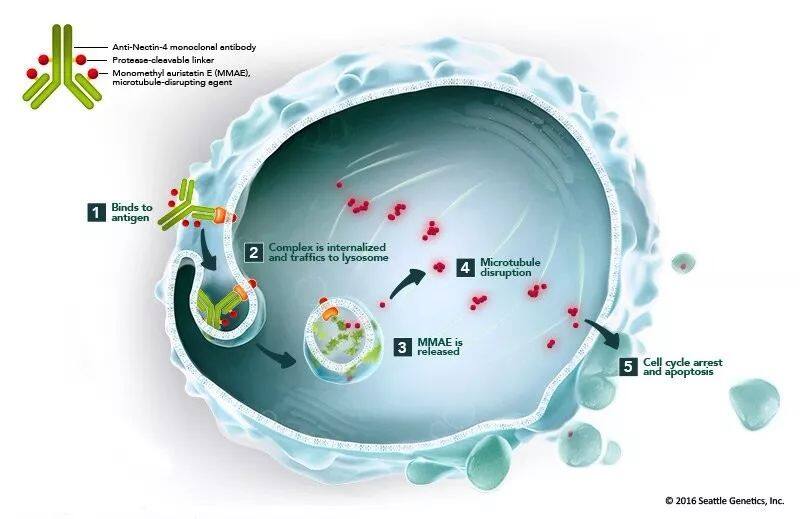
Nectin-4 is an adhesion molecule that is highly expressed in a variety of solid tumors, including urothelial carcinoma (UC). Currently, there are very few investigational new drugs targeting this molecule worldwide, and only Enfortumab vedotin has advanced to late-stage development.
Another investigational drug making significant strides in the field of bladder cancer is also an ADC, namely RC48 from RemeGen, a Chinese innovative pharmaceutical company. RC48 targets Her2. At the ASCO 2019 conference, RC48 demonstrated a confirmed objective response rate (cORR) of 51.2% and a disease control rate (DCR) of 90.7% among 43 patients with second-line or multi-line urothelial carcinoma.
Due to the extreme scarcity of second-line therapies for bladder cancer and the limited efficacy of PD-1/L1 inhibitors, antibody-drug conjugates (ADCs) offer a novel treatment option for these patients through their unique mechanism of action. We anticipate the early market approval of such agents.