BOSS Talks Health | Wang Jinhe of Johnson & Johnson Medical: Sustainable Success Lies in Innovation

Johnson & Johnson
Healthcare Product Manufacturers, Health Service Providers
Amidst a busy schedule, I finally found time to play a game of tennis with my son.
The young player’s backhand stroke had long been inconsistent. As Wang Jinhe watched it grow steadily more reliable, he was filled with a quiet sense of small, certain happiness.
"This ordinary father-son moment was described by Wang Jinhe as a rare moment of enjoyment in recent times."
A similar moment of triumph occurred a year ago, when Wang Jinhe successfully persuaded the U.S. headquarters to launch an innovative balloon technology product (HELIOSTAR) simultaneously in China and the United States.
For most executives at multinational corporations, striking a balance between high-pressure market expansion efforts and infrequent family time is no easy feat. “People our age have many responsibilities to attend to, not only professional but also familial, and we must strive to accommodate both as best as possible,” Wang Jinhe told Health界.
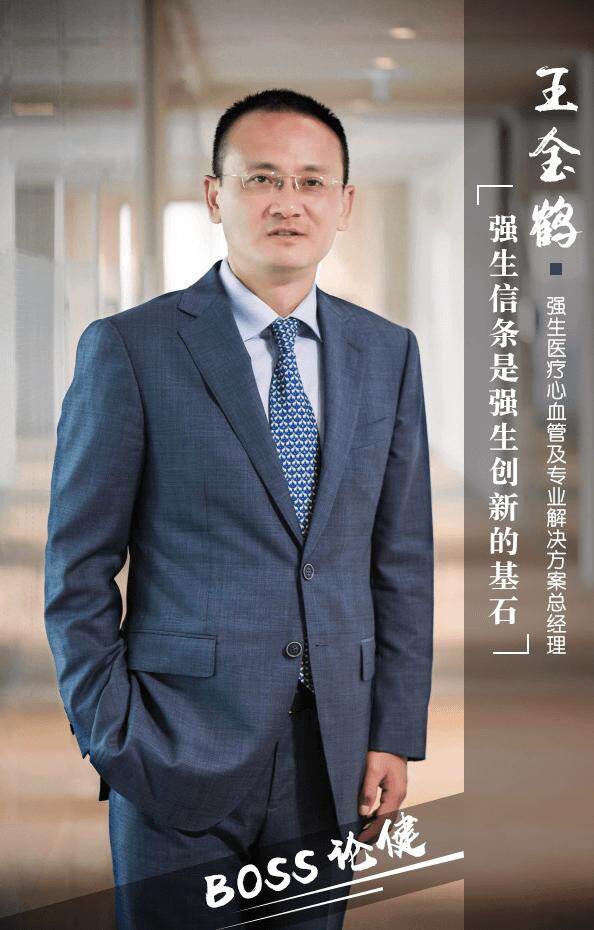
Journey of Innovation
Sixteen years ago, Wang Jinhe, who had no background in healthcare or medicine, joined Johnson & Johnson Medical after earning his MBA from the University of Michigan’s Ross School of Business. He has held roles across various business units, including surgery, sutures, hemostasis, and electrophysiology, and has served in diverse capacities such as sales manager, product manager, and marketing manager. His professional experience spans a broad spectrum of responsibilities. It is precisely this extensive exposure across different domains and departments that has enabled him to develop a comprehensive and in-depth understanding of Johnson & Johnson Medical’s product ecosystem.
Three years ago, Wang Jinhe was promoted to General Manager of Cardiovascular and Specialty Solutions at Johnson & Johnson MedTech. “Throughout my career growth, I have made many mistakes and faced various challenges,” said Wang Jinhe. He credited Johnson & Johnson’s culture of inclusivity and care with helping him realize that career development depends not on short-term bursts of energy, but on the endurance required for a long-distance run.
In early 2019, Wang Jinhe was appointed Chairman of the Johnson & Johnson Medical China Innovation Committee. However, Wang Jinhe’s “journey of innovation” did not begin this year.
For many multinational corporations, innovation is often globalized, with products developed for mature Western markets frequently exported directly to China, while innovations specifically tailored to the Chinese market tend to lag behind. Wang Jinhe has also faced such a situation.
Human initiative drives progress, and innovation can often spark in a single moment. Take the aforementioned HELIOSTAR as an example: this innovative product for atrial fibrillation ablation was first successfully developed in the United States. The subsequent question was whether to launch it simultaneously in both China and the United States. Wang Jinhe and the corporate headquarters held differing views. The headquarters expressed significant concerns: Would such a move jeopardize the successful launch in the U.S. market? After all, it would introduce additional variables from the Chinese market.
Wang Jinhe insisted on a simultaneous launch and expressed strong confidence in this strategy. He believes that the ultimate goal of Johnson & Johnson’s innovative products is to serve patients. Today, China has become a key market for Johnson & Johnson’s global operations. With the growing middle class, an aging population, and increasing patient demand for customized healthcare solutions, there is an urgent need in the Chinese market for such innovative products to benefit patients. Moreover, in recent years, the Chinese government has continuously introduced new policies to foster a favorable business environment and support the successful application of new technologies. To this end, Wang traveled specifically to the United States and successfully persuaded headquarters that if this initiative must be undertaken eventually, now is the optimal time.
On the last day of May 2018, Johnson & Johnson Medical announced that its HELIOSTAR three-dimensional multi-channel radiofrequency ablation balloon catheter had received Green Channel approval from the National Medical Products Administration. In the second half of that year, at the suggestion and initiative of Wang Jinhe, the U.S. headquarters also approved a plan for synchronized clinical trials and simultaneous market launch of HELIOSTAR in China and the United States. Wang Jinhe revealed to Health World that the accelerated market entry of HELIOSTAR in China would directly benefit more than 10 million atrial fibrillation patients in the country, along with a growing number of new cases. It would significantly shorten the learning curve for young physicians, improve treatment rates and clinical outcomes for atrial fibrillation patients, enhance patients’ quality of life, and set a new standard for atrial fibrillation treatment in China. “We are very much looking forward to it,” he said.
“We have also decided to adopt this approach for most of our new products going forward, hoping to serve patients in China through these innovative methods, enable doctors in China to access the latest technologies at an earlier stage, and advance scientific research in China,” said Wang Jinhe.
The innovative policy environment is also releasing dividends. Since last year, the state has accelerated the reform of the approval process for innovative pharmaceuticals and medical devices. Under the support of favorable policies, Johnson & Johnson's innovative products and healthcare solutions have been able to enter the Chinese market more quickly. For example, after the State Council introduced the "Nine National Measures" policy for the Hainan Boao Pilot Zone, Wang Jinhe immediately led his team to Hainan to implement Johnson & Johnson's new technologies.
On December 7, 2018, Johnson & Johnson successfully performed the first innovative electrophysiology procedure in China, leveraging its fully three-dimensional visualization and dual magnetic-electric localization technology for arrhythmia treatment. Utilizing the policy channel for “Approval of Clinically Urgent Imported Medical Devices,” the product was deployed in Boao, Hainan, nearly synchronously with the U.S. market, thereby achieving the simultaneous introduction of cutting-edge international medical technology into China. In March 2019, Johnson & Johnson jointly established the “Johnson & Johnson Advanced Technology Boao Education Center” with Boao Super Hospital to help medical personnel better master advanced innovative medical technologies.
Innovation is never achieved by waiting, relying on others, or asking for handouts; rather, it stems from proactive choices that stay one step ahead. Wang Jinhe did not rest on his laurels in leveraging the policy advantages of Boao, Hainan. In early 2019, he led the Johnson & Johnson team to proactively propose a plan to accelerate the approval of new technologies through Hainan’s “real-world data” initiative, engaging in repeated communications and discussions with regulatory authorities.
In early July 2019, Hainan Province issued guidelines to accelerate the approval of new technologies through the use of real-world data. Wang Jinhe expressed his excitement to Health界, stating, “The acceleration of new technology approvals using real-world data is unprecedented in the global medical device industry. This represents a genuine effort to drive technological innovation through policy innovation.” Accelerating the implementation of innovative technologies will undoubtedly better serve patients in China.
The Power of Creed
The true implementation of innovative technologies also relies on organizational models that are better suited to the local environment. “For a global giant like Johnson & Johnson, ‘how to take root in the Chinese market and adapt to its rapid iteration is what we need to consider,’” Wang Jinhe stated candidly.
He reflected even as he took action. “Previously, we relied more on our own resources to drive innovation. However, as societal development accelerates and new business partners continually emerge, relying solely on Johnson & Johnson would expose us to significant limitations.”
Viewed through the lens of a patient’s complete care journey, the first step is prevention, the second is screening, the third is diagnosis, the fourth is treatment, and the fifth is rehabilitation and follow-up. Wang Jinhe posed the question: Should Johnson & Johnson engage in every link of this chain? What are Johnson & Johnson’s key focus areas? Based on multiple rounds of value analysis, Johnson & Johnson has concentrated its efforts on deepening and strengthening its core competency—treatment—while collaborating with diverse commercial partners to build an ecosystem encompassing the other segments.
On June 27, 2019, the JLABS project, founded on the principles of open collaboration and innovation, was launched in Shanghai. It provides an efficient and flexible innovation platform for approximately 50 life sciences startups from around the world, covering sectors including pharmaceuticals, medical devices, consumer health, and medical technology. To date, 31 companies have joined the facility.
“It is an open incubator, a highly meaningful innovation initiative undertaken by Johnson & Johnson,” said Wang Jinhe. This fully open innovation platform from Johnson & Johnson comes with no strings attached, enabling startups and researchers to move in and get started immediately, thereby focusing their time and energy where it matters most. In addition to providing office space equipped with world-class advanced facilities, Johnson & Johnson also offers guidance to resident enterprises in areas such as scientific research and human resources.
It must be acknowledged that in many fields where breakthrough progress has been made, traces of innovation are always visible. The innovative initiatives driven by Wang Jinhe and his team reflect Johnson & Johnson Medical’s innovation pathway.
Innovation is the core driver of medical development and the key competitive advantage for healthcare institutions to achieve enduring success. In the “Top 50 Most Innovative Companies 2018” list released by Boston Consulting Group (BCG), Johnson & Johnson ranked first among the three healthcare companies featured.
Johnson & Johnson’s robust innovation capability is underpinned by the Johnson & Johnson Credo.
Seventy-six years ago, General Robert Wood Johnson, son of the founder of Johnson & Johnson, penned the “Johnson & Johnson Credo”: to be responsible first to patients, healthcare professionals, parents, and all those who use Johnson & Johnson products and services; second, to employees; third, to society; and finally, to shareholders.
For over 70 years, the “Johnson & Johnson Credo” has served as the guiding principle for the company’s business operations, undergoing several revisions during this period. In the most recent update, the “Johnson & Johnson Credo” explicitly places “patients” at the forefront of the first paragraph, underscoring the primacy of serving human health and well-being. Additionally, provisions have been introduced to evaluate executives based on a “Credo Score.”
Healthcare Insight has learned that Johnson & Johnson China’s annual “Credo Score” consistently far outperforms those of other countries and markets, reflecting the excellence of its team in continually stepping out of their comfort zones to embrace greater challenges. In Wang Jinhe’s view, the Johnson & Johnson Credo serves as the cornerstone of the company’s innovation. “Whenever faced with conflicts or decisions, I consciously refer to this Credo and act accordingly.”
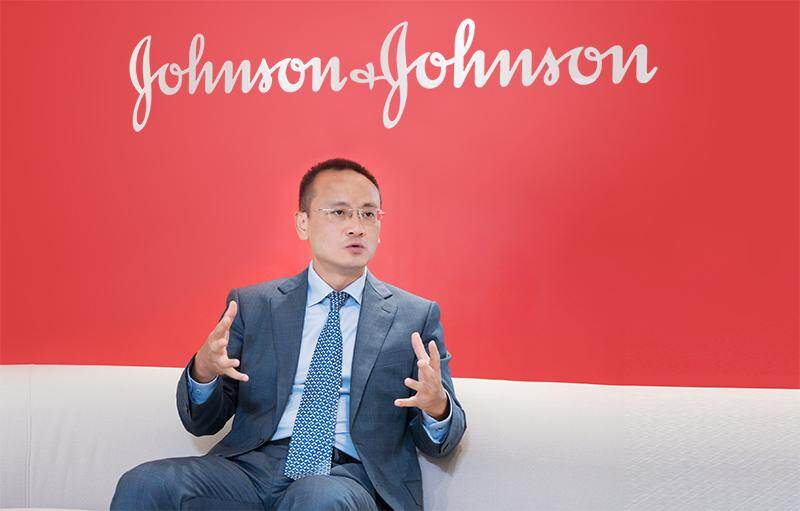
Face-to-Face:
Healthcare Circle:As the Chair of the Johnson & Johnson Medical China Innovation Committee at Johnson & Johnson, a multinational corporation with a 130-year history, in which areas do you hope to achieve breakthroughs?
Wang Jinhe:Since assuming the role of Chair of the Innovation Committee, I have been reflecting on a key question: Johnson & Johnson has already achieved excellence in the past; how can I drive even greater success?
To this end, I propose that we concentrate on our core strength—the treatment sector—by deepening and refining our capabilities in this area, while collaborating with external partners in other segments to build an ecosystem. As we devote our full efforts to the treatment sector, we must also anticipate future trends. A characteristic feature of the healthcare industry is its long cycle; for instance, the development timeline for a new drug from research to successful market approval can span several decades. Therefore, it is imperative that we forecast future developments, including demographic shifts and changes in the disease spectrum in China, and leverage our strengths in the treatment sector to address these evolving challenges.
Healthcare Industry:To establish an ecosystem for collaboration with others, the first step is to address the model of cooperation. How does Johnson & Johnson collaborate with other companies?
Wang Jinhe:From the perspective of the patient journey, care can be divided into stages such as prevention, screening, diagnosis, treatment, and rehabilitation follow-up. Johnson & Johnson focuses primarily on the treatment stage. In the disease prevention phase, we collaborate more extensively with wearable device companies such as Xiaomi, Google, and Apple to help patients monitor their health status and identify potential issues. During the screening phase, we partner with community hospitals to promote education among community physicians for elderly patients, including electrocardiogram (ECG) screening and diagnosis. In the diagnostic phase, we cooperate with AI enterprises to leverage artificial intelligence for ECG interpretation, extending these capabilities to postoperative follow-up and treatment efficacy assessment. Furthermore, we encourage each business unit within Johnson & Johnson MedTech to explore external collaboration opportunities, thereby maximizing the utilization of our technological advantages.
Healthcare Circle:Overall, China’s healthcare service system remains relatively weak. Addressing this issue requires innovation and improvement from multiple stakeholders. In your view, in which areas should the government and healthcare institutions prioritize innovation or adjustments?
Wang Jinhe:We welcome the government’s active efforts to create a fair business environment that encourages innovation and enables enterprises of all types to thrive. Furthermore, we should broaden our perspective. The state attaches great importance to cancer prevention and control, providing policy support in this area. Meanwhile, stroke, not just cancer, deserves significant attention, as it is the leading cause of death among Chinese people and the primary cause of disability in the elderly. Therefore, I recommend shifting the focus of disease treatment upstream. Since atrial fibrillation is the most significant and direct risk factor for stroke, stroke management should begin with addressing atrial fibrillation. We encourage innovation in the treatment of atrial fibrillation and stroke, granting them equal priority to cancer care. For healthcare institutions, we hope that new technologies can be adopted more rapidly to better and more timely meet patient needs.
Healthcare Industry:Some healthcare institutions believe that corporate innovation often carries a strong sales-driven motive. What is your view on this?
Wang Jinhe:For an innovative technology, if it cannot be successfully commercialized, it indicates that it is not yet truly benefiting a sufficient number of hospitals and patients, thereby casting doubt on its actual value. At Johnson & Johnson, the purpose of innovation is to help patients. Our technologies are adopted by a wide range of hospitals and physicians only when they can tangibly benefit patients; this adoption is merely the outcome. What we strive for is genuinely effective innovation. Johnson & Johnson also evaluates innovative technologies from the perspective of health economics. Internationally, the prices of many new technologies tend to gradually decrease after their adoption. This is a normal part of the product lifecycle, a phase that every new product or technology must undergo, and we must respect this pattern.
Healthcare Circle:Looking back on your 16 years in the medical device industry, what issue would you most like to change?
Wang Jinhe:There are many things we wish to change, but what we most desire is to shift disease treatment earlier in the care continuum. In fact, whether in China, the United States, or other countries and markets, all face the challenge of population aging. If we can move disease intervention upstream, the effectiveness of treatment will be truly enhanced. From the perspective of value-based healthcare, this approach allows for lower healthcare spending while extending healthy life expectancy. However, realizing this vision is not an overnight endeavor; it requires continuous innovation and ongoing public education. As advocated by Johnson & Johnson, fostering an innovation ecosystem and engaging in collaborative innovation with diverse business partners represents a truly sustainable development model.
Healthcare Industry:"Having worked in the medical industry for so many years, has your perspective on health changed?"
Wang Jinhe:In the past, I equated health with the mere absence of disease. Now I realize that health is far more complex. Physical well-being is merely the foundation; mental and spiritual health are equally vital. Throughout my years in the healthcare industry, Johnson & Johnson’s “Energy for Performance” program has been immensely beneficial to me. Developed by the Human Performance Institute, a subsidiary of Johnson & Johnson, this training curriculum offers customized solutions tailored to the health needs of corporate executives and employees. It has helped me establish a proper framework for managing physical energy, emotional energy, mental focus, and spiritual purpose. I have come to understand that by elevating my energy levels, I can fully engage in my family life, personal pursuits, and work, thereby enjoying family life more deeply and handling professional responsibilities more efficiently. This, in turn, makes life healthier, more positive, and more meaningful. The program is officially launching its commercial operations in China this year and is open to external participants. I highly recommend it to both companies and individuals.

Health界:What type of fitness exercise do you prefer the most?
Wang Jinhe:My primary fitness activities include: first, strength training, such as weighted exercises with barbells and dumbbells; second, cardiovascular conditioning, for example, playing tennis; and third, boxing, which I sometimes practice with my son as a way to relieve stress during particularly demanding times.
Healthcare World:Do you enjoy reading books on health?
Wang Jinhe:I have been reading The Emperor of All Maladies: A Biography of Cancer. This book not only discusses cancer as a disease but also addresses how we care for our own health and the health of those around us. It reveals how patients, physicians, hospitals, corporations, scientists, and governments—generation after generation—have tirelessly struggled against this disease. Conquering cancer is a protracted endeavor, to which each individual contributes only a part, with much still left to be done.
Healthcare Circle:What state do you enjoy most right now?
Wang Jinhe:Set a goal for yourself, whether in life or at work, and strive toward it; this state of being is deeply fulfilling.