

Merck and Eisai’s Lenvima plus Keytruda Combination Receives Third FDA Breakthrough Therapy Designation for First-Line Treatment of Unresectable Hepatocellular Carcinoma
Jul 23, 2019 15:32
CST Updated
15:32

MSD
Pharmaceutical R&D and Manufacturer
Eisai
Pharmaceutical Product R&D and Manufacturer

FDA
U.S. Food and Drug Administration

American Association for Cancer Research
A Company Dedicated to the Prevention and Cure of Cancer
July 23, 2019/BioValleyBIOON/--TumorImmunotherapy giants Merck & Co. and its partner Eisai recently jointly announced that the United StatesFDABreakthrough Therapy Designation (BTD) Granted to the Combination of Targeted Anticancer Drug Lenvima (lenvatinib) and PD-1 Immunotherapy Keytruda (pembrolizumab) for First-Line Treatment of Patients with Advanced Unresectable Hepatocellular Carcinoma (HCC) Who Are Not Candidates for Locoregional Therapy
Notably, this BTD also marks the third BTD granted by the FDA to the Lenvima + Keytruda combination. Previously,FDABreakthrough Therapy Designation (BTD) has been granted for this combination in the treatment of advanced and/or metastatic renal cell carcinoma (RCC), as well as advanced and/or metastatic microsatellite-stable (MSS)/proficient mismatch repair (pMMR) endometrial cancer (EC).
Breakthrough Therapy Designation (BTD) is a new drug review pathway established by the FDA in 2012, aimed at accelerating the development and review of new drugs intended to treat serious or life-threatening diseases, where preliminary clinical evidence indicates that the drug may demonstrate substantial improvement over existing therapies. Drugs granted BTD can receive, during development, includingFDACloser guidance, including from senior officials, to ensure that new treatment options are made available to patients in the shortest possible time.
This Breakthrough Therapy Designation (BTD) is based on interim analysis data from the open-label, single-arm Phase Ib clinical study KEYNOTE-524/Study 116. The relevant results were presented at the American Association for Cancer Research (AACR) Annual Meeting held in early April 2019. The results demonstrated that the Lenvima + Keytruda combination therapy exhibited highly promising anti-TumorEfficacy and acceptable safety. As of August 23, 2018, data evaluated by study investigators based on the modified Response Evaluation Criteria in Solid Tumors (mRECIST) showed that among the 30 patients treated with the Lenvima + Keytruda combination therapy, 11 achieved tumor response, yielding an objective response rate (ORR) of 36.7%, including one complete response (3.3%) and ten partial responses (33.3%); additionally, 18 patients had stable disease (60.0%).

The Lenvima + Keytruda combination therapy is part of the strategic oncology collaboration between MSD and Eisai. In March 2018, the two companies signed a cooperation agreement worth up to $5.8 billion to develop Lenvima as monotherapy and in combination with Keytruda for the treatment of various types of tumors. In addition to the ongoing evaluations of the Lenvima and Keytruda combination therapy for several different types of cancer, including renal cell carcinoma,TumorIn addition, both parties will launch the LEAP clinical program to evaluate the combination therapy for 11 treatment indications across six types of cancer (endometrial cancer, hepatocellular carcinoma,Melanoma, non-small cell lung cancer, head and neck squamous cell carcinoma, urothelial carcinoma). The LEAP clinical program also includes a new basket study targeting six additional cancer types (biliary tract cancer, triple-negativeBreast Cancer, colorectal cancer, gastric cancer, glioblastoma, ovarian cancer).
Lenvatinib is a targeted therapy discovered and developed internally by Eisai. It is an oral multi-receptor tyrosine kinase (RTK) inhibitor with a novel binding mode, which inhibits pathways involved in tumor angiogenesis, tumor progression, andTumorIn addition to other receptor tyrosine kinases (RTKs) associated with pro-angiogenic and oncogenic signaling pathways involved in immune modulation, including platelet-derived growth factor (PDGF) receptors PDGFRα, KIT, and RET, it can also selectively inhibit the kinase activity of vascular endothelial growth factor (VEGF) receptors (VEGFR1, VEGFR2, VEGFR3) and fibroblast growth factor (FGF) receptors (FGFR1, FGFR2, FGFR3, FGFR4).
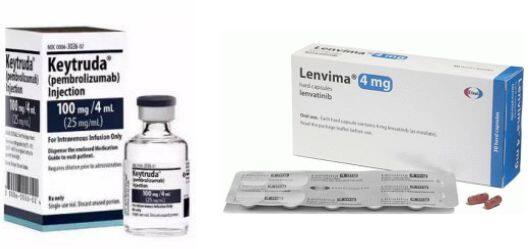
Keytruda is an anti-PD-1 cancer immunotherapy that helps detect and fight tumor cells by enhancing the capability of the human immune system. Keytruda is a humanized monoclonal antibody that blocks the interaction between PD-1 and its ligands, PD-L1 and PD-L2, thereby activating T lymphocytes that may affect both tumor cells and healthy cells.
PD-(L)1 immunotherapy is a highly prominent class of cancer immunotherapies that leverages the body’s own immune system to combat cancer. By blocking the PD-1/PD-L1 signaling pathway, it induces cancer cell death and holds potential for treating various types of tumors. To date, nine PD-(L)1 tumor immunotherapies have been approved worldwide, with Keytruda being the leader in this field.
MSD boasts the largest immuno-oncology clinical research program in the industry. Currently, more than 1,000 clinical trials are investigating Keytruda across various cancer types and treatment settings. The program aims to elucidate the role of Keytruda in cancer therapy and identify factors that predict patient benefit from Keytruda treatment, including the exploration of several different biomarkers. In June this year, MSD held its first Investor Day event in five years, stating that it expects the number of approved indications for Keytruda to more than double over the next five years. (Bioon.com)(BioValley Bioon.com)
Original Source:Eisai Website