

Gilead's Biktarvy Demonstrates High Efficacy in HIV Patients with Known NRTI/NNRTI/PI Resistance
Jul 24, 2019 16:06
CST Updated
16:06

Gilead Sciences
Antiviral Drug Developer

July 24, 2019/BioValleyBIOON/--U.S. pharmaceutical giant Gilead Sciences recently announced at the 2019 International AIDS Society Conference on HIV Science held in Mexico CityConference(IAS 2019) published the results of a Phase III clinical study on switching regimens to Biktarvy, a novel three-in-one combination HIV medication (bictegravir 50 mg/emtricitabine 200 mg/tenofovir alafenamide 25 mg, BIC/FTC/TAF or B/F/TAF).
This is an ongoing, randomized, double-blind, Phase III study that enrolled 565 patients with achieved virologic suppression to evaluate the efficacy and safety of switching from either a DTG + F/TAF (50/200/25 mg) or DTG + F/TDF (50/200/300 mg) regimen to either a DTG + F/TAF regimen or the single-tablet regimen B/F/TAF (Biktarvy). Unlike previous clinical studies that excluded patients with known resistance, this study allowed enrollment of patients with prior resistance to nucleoside reverse transcriptase inhibitors (NRTIs), non-nucleoside reverse transcriptase inhibitors (NNRTIs), and/or protease inhibitors (PIs); only patients with documented resistance to integrase inhibitors were excluded. In this study, 24% of patients had NRTI resistance. The primary endpoint was the proportion of patients with HIV-1 RNA ≥50 copies/mL (c/mL) at Week 48.
The results showed that at Week 48, the proportion of patients with HIV-1 RNA ≥50 copies/mL (snapshot algorithm) was 0.4% in the Biktarvy group (n=284) and 1.1% in the DTG+F/TAF group (n=281), demonstrating non-inferiority. Furthermore, no treatment-emergent resistance was detected at Week 48; among patients with pre-existing NRTI resistance mutations, no patient had detectable HIV RNA >50 copies/mL.
It should be noted that the use of Biktarvy in patients with known resistance is investigational; its safety and efficacy have not been established, nor has it been approved by the U.S.FDAApproved.
Diana Brainard, M.D., Senior Vice President of HIV and Emerging Viruses at Gilead Sciences, stated, “The data presented at the IAS Conference provide new insights into the treatment of HIV in patients with known drug resistance. This study further demonstrates that Biktarvy may serve as an important therapeutic option for this difficult-to-treat patient population.”
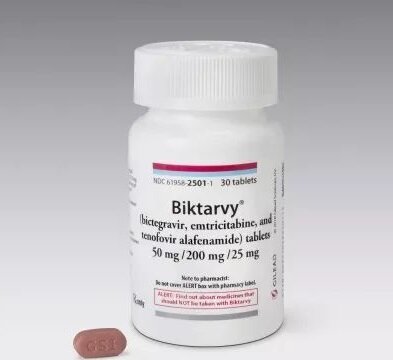
Biktarvy combines the potency of the novel integrase strand transfer inhibitor (INSTI) bictegravir (BIC) with the proven efficacy and safety of the marketed drug Descovy (emtricitabine 200 mg/tenofovir alafenamide 25 mg, FTC/TAF), which is a dual-nucleoside reverse transcriptase inhibitor (NRTI) backbone therapy recommended by HIV clinical treatment guidelines. In Phase III clinical studies, the Biktarvy regimen achieved very high rates of virologic suppression in both treatment-naïve adult patients and adults who were virologically suppressed and switched therapy, with no emergence of treatment-resistant resistance.
In the United States, Biktarvy is indicated as a complete regimen for the treatment of HIV-1 infection in antiretroviral-naïve adults and pediatric patients weighing ≥25 kg. Biktarvy is also indicated to replace the current antiretroviral regimen in adults and pediatric patients weighing ≥25 kg who are virologically suppressed on a stable antiretroviral regimen, provided they have no history of treatment failure and no known resistance to any component of Biktarvy. On June 28, 2019, the United StatesFDAApproval of Biktarvy Labeling Revision to Expand the Patient Population to Include Pediatric Patients Weighing ≥25 kg. Notably, the U.S. product labeling for Biktarvy includes a Boxed Warning regarding the risk of acute exacerbation of hepatitis B following treatment discontinuation.
In China, Biktarvy was approved by the Hong Kong Department of Health in early October 2018 as a once-daily, single-tablet regimen (STR) for the treatment of HIV-1 infection in adults. This approval also made Hong Kong, China, the first market in Asia where Biktarvy was authorized for launch. In late March this year, Biktarvy also received approval in Japan.
In 2018, the United StatesFDAA total of 62 new drugs were approved. The foreign pharmaceutical industry website PharmaCompass compiled data from multiple institutions to estimate the peak sales for these new drugs. The results showed that among the 62 drugs, Biktarvy topped the list with a projected peak sales figure of up to $5.269 billion. (Bioon.com)
Original Source: Gilead Sciences Website