

Pfizer and Astellas Submit New Indication Application for Xtandi (enzalutamide) to Treat Metastatic Hormone-Sensitive Prostate Cancer (mHSPC)
Jul 25, 2019 10:44
CST Updated
10:44

Astellas
Pharmaceutical R&D Manufacturer

Pfizer
Pharmaceutical R&D Developer

European Medicines Agency
The European Medicines Agency (EMA) is a decentralized agency of the European Union (EU), located in London. It began operations in 1995. The agency is responsible for the scientific evaluation, supervision, and safety monitoring of medicines developed by pharmaceutical companies for use in the EU. By ensuring that all medicines available on the EU market are safe, effective, and of high quality, the EMA protects public and animal health in the 28 EU Member States and countries of the European Economic Area.

July 25, 2019/BioonBIOON/--Japanese pharmaceutical company Astellas recently announced that the European Medicines Agency (EMA) has accepted its Class II variation application for the targeted anticancer drug Xtandi (enzalutamide) for the treatment of patients with metastatic hormone-sensitive prostate cancer (mHSPC).
This Class II variation application is based on data from the pivotal Phase III ARCHES study and the Phase III ENZAMET study. The data from the ARCHES study were presented in February this year at the 2019 American Society of Clinical Oncology (ASCO) Genitourinary Cancers Symposium held in San Francisco, USA.TumorPresented at the ASCO-GU symposium, this study enrolled a total of 1,150 patients with metastatic hormone-sensitive prostate cancer (mHSPC). The data showed that, compared with placebo plus androgen deprivation therapy (ADT), Xtandi plus ADT significantly reduced the risk of radiographic progression in mHSPC patients by 61% (HR=0.39 [95% CI: 0.30-0.50]; P<0.0001). In this study, the safety profile of Xtandi was consistent with previous clinical studies in castration-resistant prostate cancer (CRPC). The incidence of Grade 3-4 adverse events (AEs) was 23.6% in the Xtandi plus ADT group and 24.7% in the placebo plus ADT group. No unexpected AEs occurred.
The ENZAMET study enrolled a total of 1,125 patients with metastatic hormone-sensitive prostate cancer (mHSPC). The data demonstrated that, compared with a regimen of a conventional nonsteroidal antiandrogen (NSAA) plus androgen deprivation therapy (ADT), the Xtandi plus ADT regimen significantly reduced the risk of death in mHSPC patients by 33% (HR=0.67 [95% CI: 0.52–0.86]; p=0.002). The 3-year overall survival (OS) rate was 80% in the Xtandi plus ADT group, compared with 72% in the NSAA plus ADT group. Adverse events during the follow-up period were consistent with the known safety profile related to disease stage, patient age, and the study protocol. The Xtandi plus ADT group had higher incidences of seizures and fatigue, as well as a higher rate of treatment discontinuation due to adverse events.
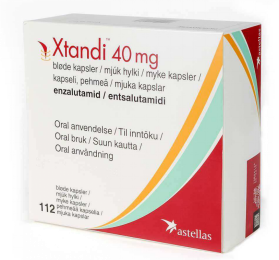
Xtandi is by Astellas andPfizerCo-developed and marketed by Pfizer and Astellas, this drug is a novel, once-daily oral androgen receptor signaling inhibitor that inhibits multiple steps in the androgen receptor signaling pathway. It is designed to interfere with the ability of testosterone to bind to prostate cancer cells, has been shown to reduce cancer cell growth, and can induceTumorCell Death. Testosterone is a male hormone that can stimulate the growth of prostate cancer cells.
Xtandi was first approved for marketing in 2012 for the treatment of metastatic castration-resistant prostate cancer (mCRPC). In 2018, Xtandi received further approval in the United States and Japan for the treatment of non-metastatic castration-resistant prostate cancer (nmCRPC), and in the European Union for the treatment of high-risk nmCRPC.
Based on the results of the ARCHES study, Pfizer and Astellas plan to discuss these data with global regulatory authorities and apply for a new indication for Xtandi in male patients with metastatic hormone-sensitive prostate cancer (mHSPC). (Bioon.com)