

Bristol Myers Squibb Announces Opdivo (nivolumab) Plus Yervoy (ipilimumab) Demonstrates Superior Overall Survival Versus Chemotherapy in First-Line PD-L1-Positive Non-Small Cell Lung Cancer
Jul 25, 2019 15:05
CST Updated
15:05
Bristol-Myers Squibb
Biopharmaceutical and Nutritional Product R&D and Sales

July 25, 2019/Bio ValleyBIOON/--Tumor immunotherapy giant Bristol-Myers Squibb (BMS) recently announced the evaluation of PD-1TumorUpdated Data from the Phase III CheckMate-227 Clinical Study of First-Line Immunotherapy with Opdivo (Opdivo, generic name: nivolumab) for Non-Small Cell Lung Cancer (NSCLC)
This study is a multi-part, open-label Phase III trial evaluating Opdivo-based regimens versus platinum-based two-drug combination chemotherapy as first-line treatment for patients with advanced non-small cell lung cancer (NSCLC) of both non-squamous and squamous histologies. The study comprises two parts: (1) Part 1: Part 1a compares Opdivo plus low-dose Yervoy, Opdivo monotherapy, and chemotherapy in patients whose tumors express PD-L1; Part 1b compares Opdivo plus low-dose Yervoy, Opdivo plus chemotherapy, and chemotherapyTumorPatients not expressing PD-L1; (2) Part 2: Comparison of Opdivo in combination with chemotherapy versus chemotherapy alone, regardless of PD-L1 expression status.
The results showed that Part 1a of the study met the co-primary endpoint of overall survival (OS): first-line treatmentTumorIn patients with NSCLC expressing PD-L1 ≥1%, the Opdivo plus low-dose Yervoy combination regimen demonstrated superiority in overall survival (OS) compared with chemotherapy. The safety profile observed in this study was consistent with previously reported results for the first-line treatment of NSCLC using a combination regimen of Opdivo 3 mg/kg every two weeks and low-dose Yervoy (1 mg/kg) every six weeks. Bristol-Myers Squibb will share the data from this study with regulatory authorities.
In the exploratory analysis of Part 1b, OY combination therapy was also observedTumorSurvival benefit in NSCLC patients not expressing PD-L1. The company looks forward to the upcoming medicalMeetingFull data from Part 1 of CheckMate-227 were published.
Bristol-Myers Squibb also announced data from Part 2 of the study. In patients with non-squamous histology, regardless of PD-L1 expression status, Opdivo plus chemotherapy did not meet the prespecified primary endpoint of overall survival (OS) compared with chemotherapy alone (HR=0.86; 95% CI: 0.69–1.08). Specifically, the median OS was 18.83 months in the Opdivo plus chemotherapy group versus 15.57 months in the chemotherapy group, with one-year OS rates of 67.3% and 59.2%, respectively. An exploratory analysis in patients with first-line squamous NSCLC showed a median OS of 18.27 months in the Opdivo plus chemotherapy group versus 11.96 months in the chemotherapy group (HR=0.69; 95% CI: 0.50–0.97).
Fouad Namouni, M.D., Head of Oncology Development at Bristol-Myers Squibb, stated: “CheckMate -227 is the first Phase III study to demonstrate that patients with lung cancer can achieve superior overall survival benefits with a dual immunotherapy combination regimen compared with chemotherapy. Lung cancer is also the third indication in which the Opdivo and Yervoy combination has shown significant overall survival benefits in randomized Phase III clinical studies.”Tumortype, reinforcing the importance of Yervoy in cancer treatment. We thank the patients and investigators who participated in this trial.”
Martin Reck, from the Lung Clinic Grosshansdorf at the German Center for Lung Research and an investigator in the CheckMate 227 study, stated, “The results of the nivolumab plus ipilimumab combination from Part 1a of the CheckMate 227 study demonstrate the potential of this regimen as an alternative to chemotherapy, showing an overall survival (OS) benefit in patients with previously untreated lung cancer. I look forward to seeing the complete data in the future.”
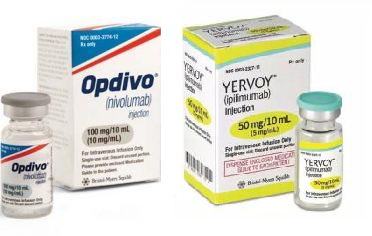
Opdivo (Ouyidiwo, generic name: nivolumab) and Yervoy (ipilimumab, Yipulimma) are both tumor immunotherapies (I-O), which target different regulatory elements in the immune system to harness the body’s own immune system to combatTumor, in which Opdivo targets and blocks the PD-1/PD-L1 pathway, while Yervoy targets and blocks CTLA-4.
To date, the Opdivo + Yervoy immunotherapy combination has been approved for: (1) the treatment of unresectable or metastaticMelanoma; (2) patients with intermediate- or high-risk advanced renal cell carcinoma (RCC) in the first-line setting; (3) pediatric patients aged 12 years and older and adult patients with microsatellite instability-high (MSI-H) or mismatch repair-deficient (dMMR) metastatic colorectal cancer (CRC).
In February this year, Bristol-Myers Squibb announced the interim analysis results of the Phase II clinical study CheckMate-650 evaluating the Opdivo + Yervoy combination for the treatment of metastatic castration-resistant prostate cancer (mCRPC). The data demonstrated robust efficacy evidence for the OY combination in treating mCRPC, making it the first immunotherapy to show strong efficacy in this refractory patient population.TumorImmuno-oncology (I-O/I-O) combination therapy. (Bioon.com)