

Singleron Bioinformatics Files IPO Prospectus: Pioneering Single-Cell Multi-Omics to Transform Disease Diagnosis and Therapy

Abiosciences
Life Science Technology Developer
In recent years, with the rapid advancement of sequencing technologies, single-cell sequencing has gradually come into the spotlight. In 2013, single-cell sequencing was named “Method of the Year” by Nature. Most next-generation sequencing (NGS)-based genetic tests perform genetic analysis on entire cell populations at a macroscopic level. In contrast, single-cell sequencing detects genetic material at the level of individual cells, thereby enabling observation of how mutations synergistically drive disease at a finer resolution. Consequently, compared to conventional genetic testing, single-cell sequencing can yield far more extensive cellular genetic information.
However, in the field of single-cell sequencing, analyzing the vast amount of cellular genetic information remains a significant challenge. Taking immune T cells as an example, single-cell sequencing technology can identify T cell subsets, various T cell states, the heterogeneity among different cell subsets, and their potential functions. To fully leverage the advantages of single-cell sequencing and gain deeper insights into this complex cellular genetic information, these data must be analyzed and integrated using bioinformatics tools.
Abiosciences is dedicated to research in single-cell sequencing technologies and bioinformatics, collaborating with hospitals, research institutions, and pharmaceutical companies to explore the applications of single-cell genomics and bioinformatics in the diagnosis and treatment of human diseases.
Abiosciences was founded in 2018. Its founder, Dr. Zhang Zemin, formerly served as Chief Scientist of the Bioinformatics Department at Roche. With over 20 years of expertise in bioinformatics, he is also an internationally renowned expert in cancer genomics and holds more than 60 U.S. patents along with multiple European patents.
The company’s core team members possess professional backgrounds in genomics, bioinformatics, ICT, and investment. Furthermore, the company is supported by a Scientific Advisory Board that includes academicians from the Chinese Academy of Sciences and tenured professors from Peking University. The board includes Academician Chen Runsheng, a pioneer in theoretical biology, bioinformatics, and non-coding RNA research in China, who participated in the 1% Human Genome Project and the draft sequencing of the rice genome.
Single-cell sequencing technology is widely applied and holds significant importance for disease diagnosis and treatment, clinical trials, and even preclinical studies. For instance, hospitals often possess precious clinical samples, and single-cell sequencing technology can enable deeper data mining and analysis of these samples, providing guidance for disease diagnosis and treatment. Taking cancer as an example,Traditional tumor gene research often treats tumors at specific sites as a single tissue, thereby seeking disease-related gene mutations or changes in gene expression levels.Moreover, the application of single-cell sequencing technology enables a deeper understanding of tumors, even surpassing current knowledge in tumor research.
Dr. Zhang Zemin has extensive expertise in single-cell sequencing research and bioinformatics analysis. "Tumor tissue is not homogeneous; rather, it is a highly complex mixture. Within this mixture, only a small number of individual cells may undergo pathological changes," explained Dr. Zhang. "The tumor microenvironment contains heterogeneous populations of various tumor and immune cells. Pathological alterations in these few or even single cells may appear negligible at the bulk tissue level and are likely to be obscured by the abundance of other cells, yet they can represent significant changes at the single-cell level."
Therefore, without understanding tumors at the single-cell level and applying bioinformatics approaches to analyze these data, it is impossible to identify therapeutic targets and biomarkers for disease treatment, nor to accurately comprehend the essential nature of the disease.
Certainly, single-cell sequencing technology is not limited to applications in tumor diagnosis and treatment. Studies have shown that many diseases, such as heart disease, diabetes, hydrocephalus, arthritis, and autoimmune disorders, are often closely related to pathological changes in a small number of cells.
Furthermore, applying bioinformatics approaches to analyze single-cell sequencing data can uncover correlations between current experimental results and those reported in published literature, thereby helping researchers gain deeper insights into animal models and in vitro cellular data. For instance, which cell populations within these animal models undergo changes in response to drug stimulation? Are novel cell subtypes generated? What are the differences in gene expression profiles between these newly emerged cell subtypes and the pre-existing cell populations in vivo? These questions can be addressed through single-cell sequencing analysis.
“We not only provide single-cell data generation services, but also offer bioinformatics research services,” Dr. Zhang Zemin told VCBeat. The company provides integrated single-cell data generation and analysis services to research institutions, hospitals, and pharmaceutical companies. By utilizing state-of-the-art high-throughput single-cell sequencing instruments, the company overcomes the limitations of traditional low-throughput methods—which can process only one to ten cells at a time—enabling simultaneous gene sequencing at the single-cell level for tens of thousands of cells.
Bioinformatics research services provide single-cell data analysis solutions for research institutions, hospitals, and other organizations, offering a range of single-cell genomics analysis services tailored to diverse analytical needs. These services encompass both basic analyses, such as the identification of functional cell subpopulations, and customized analyses, including rare cell subtype identification, cell lineage tracing, and single-cell intercellular interaction analysis. This constitutes the core business focus and distinctive service offering of Abiosciences.
Over the years of research, the company’s R&D team has built an industry-leading single-cell genomics database, which stores more than 100 single-cell research datasets. These include data on the types, states, and interrelationships of immune cells across different cancer types, as well as specially expressed genes within cells. “There is often a disconnect between single-cell data generation and single-cell data analysis. We hope to accelerate single-cell research through bioinformatics tools and existing research findings,” said Dr. Zhang Zemin.
“In addition, Abiosciences is committed to developing more research tools to accelerate single-cell data analysis. The development of these research tools mainly focuses on two directions: one is the development of bioinformatics tools, including tools for data visualization and correlation analysis between different samples; the other is the development of data integration and analysis tools, which aggregate various known single-cell datasets to uncover correlations among different research data,” explained Dr. Zhang Zemin.
In June 2019, Abiosciences completed its Series A investment from IDG Capital. The funds will be used to advance single-cell genomics research, particularly in establishing a single-cell big data platform, intelligent analysis workflows, and in-depth solutions. Dr. Zhang Zemin stated that while sample preparation, high-throughput sequencing, and database construction for single-cell research might take only one week when technology is mature and instruments are fully equipped, data analysis could take months or even years. Leveraging its extensive experience in bioinformatics analysis of single-cell data, Abiosciences can enhance the efficiency of researchers, reducing analysis time to weeks or months depending on the complexity of the research topic.
Currently, Abiosciences has achieved notable success in single-cell research data for immune-related diseases, with its findings published in prestigious journals such as Nature, Cell, and Nature Medicine.
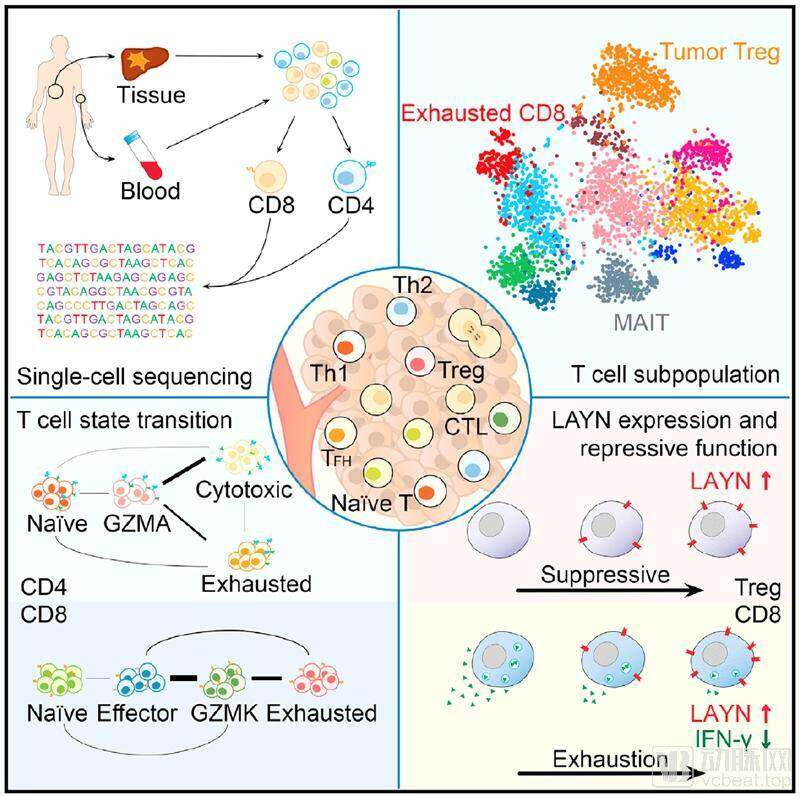
Zhang Zemin Laboratory’s Single-Cell Research Findings (2017 Cell)
Discussing the future development of single-cell sequencing, Dr. Zhang Zemin remarked with a smile, “Although single-cell sequencing is not yet widespread at this stage, as sequencing costs decrease, people will gradually recognize its immense potential in disease diagnosis and treatment as a novel approach to understanding diseases. Over the next five years, single-cell sequencing will experience rapid growth, aiding in the discovery of new therapeutic targets and the formulation of innovative treatment strategies.”