

Pfizer Announces Phase 3 Failure of Pan-Selectin Antagonist Rivipansel in Sickle Cell Disease
Aug 03, 2019 14:03
CST Updated
14:03

Pfizer
Pharmaceutical R&D Developer
August 03, 2019 News /BioValleyBIOON/ -- U.S. pharmaceutical giantPfizerPfizer recently announced the top-line results from the pivotal Phase III clinical trial RESET (B5201002, NCT02187003), which evaluated rivipansel (GMI-1070) for the treatment of vaso-occlusive crises (VOC) associated with sickle cell disease (SCD).
This is a multicenter, randomized, double-blind, placebo-controlled, parallel-group Phase III study conducted in patients with sickle cell disease (SCD) aged 6 years and older who were hospitalized for vaso-occlusive crises (VOC) and required intravenous (IV) opioid therapy. The study evaluated the efficacy and safety of rivipansel. The primary endpoint was time to readiness for discharge, defined as the interval between the start time and date of the first dose of the study drug and the time and date when healthcare providers assessed the patient as ready for discharge. Key secondary endpoints included time to discharge, cumulative IV opioid consumption, and time to discontinuation of IV opioids.
A total of 345 patients were enrolled in the study and randomized in a 1:1 ratio to receive rivipansel or placebo., administered via intravenous infusion every 12 hours for a maximum of 15 doses. All patients underwent a 35-day safety follow-up after the last treatment.Eligible patients who completed the RESET study were able to enter the open-label extension study (B5201003), where they received rivipansel for subsequent VOC episodes over an 18-month period.
The results showed that the study did not meet the primary and key secondary efficacy endpoints. A detailed analysis of the study, including additional data on efficacy and safety endpoints, is currently unavailable and will be presented at future scientificMeetingintroduced above.
Brenda Cooperstone, Senior Vice President of Global Product Development and Rare Diseases and Chief Development Officer at Pfizer, stated, “We are disappointed with the results of the RESET study, as we have been working closely with the sickle cell disease (SCD) community to develop rivipansel as a potential treatment for acute vaso-occlusive crises (VOC). We plan to share the study data at upcoming scientific meetings, as we aim to ensure that the lessons learned from this trial inform future SCD programs designed to improve care for patients experiencing VOC. We sincerely thank everyone involved in this study, including the investigators, and especially the patients and their families.”
Pfizer’s Chief Patient Officer and Executive Vice President, Freda Lewis Hall, stated, “We recognize that this is a significant setback for the sickle cell disease (SCD) community, which has been eagerly awaiting new treatment options, and we share in their disappointment. Many of us have witnessed firsthand the devastating impact of SCD on patients and their families, yet we are also profoundly moved by their incredible strength and courage. We remain committed to supporting this brave community.”

SCD is the most common in the United StatesHereditySickle cell disease (SCD) affects approximately 100,000 people in China. Globally, about 100 million people carry the sickle cell trait, and an estimated 5 million people are affected by SCD. Although most patients with SCD are of African descent, the disease can affect individuals of all ethnicities, particularly those from malaria-endemic regions such as Africa, the Middle East, India, and the southern Mediterranean.
Sickle Cell Disease (SCD) is a debilitating blood disorder, with acute pain crises or vaso-occlusive crises (VOC) being the most common clinical manifestations. VOC occurs when diseased red blood cells stimulate the vascular endothelium and trigger an inflammatory response, leading to vascular occlusion, tissue ischemia, and pain.Currently, the treatment options for vaso-occlusive crises (VOC) in patients with sickle cell disease (SCD) are limited to symptomatic management using analgesics (including opioids and nonsteroidal anti-inflammatory drugs) and hydration, highlighting a significant need for new therapeutic approaches.
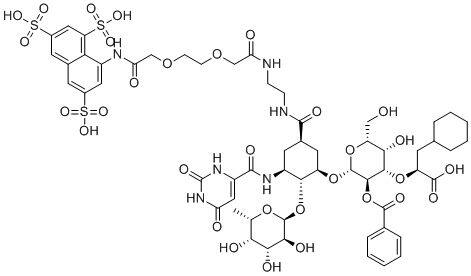
rivipansel(GMI-1070) Molecular Structural Formula (Image Source: probechem.cn)
Rivipansel is a glycomimetic that functions as a pan-selectin antagonist, binding to all three members of the selectin family (E-, P-, and L-selectin). Rivipansel prevents selectin proteins on injured endothelial cells from binding to receptors on leukocytes, thereby inhibiting the adhesion of large numbers of leukocytes to inflamed microvasculature. By reducing cell adhesion, activation, and inflammation, rivipansel has the potential to become the first therapy to interrupt the underlying cause of vaso-occlusive crises (VOC), enabling earlier hospital discharge for patients.
In a Phase II study enrolling 76 patients with SCDClinical Trial, rivipansel was administered intravenously every 12 hours for a total of 15 doses. The results showed that, compared with the placebo group, patients in the rivipansel treatment group experienced faster resolution of vaso-occlusive crises (VOC), shorter hospital stays, and lower utilization of opioid analgesics for pain management, with comparable incidence and severity of adverse events.
Rivipansel, developed by GlycoMimetics, has been granted orphan drug designation and fast track designation by the FDA. In 2011, Pfizer entered into a global licensing and development agreement with the company. Since the completion of Phase II clinical trials, Pfizer has been responsible for the clinical development of rivipansel, including the RESET trial.Clinical Trial。(Bioon.com)