

Jian Ma, CEO of XtalPi, Highlights AI as a Key Value Variable in Drug Discovery Amid Company's Hong Kong IPO Filing
XtalPi
Computation-Driven Innovative Drug R&D Provider
From July 25 to 27, 2019, under the guidance of the China Health Information and Healthcare Big Data Association, with strategic support from the Huairou District Bureau of Economy and Information Technology, the Huairou District Bureau of Commerce, and the Huairou District Health Commission, and jointly organized by EqualOcean and EqualOcean Health, the “Yanqi Health Talk"The 4th China Grand Health Industry Upgrade Summit (GIIS2019) officially kicked off on July 25, 2019. The three-day summit brought together thousands of industry professionals from across China at the Yanqi Lake International Convention and Exhibition Center in Beijing to discuss the 'next decade' of China's grand health industry."
Themed “Healthcare Transformation: From ‘Scale’ to ‘Value’,” this summit adopted a format comprising a Leaders’ Summit, four industry forums, and project roadshows. It focused on four key themes—pharmaceutical innovation, healthcare big data, non-public healthcare, and technology-driven healthcare—bringing together more than 50 distinguished guests and thousands of attendees to discuss opportunities for transformation and witness the dawn of a new era in the healthcare industry’s evolution from “scale” to “value.”
At the meeting,XtalPiCEO Ma Jian delivered a speech titled “AINew Drug DevelopmentThe Value Variables,” with the following key points:
1. The difficulty of implementing innovative drugs varies across different application scenarios, and AI is the means to bridge these gaps.
2. New drug development must still be primarily driven by market demand.
3. The biopharmaceutical industry has a strong demand for technological transformation.
Below is the transcript of the speech (abridged):
Hello everyone, today I will mainly discuss some issues in the field of AI-driven new drug development.
In 2014, XtalPi was officially established, primarily focusing on early-stage clinical drug design, including research on solid forms of drugs.
The biopharmaceutical industry is characterized by high risk, high investment, and high returns. In practice, we have found that the first two characteristics hold true, but returns, based on the actual landscape of drug development, are actually showing a year-on-year decline. This is because discovering new targets and developing new compounds have become increasingly challenging, with even large-molecule drugs facing substantial hurdles.
Recently, I was chatting with a friend involved in new drug development and discovered that the failure rate for some new drugs during Phase II clinical efficacy trials has been extremely high over the past two years. The success rate for indications such as oncological diseases and central nervous system disorders at this stage is less than 25%. Many drugs that prove effective in animals fail to produce the same effects in humans, leading to the saying that we have developed many "mouse drugs."
The biopharmaceutical industry has a strong demand for technological transformation. The Chinese market, which was initially dominated by generic drugs, has now grown to include more than 4,400 pharmaceutical companies, with total sales exceeding RMB 78 billion last year. In contrast, the United States has only around 300 pharmaceutical companies, yet their sales reached USD 480 billion. This comparison clearly demonstrates that the value of innovative drugs far exceeds that of generic drugs.
Innovation comes in various forms, asArtificial IntelligenceWith applications and implementation across various fields, a new era of artificial intelligence is on the horizon. In the biopharmaceutical industry, more than 120 companies have already converged, covering diverse areas ranging from early-stage target discovery and target validation to drug compound design, preclinical solid-form studies, and clinical research. Some specialize in big data, others in deep learning algorithms; some are technology-driven, while others focus on literature mining. Meanwhile, hundreds of investment institutions are continuously injecting capital into the biopharmaceutical sector, aiming to propel it toward the next critical tipping point of transformation.
The challenges associated with the commercialization of innovative drugs vary across different application scenarios, with AI playing a pivotal role in this process. Taking XtalPi as an example, after I returned to China, I conducted roadshows in various locations and industrial parks, where my presentations were well-received but failed to attract substantial interest or investment. People struggled to understand the relationship between algorithm-driven approaches and drug design. It was not until the emergence of AlphaGo, when humans were defeated by machines, that applications of artificial intelligence gradually gained recognition and attention.
XtalPi’s primary business line is the study of drug solid forms in preclinical development, with another focus on the design of drug molecules at an earlier stage. From the perspective of the drug R&D pipeline, these two areas belong to different stages, but they share common underlying technologies. In the future, XtalPi will continue to move towards earlier stages of drug research, with increased investment in computational capabilities, including computational chemistry and artificial intelligence algorithms.
In drug design, solid-state drug research, and the optimization of downstream manufacturing processes—encompassing all computation-assisted tasks—XtalPi has collaborated with leading pharmaceutical companies at various stages to develop market-ready drugs. Starting this year, we have established our own laboratories, transitioning from purely cloud-based computing to actual drug synthesis (including crystallization). XtalPi has also experienced rapid customer growth in China.
Our research in the fields of crystal forms and new drug development continues to face a very narrow scope, which is closely related to the stringent quality requirements across various aspects of pharmaceuticals. The reason is straightforward: the crystal structure serves as the carrier for the drug. The active pharmaceutical ingredient (API), which is the core functional molecule, relies on its solid-state form—specifically, the type of crystal in which it exists—for administration, absorption, and utilization by the human body. This involves various requirements, including quality standards and patent considerations. When developing generic drugs, manufacturers not only face insurmountable patent barriers but also, even when attempting to replicate the originator drug, may fall significantly short of the originator in terms of quality control and impurity management.
XtalPi integrates computational chemistry and AI algorithms with large-scale cloud orchestration to create a high-precision computing platform. However, its practical implementation remains primarily driven by customer needs, requiring significant translation efforts in areas such as computational research and AI algorithm recommendations. This is akin to the communication challenges that often arise between algorithm developers and experimental scientists.
In the future, XtalPi will accelerate the deployment of computational research in China, integrating experiments and computation into a comprehensive service package. Rather than relying solely on individual AI algorithms, XtalPi will combine multiple AI algorithms to generate more effective feedback and address evolving demands.
XtalPi excels in developing computational tools and software. We leverage these methods to enhance the efficiency and success rate of drug development, ranging from crystal structure research to early-stage drug molecule design. While many companies are engaged in early target identification and clinical studies, the vast majority of prominent AI firms are concentrated in the drug discovery phase rather than later stages.
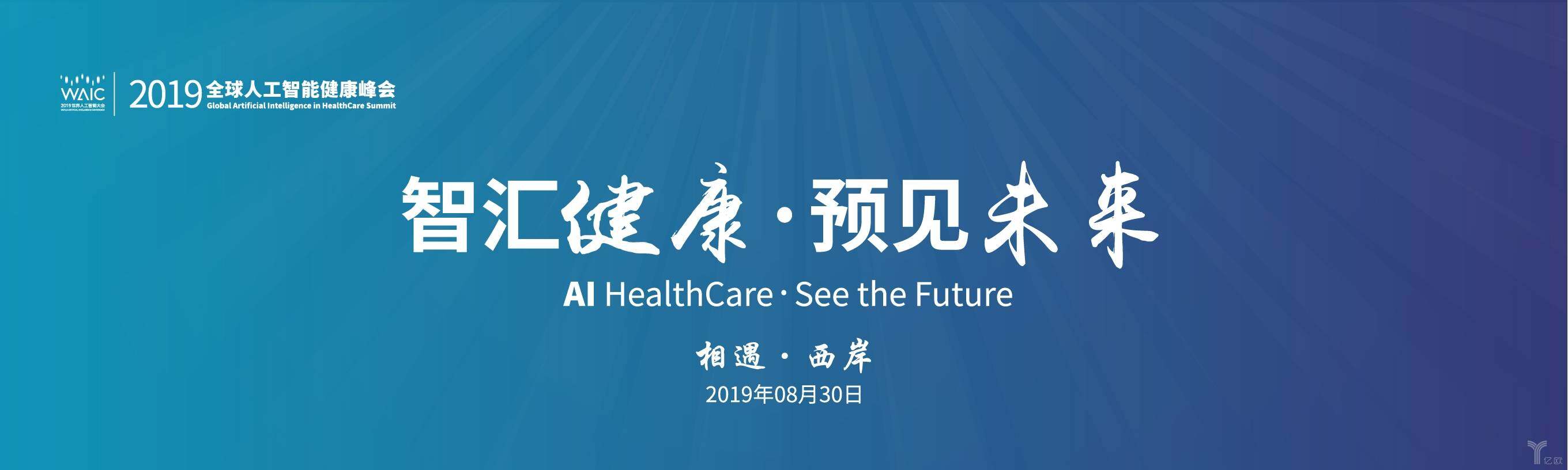
As one of the ten thematic forums at the 2019 World Artificial Intelligence Conference, the Global AI Health Summit was themed “Smart Health · Envisioning the Future.”
We aim to leverage the Summit to build a diverse, open, and innovative global platform for shared exchange, bringing together visionaries, experts, scholars, and industry leaders in the field of AI-driven health to engage in in-depth discussions on development trends, industry regulation, innovative technologies, practical applications, and investment directions.
August 30, 2019, 9:00–17:00
West Bund Art Center, Hall A, Xuhui District, Shanghai
We invite you to meet at the art-infused and culturally rich Xuhui Riverside, to explore new models and drivers of AI-empowered human health community, leading the new development of global health industry.
Click to Register:https://www.iyiou.com/post/ad/id/850
Sources and references have been cited in this article. Copyright belongs to the original author(s). If there is any infringement, please contact us.