

Global Generics Leader Struggles with Slumping Performance: How Should MNCs Navigate Mature Product Lines in China?

Teva
Drug Developer
[Editor’s Note] Clearly, to address challenges associated with their mature product portfolios, pharmaceutical giants have been continuously tapping into the potential of emerging markets, particularly China, the world’s second-largest pharmaceutical market. However, since 2018, major industry policies—such as the consistency evaluation and the national volume-based procurement program—have increasingly reshaped the competitive landscape, underscoring the need for patience in exploring opportunities within mature product lines.
This article was first published in E-Drug Manager, authored by Yi Jie; edited by EO Healthcare for industry professionals’ reference.
Generic DrugIndustry Giants All Face Growth Bottlenecks
Teva, the global generic drug giant, recently announced its semi-annual financial results. The announcement showed that Teva's operating revenue for the first half of fiscal year 2019 was $8.632 billion, a year-on-year decrease of 11.61%, and net profit was -$794 million, a sharp decline of 197.54%.
To reverse the downward trend in its performance, Teva announced a major restructuring plan at the end of 2017, which included cutting 14,000 jobs globally and reducing its total cost base by $3 billion by the end of 2019. In a recent conference call, CEO Kare Schultz revealed that since the implementation of the plan in 2018, the company has reduced operating expenses by $2.7 billion.
Given the current situation, it appears that Teva will have little difficulty achieving its $3 billion cost-reduction target by year-end. However, based on its performance to date in 2019, the company has yet to restore revenue growth. Köre Schultz stated that Teva will continue to enhance profit margins by driving operational efficiencies. As projected, Teva is expected to raise its profit margin from the current 23% to 27% by optimizing its product portfolio and implementing other efficiency-enhancing measures.
Since Köre
Since assuming the role of Teva’s CEO in 2017, Schultz has cut company costs through measures such as layoffs and office closures to stimulate performance vitality. In July 2019, Teva also sold its over-the-counter (OTC) product portfolio in the U.S. market and a 93,000-square-foot factory in New York to Perrigo (PL).
Developments Company, the factory employs approximately 80 staff members.
He also stated that the restructuring plan would be a long-term and gradual process, and after a certain period of recovery, Teva is expected to achieve annual growth of 50% to 100%. A plan for further optimizing performance will be announced by the end of this year.
Another generic drug giant, Mylan, has recently drawn significant attention for its “marriage” with Pfizer. Mylan will merge with Upjohn, Pfizer’s off-patent branded and established medicines division, to form a new global pharmaceutical company. Mylan’s financial performance has also been lackluster; its 2019 interim report showed revenue of $5.347 billion, a year-on-year decline of 2.65%, while net profit plummeted by 255.3% to -$194 million.
Pfizer first bundled its off-patent brand and established medicines business into Upjohn, then merged it with Mylan. This series of moves by Pfizer indicates a gradual shift in its business focus toward innovative drugs, subtly revealing new trends in the global pharmaceutical industry. In addition, Novartis’s Sandoz, which also holds significant influence in the global generic drug market, is facing sluggish performance growth. Sandoz’s sales declined by 2% in 2017 and by 3% in 2018, while its net sales in the first quarter of 2019 fell by 2% year-on-year to $2.3 billion. Novartis has been pursuing transformation efforts for Sandoz, and its CEO, Richard Francis, announced his departure in the first half of this year.
Mature ProductsChina Market Amid Anxiety
“We are seriously considering whether to trade price cuts for sales volume or to withdraw directly.” This was stated by a senior executive at a multinational pharmaceutical company during an interview with the renowned consulting firm McKinsey.
Clearly, to address challenges associated with their mature product portfolios, pharmaceutical giants have been continuously tapping into the potential of emerging markets, particularly China, the world’s second-largest pharmaceutical market. However, innovation-driven transformation has gradually become the dominant theme in China’s pharmaceutical industry, bringing about new changes such as shifts in commercial and operational models, reevaluation of investment strategies, and the development and enhancement of new capabilities within pharmaceutical companies. In particular, since 2018, major industry policies—including the Generic Drug Quality and Efficacy Consistency Evaluation and the National Centralized Volume-Based Procurement program—have increasingly reshaped the industry landscape, compelling companies to explore new pathways for their mature product lines in the Chinese market.
In its report “Cracking the Cocoon: The Transformation Path for Chinese Pharmaceutical Companies,” McKinsey predicted that while the consistency evaluation of generic drugs and healthcare insurance reforms would exert pricing pressure on mature products, they could also provide more ample healthcare insurance funding support for innovative products, thereby driving the continuous maturation of the Chinese market.
McKinsey data shows that mature products account for more than 85% of the total sales of multinational pharmaceutical companies in China, with an even higher proportion among domestic Chinese pharmaceutical companies. McKinsey points out that many executives are concerned that the implementation of generic drug consistency evaluations and new bidding rules will exert excessive price pressure on mature products.
“We hold a rather pessimistic outlook on mature products. The severe challenges and heavy pressures we currently face are forcing us to rethink our investment and return expectations,” said an executive at a multinational pharmaceutical company, commenting on the dramatically changing Chinese pharmaceutical market.
It is evident that mature products are facing increasing pressure in the Chinese market, and even in the global pharmaceutical market. In light of this, pharmaceutical companies have begun to reevaluate their investments and returns. In addition to improving efficiency and maintaining profits by transforming business models, these enterprises are also seeking opportunities to continuously boost sales.
Some multinational pharmaceutical companies are seeking collaborations with local Chinese enterprises to further expand market coverage and enhance market access, particularly in regions with significant market potential, while improving efficiency and maintaining product maturity. These companies are also pursuing diversification of their growth models by developing more targeted commercial strategies for different product portfolios. For example, Ascletis Pharma was granted exclusive rights by Roche to sell and promote Pegasys in mainland China; 3SBio obtained exclusive distribution and promotion rights for Eli Lilly’s insulin product Humulin in China; Novartis exclusively granted Hansoh Pharmaceutical the promotion rights in China for its three products used to treat adult chronic obstructive pulmonary disease (COPD); and Luye Pharma granted AstraZeneca the promotion rights for Luye’s Xuezhikang capsules in mainland China.
McKinsey predicts that in the near future, more multinational pharmaceutical companies will outsource originator drugs with expiring patent protection to partners. In addition, these companies will reset their profit and productivity targets, adopt innovative tools to further enhance the efficiency of their sales teams, and accelerate the shift of their investment focus across different product portfolios.
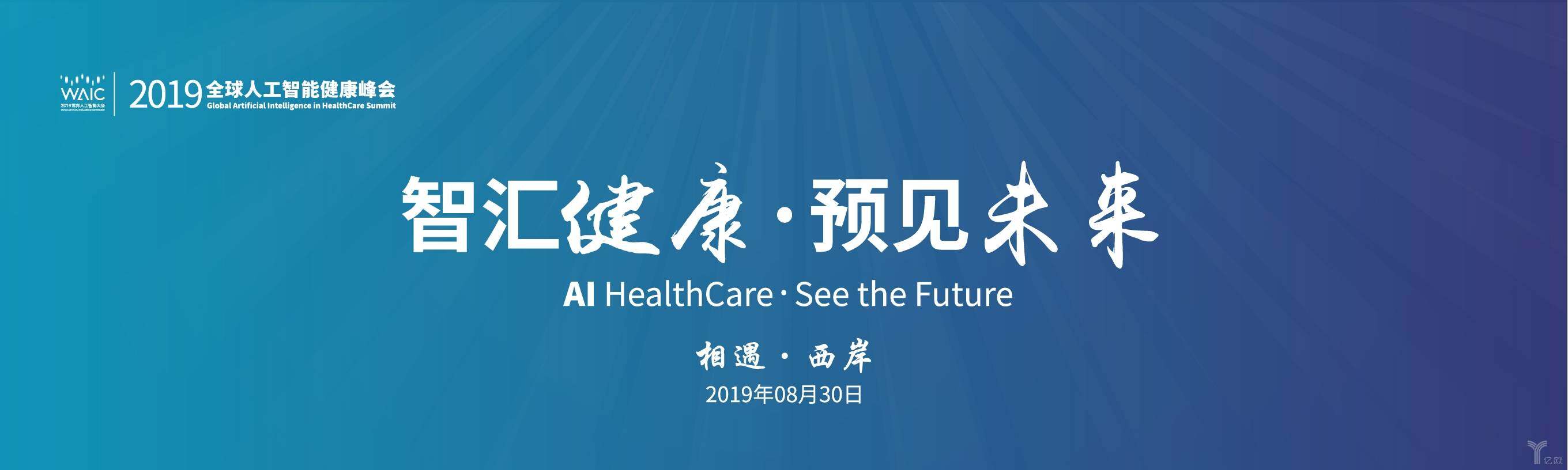
As one of the ten thematic forums of the 2019 World Artificial Intelligence Conference, the Global AI Health Summit was themed “Smart Health · Foreseeing the Future.”
We aim to leverage the Summit to establish a diverse, open, and innovative global platform for shared exchange, bringing together visionaries, experts, scholars, and industry leaders in the field of AI-driven health to engage in in-depth discussions on development trends, regulatory frameworks, innovative technologies, practical applications, and investment directions.
August 30, 2019, 9:00–17:00
West Bund Art Center, Hall A, Xuhui District, Shanghai
We invite you to meet at the art- and culture-infused Xuhui Riverside, to explore new models and drivers of AI-empowered human health communities, and to lead the new development of the global health industry.
Click to Register:https://www.iyiou.com/post/ad/id/850
This article has been cited with sources and references. The copyright belongs to the original author. If there is any infringement, please contact us.