

Roche Veteran's Third Charge at HKEX: Pediatric Track Clinical Gap Breakthrough Reaches Pre-Commercialization Eve
ArkBio
Innovative Drug Developer
From Roche's R&D frontline to independent entrepreneurship, Roche veteran Wu Zheng has focused on unmet clinical needs in respiratory and pediatric fields for thirteen years. ArkBio, with its globally leading RSV pipeline, is knocking on the door of the Hong Kong stock market for the third time. On one side are three high-growth tracks, and on the other side is a high-quality pipeline yet to reach commercialization. This innovative pharmaceutical company, deeply rooted in niche fields, is now standing at the critical crossroads of clinical value and commercial realization.
On March 17, 2026, Shanghai Aike 100 Biomedical Technology Co., Ltd. (ArkBio) updated its prospectus for the Hong Kong stock market, making its third attempt to list on the Hong Kong Stock Exchange's Chapter 18A. Founded by Zheng Wu, former head of Roche’s virology division, this innovative pharmaceutical company has focused for thirteen years on respiratory and pediatric diseases. From taking over a suspended Roche R&D project and addressing the global clinical gap in infant RSV treatments, to gaining approval for a new ADHD drug and advancing its IPF pipeline, ArkBio now stands at a critical juncture of commercialization, becoming a typical example of China’s innovative pharmaceutical industry breaking through in niche markets.
The story began in 2013, when Wu Zheng had already served as the head of Roche China's Biology and Virology departments, with over three decades of experience in antiviral drug development. He was also a co-inventor of Ziresovir (AK0529). Due to a strategic adjustment within the group, Roche decided to halt the development of this RSV-targeting drug for infants and young children. In the evaluation system of large pharmaceutical enterprises, pediatric drug development is characterized by long cycles, high investment, and limited market size, making it not a priority area for development.
But Wu Zheng clearly saw the unmet clinical needs: globally, more than 33 million children under the age of 5 are infected with RSV each year, making it the leading cause of severe lower respiratory tract infections in infants and young children. In China, more than 2 million children are hospitalized annually due to RSV. This field has long lacked specific oral therapeutic drugs, and the clinical approach can only rely on symptomatic supportive care. In 2014, Wu Zheng left his job to establish ArkBio and obtained the global exclusive development and commercialization rights for Ziresovir from Roche, determined to transform this shelved project into the world's first specific treatment drug for infant RSV.
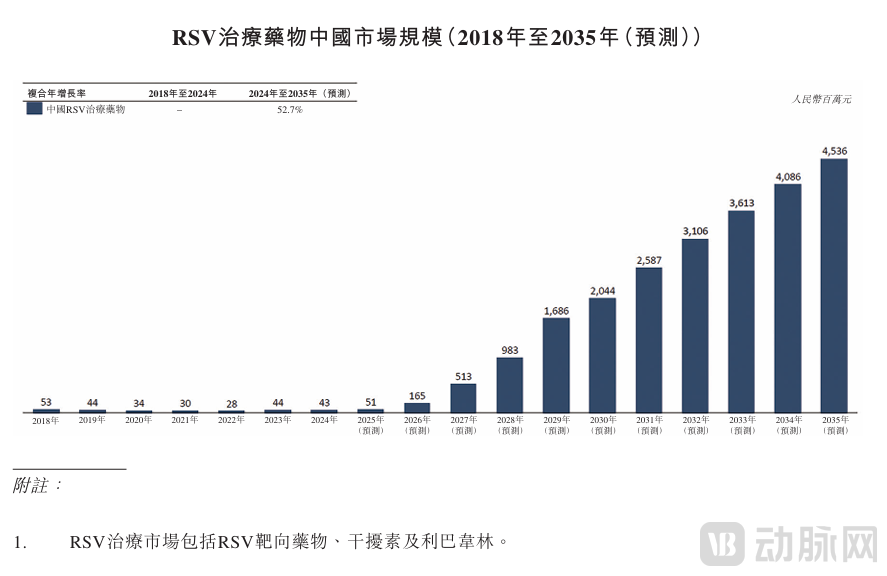
The prevention and treatment of RSV (Respiratory Syncytial Virus) remain challenging issues in the global viral infection field. In recent years, it has once again become a key focus area for multinational corporations (MNCs), with almost all pipelines concentrating on vaccines. Two years ago, GSK and Pfizer’s RSV vaccines were successively launched, along with Sanofi's preventive monoclonal antibody, Nirsevimab. The market for RSV therapeutic drugs in China is expected to surge from RMB 43 million in 2024 to RMB 2 billion by 2030, with a compound annual growth rate (CAGR) of 52.7% through 2035. Ziresovir, developed by ArkBio, is currently the world's first targeted antiviral drug specifically designed for RSV treatment.
Subsequently, ArkBio introduced high-potential assets from Genentech and established five major technology platforms, including pediatric drug development and antiviral screening. The company drives growth through both licensing and independent research and development. Its pipeline focuses on three major areas: RSV, Idiopathic Pulmonary Fibrosis (IPF), and Attention Deficit Hyperactivity Disorder (ADHD). Over the thirteen years of its development, institutions such as Qiming Venture Partners, Hillhouse, and TPG have continuously invested, recognizing the company's commitment to addressing unmet clinical needs and its long-term dedication to challenging yet crucial fields. In June 2022, ArkBio completed its latest round of financing, raising 190 million yuan, with a post-money valuation of 4.69 billion yuan.
ArkBio has currently built a pipeline matrix of 6 candidate drugs, precisely targeting the core needs of respiratory and pediatric fields, with its core products addressing global clinical gaps.
Ziresovir, as the core asset of ArkBio, is a globally exclusive licensed drug introduced from Roche. It is the world’s only RSV-specific oral medication to have completed Phase III clinical trials in infants and toddlers and submitted a New Drug Application (NDA). It is also the first non-oncology drug in China to receive Breakthrough Therapy Designation from the National Medical Products Administration. By specifically targeting the pre-fusion conformation of the RSV F protein to inhibit viral infection, it has been validated by cryo-electron microscopy structural analysis. Clinical data show that the product significantly reduces viral load. In a Phase III trial involving over 400 hospitalized infants with RSV infections, the reduction in viral load was 75% greater than that of the placebo, decreasing the hospital stay for critically ill children by 2.5 days and demonstrating potential for long-term benefits. In August 2025, the company submitted an NDA for the indication covering infants aged 1 to 24 months, which was accepted, with approval expected by 2026. From a market perspective, the overall drug market for RSV continues to expand, with urgent demand for therapeutic drugs, and China's infant RSV treatment market shows clear growth potential. In the global competitive landscape, competing products from Gilead, Enanta, Merck, and others remain in the late stages of clinical trials, giving ArkBio a significant first-mover advantage.
AK3280, introduced from Roche and Genentech, is in the post-Phase II concept validation stage. Compared to marketed IPF drugs, it can improve safety issues such as gastrointestinal intolerance and phototoxicity, offering a more advantageous therapeutic window. In February 2026, it received U.S. FDA approval to proceed with Phase II clinical trials, with plans to complete Phase III trials in China by 2028. As a rare disease, IPF has unmet clinical needs, while the global and Chinese market sizes are steadily growing. Marketed drugs have significant side effects. In clinical trials, AK3280 has demonstrated the ability to improve lung function. Compared to pirfenidone, it shows better gastrointestinal tolerance and no signs of phototoxicity or hepatotoxicity, giving it a competitive edge through its safety advantages.
The third blockbuster product, AK0901 (Aizhida, a compound capsule of serdexmethylphenidate and dexmethylphenidate), was approved for marketing by the National Medical Products Administration in December 2025. It is a Best-in-Class innovative compound formulation for ADHD patients. The drug is suitable for ADHD patients aged 6 years and above and represents a new generation of methylphenidate drugs developed over the past 20 years. It features rapid onset and long-acting control with a lower risk of abuse. ArkBio has reached a commercialization partnership with Qilu Pharmaceutical. With a large population of ADHD patients in China, the market penetration rate remains low, and there is insufficient supply of long-acting original drugs. The launch of AK0901 is expected to fill the clinical gap, unlock an incremental market, and serves as the strongest support for ArkBio's recent submission of its Hong Kong IPO.
Against the backdrop of intensifying competition in the innovative drug industry, ArkBio has secured its position in the global first tier with a strategy focused on narrow tracks and high barriers. In the RSV treatment field, the company is the only enterprise to have advanced an oral medication for infants and toddlers to the NDA stage, positioning itself in a billion-dollar blue ocean market. In the IPF space, second-generation optimized drugs are clinically scarce, and AK3280 demonstrates significant safety advantages. In the ADHD sector, there is insufficient supply of domestically produced, original long-acting medications, while AK0901 offers clear differentiation. More importantly, pediatric drug clinical research is characterized by high thresholds, long cycles, and high risks. The company has accumulated mature pediatric formulation technologies and clinical research experience, establishing a difficult-to-replicate, exclusive pediatric R&D barrier.
As a late-stage clinical biotech company, ArkBio has not yet generated product sales revenue and remains in a phase of high R&D investment. Its financial performance aligns with the characteristics of late-stage innovative pharmaceutical companies. According to the prospectus, the company's other income for 2024 and 2025 will be RMB 26.305 million and RMB 7.574 million, respectively. In terms of R&D investment, R&D expenditures for 2024 and 2025 are projected at RMB 165 million and RMB 153 million, respectively. The allocation of investments is optimized as clinical stages progress, with core resources concentrated on advancing Ziresovir’s NDA submission and the global clinical development of AK3280, among other late-stage projects. Net losses for the respective years are expected to reach RMB 197 million and RMB 228 million. By the end of 2025, cash and cash equivalents will amount to only approximately RMB 39 million, indicating tight funding reserves and an urgent need to replenish operational and R&D funds through an IPO.
ArkBio's development opportunities are clear, with all three tracks featuring essential demand attributes, vast untapped market potential (blue ocean space), and policy support. The core product is nearing commercialization, and if successfully launched, it is expected to quickly improve performance. However, the company also faces multiple challenges: Ziresovir has undergone adjustments related to its marketing application, regulatory approval timelines remain uncertain, the commercialization team is still being built, and the market effectiveness of the cooperative distribution model has yet to be verified. These factors will all impact the company’s transition from a clinical-stage biotech firm to a commercial pharmaceutical enterprise.
From Roche Executive to Pioneer in Entrepreneurship: Wu Zheng’s Thirteen-Year Journey to Uncover the Vast Potential of the Niche Pediatric Drug Market. Three Attempts at the Hong Kong Stock Exchange – Not Just for Development Funding, but to Secure Global Influence for China’s Respiratory and Pediatric Innovative Drugs. The Core Evaluation Criterion in the Capital Markets Remains the Dual Ability to Deliver Clinical Value and Commercialization. With its global clinical pipeline advancing steadily, this biotech company, deeply rooted in a specialized field, is poised to achieve a critical transformation.