

Niantong Intelligence Addresses Rehabilitation Therapist Shortage with AI-Powered Active Rehabilitation Device; Files IPO Prospectus
NIANTONG INTELLIGENCE
Developer, Manufacturer, and Seller of Limb Rehabilitation Devices
With the advancement of technology, countries around the world have launched “Brain Project” research initiatives. Brain-Computer Interface (BCI) technology is a key component of these “Brain Projects.” BCI enables direct communication between the human brain and the external environment by decoding neural activity signals to extract cognitive information.
As brain-computer interfaces (BCIs) can translate motor intent from the brain into control commands for moving paralyzed limbs, they have demonstrated significant application potential in the field of stroke rehabilitation, attracting numerous domestic and international companies to enter the market. Shanghai Niantong Intelligent Technology Co., Ltd. (hereinafter referred to as "Niantong Intelligence") is one such company.
NIANTONG INTELLIGENCE was incubated at the Mechatronics Laboratory of Shanghai Jiao Tong University. The company is dedicated to the research and development, manufacturing, and sales of limb rehabilitation devices, aiming to provide rehabilitation products and technical solutions for users with limb functional impairments, such as stroke survivors and amputees. In June 2019, the eCon-Hand brain-controlled exoskeleton rehabilitation system developed by the company entered the clinical trial phase. Meanwhile, the application for its registration certificate with the China Food and Drug Administration (CFDA) is underway, with the prospect of reaching hospitals at all levels and countless households.
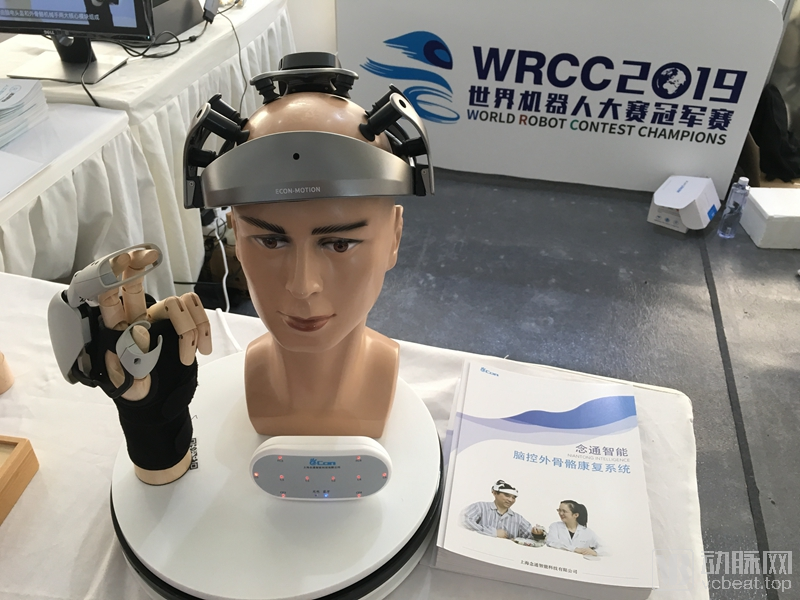
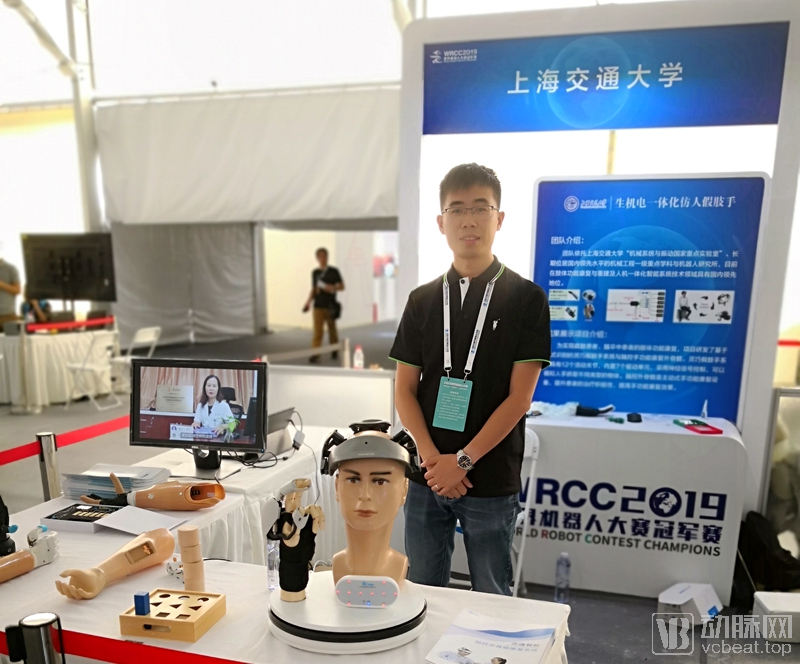
The 2019 World Robot Conference was held in Beijing from August 20 to 25.
NIANTONG INTELLIGENCE, together with its subsidiariesBrain-Controlled Exoskeleton Rehabilitation SystemExhibition Participation.
(Image provided by the company)
In 2017, data from the National Health and Family Planning Commission showed that the total number of stroke patients in China had reached 13 million, making it the country with the largest stroke patient population globally. Shu Xiaokang, CTO (Chief Technology Officer) of NIANTONG INTELLIGENCE, stated, “From a market demand perspective, the rehabilitation market for stroke patients holds enormous potential.” The China Insurance Regulatory Commission explicitly listed the treatment costs for post-stroke sequelae among the 25 critical illnesses as ranging from RMB 100,000 to 400,000. Therefore, conservatively estimated, the market size for stroke rehabilitation will reach hundreds of billions of RMB.
Traditional rehabilitation methods rely on therapists to deliver passive treatments. Such passive therapies are time-consuming and labor-intensive, yet offer limited efficacy. Furthermore, China’s rehabilitation medical resources are extremely scarce, with only one rehabilitation therapist available per 200,000 people on average. In contrast, developed countries such as the United States have an average of five rehabilitation therapists per 100,000 people. Shu Xiaokang noted, “Traditional passive rehabilitation involves prolonged treatment cycles and slow progress, leading many patients to abandon therapy midway due to a lack of visible hope for recovery.”
A study published in Nature Communications reported that researchers from the Center for Neuroprosthetics and the Institute of Bioengineering at École Polytechnique Fédérale de Lausanne (EPFL) in Switzerland found that active rehabilitation technology based on brain-computer interfaces can significantly, efficiently, and sustainably restore motor function in patients with chronic stroke, compared to conventional therapeutic approaches, with interventional effects lasting more than 12 months.
The Emergence of Brain-Computer Interface Technology Brings a Glimmer of Hope to China’s Scarce Rehabilitation Medical Resources and Stroke Patients. Shu Xiaokang stated, “Over the past decade, brain-computer interface (BCI) research teams in the United States, Germany, Switzerland, and Singapore have successively reported on the efficacy of BCI applications in stroke rehabilitation. Extensive data have demonstrated that BCI can accelerate the recovery of motor function in stroke patients.”
Against this backdrop, NIANTONG INTELLIGENCE has developed the eCon-Hand brain-controlled exoskeleton device based on brain-computer interface technology.
The brain-computer interface (BCI) system is divided into several major functional modules: the signal acquisition module, the signal analysis and processing module, and the motion execution module. As an active BCI-based rehabilitation device, eCon-Hand consists of two core components: an EEG cap and an exoskeleton rehabilitation hand.
The EEG cap is specifically designed to address the motor function of stroke patients. The acquired EEG signals are primarily derived from the patient’s sensorimotor cortex and are used to drive upper limb movements. Furthermore, this device is equipped with a wireless data transmission module and an EEG data storage module. It not only enables long-term recording and storage of the dynamic changes in the user’s EEG activity but also facilitates real-time analysis and decoding of EEG signals, thereby providing convenience for the development of brain-computer interface (BCI) applications.
Exoskeleton Rehabilitation HandThe Exoskeleton Rehabilitation Hand is primarily designed to assist stroke patients in undergoing hand function rehabilitation training. Adopting a wearable design philosophy, the device features an ergonomic shape that conforms perfectly to palms of various sizes. Furthermore, considering the weakened upper limb muscle strength of stroke patients, the exoskeleton rehabilitation hand developed by NIANTONG INTELLIGENCE weighs only 310g, significantly reducing the physical burden on patients during rehabilitation sessions.
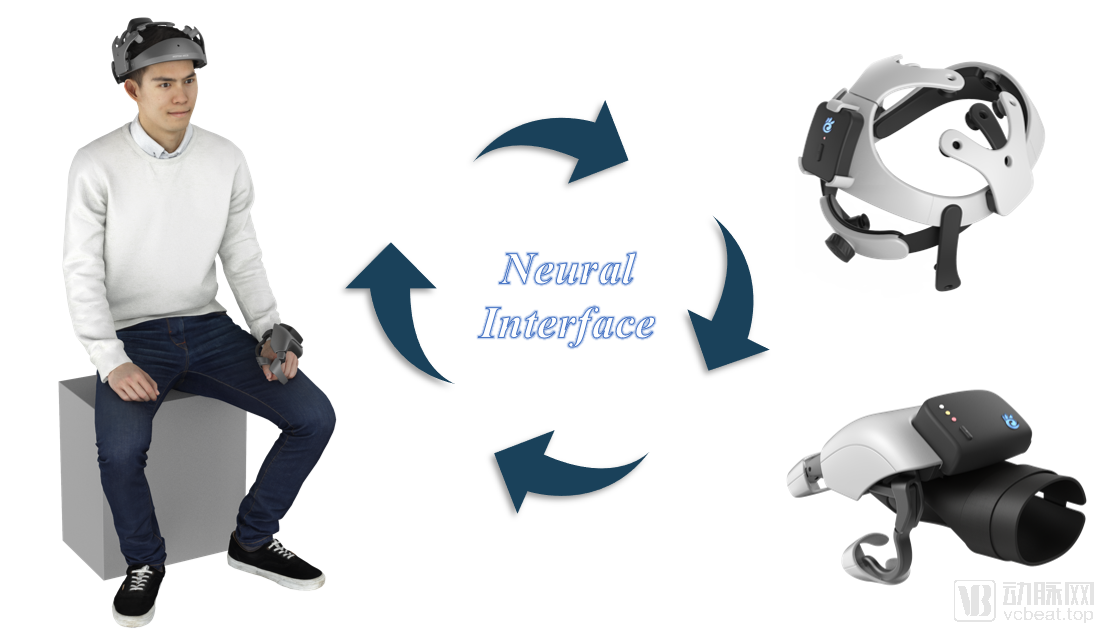
eCon-Hand Brain-Controlled Exoskeleton Rehabilitation System (Image from the company's official website)
An EEG cap is used to collect the patient’s brainwaves and decode their motor intentions, while an exoskeleton rehabilitation hand assists the patient in performing hand grasping exercises. The entire training process is fully controlled by the patient’s voluntary intent. Shu Xiaokang stated, “During our preliminary research, we found that patient engagement was very low with passive therapy administered by rehabilitation therapists. Patients often chatted, checked their phones, or slept during sessions, which typically failed to achieve ideal therapeutic outcomes.” The eCon-Hand adopts an active rehabilitation therapy model, which helps promote neuroplasticity in the patient’s brain and leads to better rehabilitation results.
“Under comparable conditions, eCon-Hand is approximately 50% less expensive than imported devices,” mentioned Shu Xiaokang. Initially, eCon-Hand will be deployed in the rehabilitation departments of major hospitals or specialized rehabilitation hospitals, where patients undergo rehabilitation training with the assistance of therapists. As the related technologies and products mature, patients will be able to take the device home for self-directed training through leasing and other models.
The primary target population for eCon-Hand is patients with hand dysfunction caused by stroke. Shu Xiaokang stated, “Active rehabilitation technology based on brain-computer interfaces represents a completely new model of rehabilitative therapy. Currently, NIANTONG INTELLIGENCE is developing a series of active rehabilitation devices aimed at restoring motor function in the major joints of the upper limbs and the lower limbs.”
In December 2016, NIANTONG INTELLIGENCE was established and completed its angel financing round. Currently, the company’s products are undergoing registration for Class II medical device certification.
Shu Xiaokang stated, “The application prospects of brain-computer interfaces (BCIs) in the field of rehabilitation are extensive. Patients with limb impairments caused by central nervous system damage, such as those with cerebral palsy, spinal cord injury, or traumatic brain injury, can utilize BCI technology for neural functional remodeling to restore motor function.”
Next, NIANTONG INTELLIGENCE will focus on promoting the concept of active rehabilitation, enabling more patients to understand the advantages of the active rehabilitation treatment model, and leveraging brain-computer interface (BCI) technology to expand its product line and establish a brand for active rehabilitation devices.