

Intel's Aggressive Move into Healthcare: $20 Billion Invested Over Four Years with 9 Investments and 6 Acquisitions
Intel Capital
Venture Capital Firms
NVIDIA
Artificial Intelligence Computing Service Provider

Reveal Biosciences
Pathological Image Diagnosis Service Provider

Capsule Technologies
Medical Information Platform Provider

YITU
Provider of Full-Stack Intelligent Healthcare Product Solutions

HY Medical
Provider of Medical Imaging and Oncology Radiotherapy Platforms
Intel
Semiconductor Manufacturer

Caring.com
Caring.com

CareCloud
Healthcare Technology Developer
Not long ago, the following news caught our attention: On August 5, 2019, Intel Capital, the investment arm of Intel, led a $35 million Series B financing round for EXO Imaging, a medical imaging company. Following the announcement, Intel’s stock price showed little fluctuation that day, but its trading volume hit a three-month high. Shortly thereafter, on August 19, Mech-Mind Robotics announced that it had also received investment from Intel. This startup has already deployed intelligent solutions combining “3D vision + AI + industrial robots” in hospital pharmacies.
Prior to this, in April 2019, Intel Capital led the Series A financing rounds for two healthcare startups: computational pathology company Reveal Biosciences and Medical Information, which provides remote medical data monitoring and analysis software.
These two companies’ strategic positioning led Intel Capital to create a dedicated healthcare investment category for the first time at its annual Global Summit, where it reports investment outcomes to investors. Coincidentally, HY Medical, a leading domestic medical AI enterprise, was invited to attend the 19th Intel Capital Global Summit in its dual capacity as both a strategic investment partner of Intel and a leading Chinese medical imaging AI company.
All of this seems to indicate that Intel, the IT giant, is quietly beginning to lay out its strategy in the healthcare sector. Consequently, VCBeat (WeChat ID: vcbeat) has developed a strong interest in Intel’s historical moves in healthcare and has reviewed nearly two decades of news related to Intel’s activities in the medical field, compiling a comprehensive overview of Intel’s healthcare landscape.
To Sell Chips! Intel’s Early Foray into Healthcare
As one of the world’s largest chip manufacturers, Intel is a primary architect of the x86 architecture. The vast majority of desktop and laptop processors, as well as server chips in data centers, are based on this architecture. Therefore, loosely speaking, Intel has long been connected to the healthcare industry—although for the most part, it has passively played the role of an equipment supplier.
The first documented instance of Intel proactively engaging with the healthcare industry occurred on February 24, 1998. One of the earliest press releases available on Intel’s official website stated: “Intel and CommuniHealth Announce Plan to Help Patients and Doctors Better Manage Chronic Diseases.” CommuniHealth (now unverifiable) was a company at the time specializing in providing personalized online health information.
By partnering with Intel to provide internet services, diabetic patients could use PCs to track their blood glucose levels, diet, and physical activity, and share this information with CommonHealth’s professional healthcare providers, who would then offer medical advice online. Considering that the Pentium II processor had only just been released in January 1998, and internet access was still in the era of dial-up connections over telephone lines—with maximum speeds of a mere 52.6 Kb/s (compared to today’s fiber-optic speeds of up to 100 Mb/s, where 1 Mb = 1,024 Kb)—this was a remarkably forward-thinking initiative.
Andrew S. Grove, then Chairman of Intel and one of its co-founders, keenly recognized the boost that the internet could provide to healthcare informatization. That October, Intel jointly organized “Internet Health Day” with the American Medical Association and the American Academy of Pediatrics. Andrew S. Grove delivered the opening address, predicting an internet-driven transformation in the healthcare sector. Both Intel itself and its investment arm were actively seeking to integrate into the healthcare industry by leveraging the internet as a strategic entry point. However, it is evident that the well-known “dot-com bubble” at the turn of the century fundamentally altered this trajectory.
Starting in 2003, the gradual maturation of Wi-Fi technology prompted Intel to once again attempt to transform healthcare through technological innovation. At the Future of Aging Services Conference held that year, Eric Dishman, then Project Manager for Foresight Health Research at Intel, sought to explore Intel’s most promising areas in the medical field, emphasizing the added value of home sensor networks for healthcare and wellness.
After a period of exploration, Intel has established its strategic direction in the healthcare sector. On January 17, 2005 (New York time), Intel announced a sweeping restructuring of its corporate organization, establishing the Digital Health Group (later renamed the Health and Life Science Group). Led by Vice President Louis Burns, the group’s primary mission is to explore new applications of Intel processors in medical research and personal health care.
It is clear from the objectives of Intel’s digital health division that the original intent behind establishing this unit was primarily to expand the application scope of its own chips. After all, this lies at the core of Intel’s competitive advantage.
Driven by this philosophy, Intel’s Digital Health Division successively leveraged Intel chips to develop the MCA (Mobile Clinical Assistant) platform. The Motion C5 medical tablet based on this platform was a remarkably advanced product for its time—Apple did not release the now-familiar iPad until 2010.
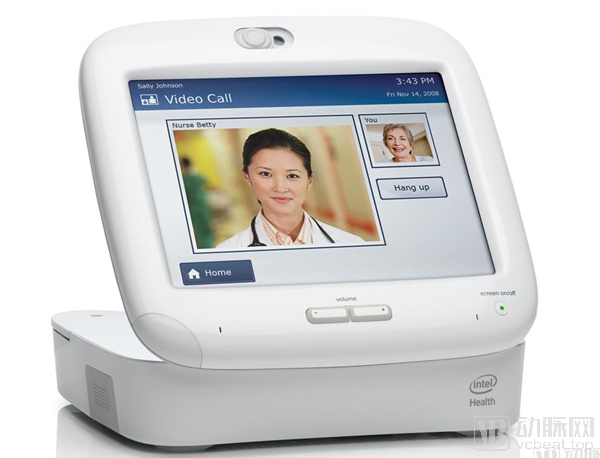
July 10, 2008, marked another milestone in Intel’s healthcare business. The Intel Health Guide tablet, integrated with a suite of healthcare management software, received FDA 510(k) clearance, becoming Intel’s first medical device to achieve FDA certification.
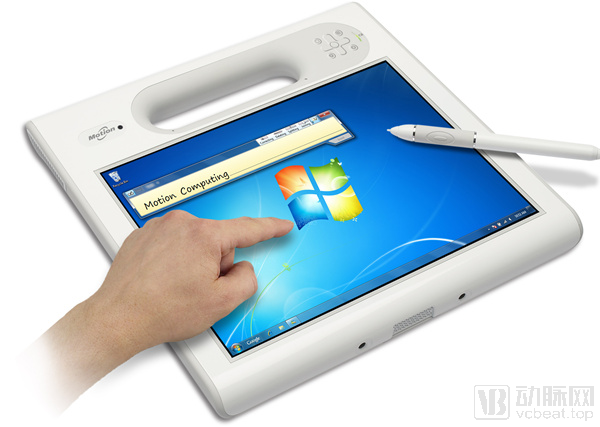
Intel Health Guide Tablet
During this period, Intel also engaged in the healthcare industry through collaborations. For instance, it formed an alliance with GE Healthcare and established a new healthcare joint venture, Care Innovations, which developed numerous medical solutions such as remote patient management and home-based self-diagnosis systems. Additionally, Intel funded medical education and research projects led by young talents in the medical field. These initiatives significantly enhanced Intel’s presence in the healthcare sector.
Since 2013, with technological advancements, Intel has begun to engage in the healthcare sector in a broader manner. Its involvement spans telemedicine, wearable devices, the Internet of Things (IoT), cloud computing, big data, and artificial intelligence (AI). In 2012, Google utilized 16,000 Intel multi-core processors to build an AI system named “Google Brain,” which successfully identified cats in YouTube videos, marking a landmark event in the development of AI. Subsequently, the Broad Institute of MIT and Harvard leveraged Intel’s AVX vector instruction set to increase the speed of genetic information analysis and monitoring by three to five times.
Seizing this opportunity, Intel recognized the immense potential of AI in the healthcare sector and the significant advantages of its own products in AI, gradually shifting its focus in healthcare toward the AI domain. For instance, Intel partnered with Novartis to leverage AI for accelerating drug discovery; collaborated with Philips to speed up deep learning for medical AI; and worked with Siemens to explore the potential of AI for real-time MRI diagnostics.

Eric Dishman: The Soul of Intel Health

Eric Dishman was the key figure behind Intel’s healthcare strategy. He joined Intel in 1999 and served as General Manager of the Health and Life Sciences Group from 2005 onwards, overseeing cross-divisional strategy formulation, product development, R&D, and policy initiatives related to healthcare and life sciences. At the time of his departure from Intel, he held the titles of Intel Fellow and Vice President of the Health and Life Sciences Group. The group he led focused on driving Intel’s growth in areas such as healthcare informatics, genomics and personalized medicine, consumer health, and collaborative care technologies.
Eric Dishman’s story is nothing short of legendary. Diagnosed with a rare form of kidney cancer in his teens, he battled the disease for 23 years before successfully undergoing a kidney transplant in 2012. Prior to that, he was frequently told by doctors every couple of years that he had only one to one and a half years left to live. It was not until his tumor DNA was sequenced that a life-saving treatment regimen was identified.
Despite suffering from a severe illness, Eric Dishman performed exceptionally well in his role. His condition deepened his understanding of the critical role technology plays in advancing healthcare. Under his leadership, Intel built its healthcare presence from the ground up. It is no exaggeration to say that without Eric Dishman, Intel would not have its current footprint in the healthcare sector. This achievement earned him significant recognition; in April 2016, he was nominated to lead the Precision Medicine Initiative (PMI) at the U.S. National Institutes of Health (NIH). Since then, Eric Dishman has primarily been responsible for the All of Us Research Program, which evolved from the PMI. Enrolling one million participants, this program aims to further advance research in precision medicine.
Intel and NVIDIA’s Medical AI Competition Heats Up
“Since Yu was born, why was Liang also born?” When discussing AI, one cannot avoid mentioning NVIDIA, Intel’s inevitable old rival. NVIDIA’s flagship product, the GPU, was originally designed for 3D graphics rendering. In PC architecture, it maintains a symbiotic relationship with Intel’s flagship product, the CPU, with no inherent conflict between the two. However, in AI applications—particularly in medical AI, where computer vision and speech processing now dominate—GPUs possess an innate advantage.
In 2013, NVIDIA collaborated with Stanford University to build the most powerful AI neural network of its time using GPUs. By leveraging just 16 GPU servers, they achieved AI performance 6.5 times greater than that of Google Brain, which required up to 1,000 servers housing 16,000 CPUs. This clearly demonstrates the advantages of GPUs in AI applications. To date, the vast majority of medical AI companies have adopted NVIDIA’s GPU-centric computing solutions. Leading Chinese medical AI enterprises, such as Infervision (2017), SenseTime (2017), and YITU (2018), have all made appearances at the NVIDIA GTC conference.
Nevertheless, GPUs do not always hold an advantage in AI applications. Due to limited memory processing capabilities, CPUs outperform GPUs in scenarios requiring extremely large memory capacities (ranging from tens to hundreds of gigabytes). Furthermore, GPUs lack an advantage when compared to application-specific integrated circuits (ASICs) tailored for specific purposes, such as AI chips with embedded AI algorithms.
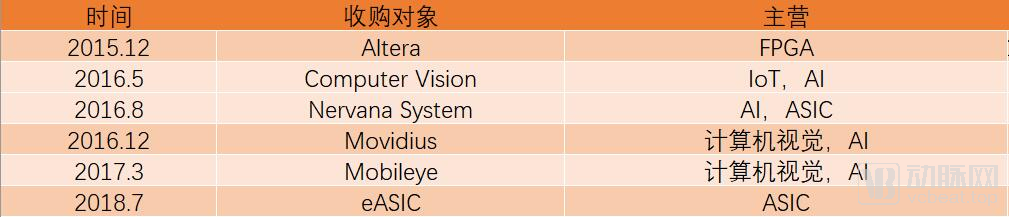
It is precisely for this reason that Yitu Technology, which was still participating in NVIDIA’s GTC conference in 2018, released its AI chip “QuestCore” in 2019. Optimized specifically for Yitu’s AI algorithms, QuestCore significantly boosted computing power in specific AI scenarios. Reportedly, a server equipped with four QuestCore chips delivers computing performance comparable to a server with eight NVIDIA P4 GPUs, while occupying only half the volume and consuming less than 20% of the power, fully demonstrating the immense potential of dedicated ASICs. Intel also recognized this trend, acquiring Nervana Systems, a renowned company in the field of AI-specific chips, in August 2015, and later acquiring Movidius, a high-performance vision processing chip vendor, in 2016. Subsequently, Intel launched its first AI chip, Lake Crest, claiming its AI performance was ten times stronger than that of GPUs. The latest generation, Spring Crest (Nervana NNP-L), reportedly offers three to four times the AI computing power of the first-generation Lake Crest. Meanwhile, building on the Ice Lake architecture used in desktop Core processors, Intel developed the Spring Hill AI processor (Nervana NNP-I) by replacing the integrated graphics core with an AI inference accelerator and adding a DSP engine. Released on August 21, this AI processor can be seamlessly deployed in existing data centers and supports all mainstream deep learning frameworks.
While AI chips offer significant advantages, their research, development, and production require substantial capital investment. FPGAs (Field-Programmable Gate Arrays), when paired with specialized algorithms, have emerged as an alternative for AI companies due to their flexible configurability and performance comparable to GPUs in specific environments. In simple terms, before software is loaded, FPGAs offer greater versatility than CPUs; after programming, they deliver performance akin to ASICs (Application-Specific Integrated Circuits). The FPGA market is also highly concentrated. In 2016, Xilinx and Altera held market shares of 53% and 36%, respectively. Intel also made strategic moves in this sector, acquiring Altera for $16.7 billion in June 2015—the largest transaction in Intel’s history.
Even in the GPU sector, where NVIDIA holds an absolute advantage, Intel is beginning to make strides. In recent years, Intel has been attempting to develop high-performance GPUs, but progress has been less than ideal. In 2017, Intel recruited Raja Koduri, former head of AMD’s GPU division and chief architect, along with his team, significantly accelerating its development timeline. Reportedly, Intel’s Xe high-performance GPUs, suitable for AI computing, are expected to launch as early as 2020.
It can be said that Intel’s foray into medical AI is not a whimsical impulse, but rather the result of careful consideration and comprehensive strategic planning. Although its starting point was not as high as NVIDIA’s, as Intel’s previous investments begin to bear fruit, its more robust layout may grant it greater momentum in the future.
Intel Completes Investment Portfolio Layout, with Medical AI as the Investment Direction
In addition to its standalone digital health division, Intel Capital, the independent investment arm of Intel, has also played a crucial role in the company’s healthcare strategy. Established in 1991, Intel Capital previously operated under the name Corporate Business Development. As early as 1998, Intel Capital invested in iVillage; this press release is considered the earliest officially documented healthcare-related investment by the firm. Although iVillage’s betterhealth.com online community is no longer operational, it was arguably one of the most popular online health communities at the time.
For a long period, Intel Capital paid little attention to the healthcare sector. Its investment focus leaned more toward areas closely aligned with Intel’s traditional business, such as networking, clean energy, servers and cloud computing, and mobile devices. It was not until 2008, when Intel Capital announced its investment in Healthination (www.Healthination.com), an online health and medical video provider, that Intel Capital re-engaged with the healthcare industry. Between 2010 and 2012, Intel Capital successively invested in the senior living community platform Caring.com, the healthcare cloud service provider CareCloud, the Brazilian medical imaging software company Pixeon, and Minhavida (Minhavida.com.br), one of Brazil’s largest health portals at the time.
With the advent of the smart device boom, Intel Capital added wearable devices to its investment portfolio. In 2013, Intel Capital invested in Basis Science, a company whose innovative health tracker aims to improve health and sleep. In 2016, Intel Capital made three healthcare-related investments: Kinduct, a Canadian developer of cloud-based health data monitoring and analytics software; CubeWorks, which developed miniature wireless sensors; and K4Connect, which provides holistic home health solutions for the elderly and people with disabilities.
Starting in 2017, in alignment with Intel’s strategic layout, Intel Capital began to intensively invest in AI companies. That year, Intel Capital invested in three AI firms: Amenity Analytics, Bigstream, and LeapMind. Although these companies were not directly linked to medical businesses at the time, as developers of AI algorithms and solutions, they played a complementary role in enhancing Intel’s hardware ecosystem. Moreover, given the commonalities between computer vision and speech processing, these AI companies had the potential to enter the healthcare industry. In its subsequent investments in 2018 and 2019, Intel Capital continued to back multiple AI companies, including Avaamo, Gamalon, Syntiant, and Reallin Technology (China) in 2018, as well as Sambanova Systems, Untether AI, and Cloudpick (China) in 2019, all of which are AI-related enterprises.
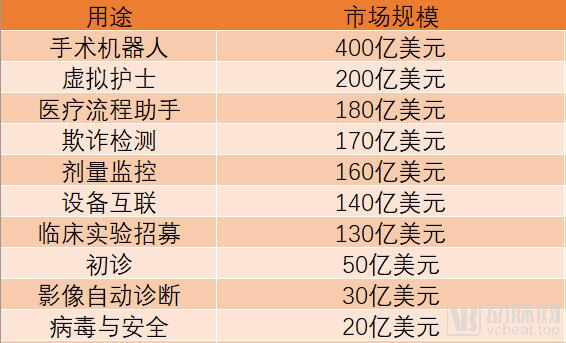
In fact, it is not only Intel; numerous technology companies with ties to the healthcare sector are highly enthusiastic about AI. According to Accenture’s 2017 report on healthcare AI, the market size for AI in healthcare was $600 million in 2014 and was projected to rise rapidly to $6.6 billion by 2021. Based on market size, Accenture listed the ten most promising applications of AI in healthcare. The enthusiasm of tech companies for healthcare AI is therefore easy to understand.
Meanwhile, Intel Capital has also increased its direct investments in the healthcare sector over the past two years. A notable example is Synthego, a company founded by former SpaceX engineers in 2017 and a leading provider of genome engineering solutions. Its flagship product, CRISPRevolution, is a portfolio of synthetic RNA products designed for CRISPR genome editing and research. This technology plays a highly positive role in medical fields such as disease treatment and new drug development, making Synthego a rather unconventional addition to Intel Capital’s investment portfolio at the time.
In 2018, Intel Capital invested in HY Medical, a Chinese company, marking its first investment in a domestic medical AI enterprise. This leading enterprise in medical imaging AI has developed multiple product lines spanning from research to clinical applications, achieving full-process artificial intelligence coverage for specific diseases, including intelligent screening, intelligent decision-making, and prognosis prediction across the entire disease cycle.
Medical Informatics Corp, invested in 2019, is a medical software company that has established the Sickbay data collection platform. This platform archives, aggregates, and transforms short-term, high-resolution waveform data from diverse devices to support remote monitoring anytime, anywhere. MIC applies machine learning to develop predictive algorithms, laying the foundation for future AI-driven data collection solutions. These solutions can predict patient risks and clinical deterioration, supporting data-driven medical technologies and patient-centered care services.
Reveal Biosciences, which also received investment from Intel in 2019, is a computational pathology company. Leveraging a solid medical foundation and specialized expertise in computing, the company has maintained a leading position in digital pathology. Lastly, there is the aforementioned EXO Imaging, a high-performance handheld ultrasound platform and AI medical imaging enterprise dedicated to providing affordable and user-friendly medical imaging tools to healthcare professionals worldwide. These tools enable healthcare providers to make accurate real-time decisions, thereby improving treatment outcomes. In particular, the Exo Imaging ultrasound platform integrates state-of-the-art nanomaterials, sensor technology, advanced signal processing, and semiconductor technology, significantly reducing imaging costs. Mech-Mind Robotics, whose intelligent “3D + AI + industrial robot” solutions have gained recognition from numerous clients, has also secured investment from Intel. Its solutions have been widely deployed across various sectors, including automotive assembly, home appliances, express delivery transit centers, and hospital pharmacies, and have reached a stage ready for scalable replication.
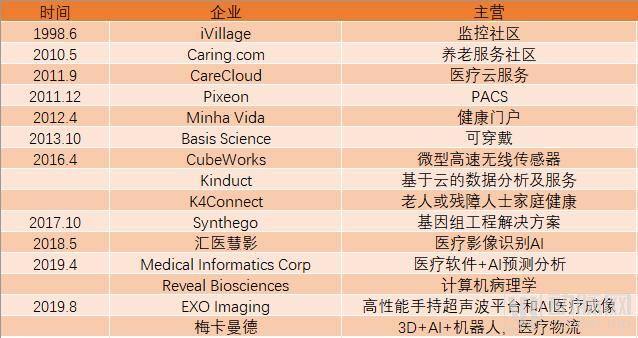
It is evident that Intel Capital’s interest in the healthcare sector has increased significantly, shifting from years of inactivity to intensive investment over the past one to two years. An analysis of these investments reveals a clear strategic focus: nearly all targeted companies possess strong “AI” attributes. Meanwhile, Intel Capital has invested in numerous AI firms in recent years. As previously mentioned, although these companies are not currently linked to healthcare operations, the possibility of their future entry into the healthcare industry cannot be entirely ruled out.
Comparison of Intel's Healthcare Strategy with Other Semiconductor Giants
So, what are the strategic layouts of semiconductor giants similar to Intel in the healthcare sector? According to the "2018 Semiconductor Market Share Analysis Report" released by the renowned market research firm Gartner, the top ten semiconductor vendors by global revenue in 2018 were:
1. Samsung Electronics ($75 billion);
2. Intel ($65 billion);
3. SK Hynix ($36 billion);
4. Micron Technology ($30.6 billion);
5. Broadcom ($16.5 billion);
6. Qualcomm ($15.3 billion);
7. Texas Instruments ($14.7 billion);
8. Western Digital ($9.3 billion);
9. STMicroelectronics ($9.2 billion);
10. NXP Semiconductors ($9 billion).
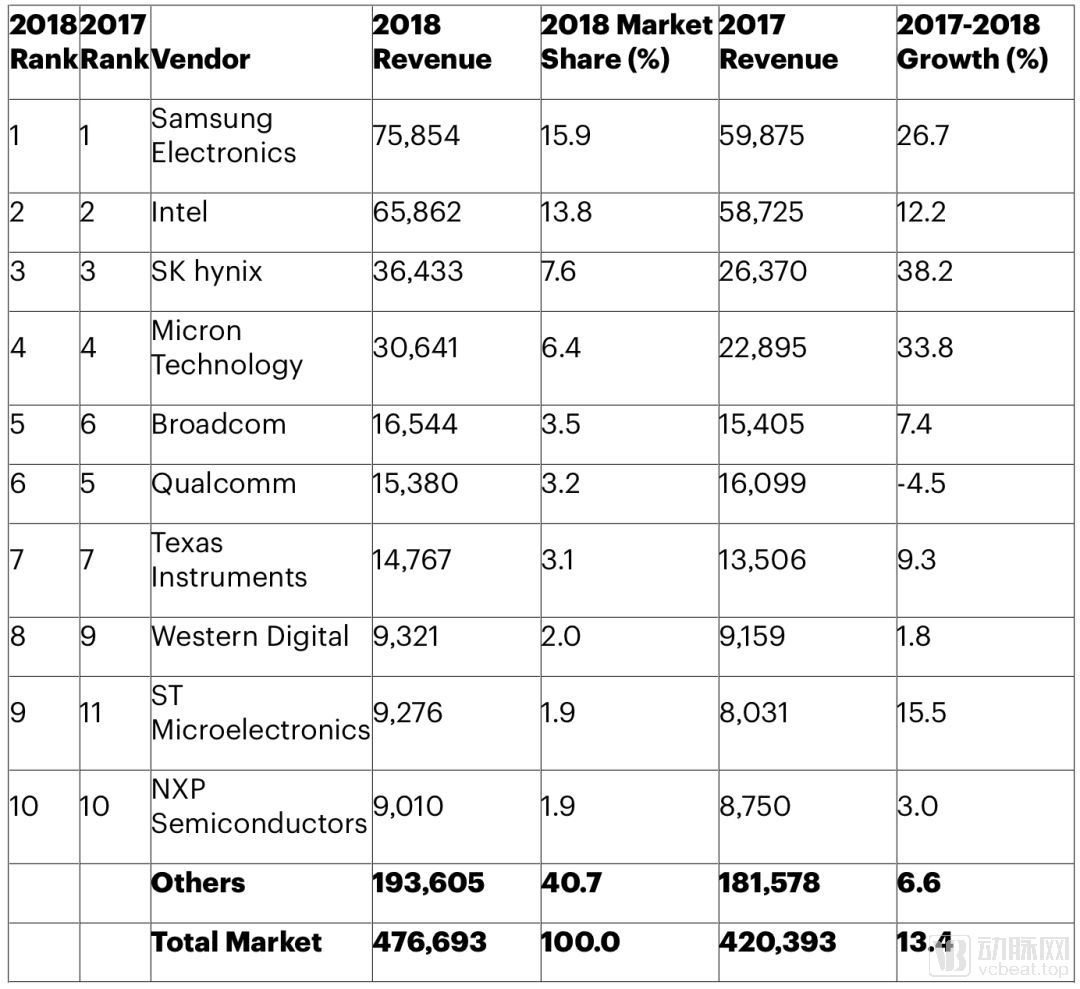
From a purely operational perspective, Samsung Electronics, the top-ranked company, has no direct intersection with the healthcare sector nor any significant footprint in it, with 88% of its revenue derived from the memory market. However, when referring to the Samsung Group, due to the unique structure of Japanese and South Korean chaebols, the conglomerate is involved in virtually every imaginable industry, including healthcare. Samsung Healthcare qualifies as a professional medical equipment supplier, with a product portfolio covering ultrasound diagnostics, medical imaging, in vitro diagnostics (IVD), and mobile CT scanners.
Meanwhile, the Samsung Group also has an affiliated biotechnology contract manufacturing organization (CMO), Samsung Biologics. In addition, Samsung Capital continues to invest in the healthcare sector. Similarly, SK Hynix, a South Korean semiconductor giant, finds itself in a comparable situation: while its core semiconductor business has no direct overlap with healthcare, its parent company, SK Group, has ventured into the medical field. As early as 2003, SK Group jointly invested with the International Exchange and Cooperation Center of China’s Ministry of Health to establish Beijing iKang Hospital, the first Sino-foreign joint venture general hospital in Beijing, which specializes primarily in medical aesthetics and health management.
Micron Technology and Western Digital are both major suppliers of semiconductor memory products, with the latter being one of only two remaining hard disk drive manufacturers. Neither company has a direct presence in the healthcare sector, as they primarily serve as traditional equipment suppliers. However, official developments indicate that both firms have a strong interest in medical AI. Meanwhile, Western Digital places additional emphasis on data centers and the Internet of Things (IoT). Its investment arm, Western Digital Capital, focuses its portfolio on data centers, IoT, and PC components and subsystems, with no direct investments in the healthcare field.
Broadcom is a giant in the networking sector, with optical communications and sensing being its core product areas. While many medical devices incorporate Broadcom’s products, that is the extent of its involvement. The company has no further strategic layout specifically targeted at the healthcare industry.
Qualcomm is also a major networking vendor and one of the core suppliers for 4G/5G technologies. Undoubtedly, Qualcomm’s 5G products hold a significant position in the upcoming era of the Internet of Things (IoT), with nearly all medical IoT applications likely linked to its offerings. In fact, Qualcomm has long been active in the healthcare sector; it established a dedicated healthcare division, Qualcomm Wireless Health, in 2011, which was later renamed Qualcomm Life and operated multiple intelligent medical care platforms. However, earlier this year, due to three consecutive years of declining revenue, Qualcomm sold this division to the private equity firm Francisco Partners, and it was subsequently renamed Capsule Tech.
Texas Instruments (TI) and STMicroelectronics offer a comprehensive range of semiconductor components, which are utilized in nearly all medical devices and equipment. However, they function purely as component suppliers without more extensive strategic layouts. In contrast, NXP is more prominent in the medical field, providing a suite of semiconductor solutions for medical devices. Its MCU/MPU chips, in particular, serve as core components of medical instruments, analogous to CPUs in personal computers. Nevertheless, NXP’s engagement with the healthcare sector still adheres to the traditional model of an equipment supplier.
A comparison reveals that Intel’s involvement in the healthcare sector is relatively deep and extensive compared to its peers. Its strategic layout is the most comprehensive among them, having moved beyond the scope of a basic equipment supplier. Qualcomm, which once had the potential to compete with Intel, has been forced to make painful cuts due to significant pressure on its core business and recent poor performance. At least for the foreseeable future, it will be difficult for Qualcomm to re-enter the healthcare field.
About the Future
From its early days as a pure-play equipment supplier to the development of innovative medical devices, and now to its strong foray into the sector with AI as the entry point, Intel’s footprint in the healthcare industry has undergone continuous adjustment and refinement. By leveraging internal technological capabilities in tandem with external investments, Intel has rapidly solidified its strategic presence in the AI domain.
Meanwhile, it is continuously refining its strategic layout, and we are certain to see increasing investment in the foreseeable future. However, at least for now, Intel serves more as a potential partner for medical AI enterprises.
Under Intel’s current organizational structure, the Healthcare and Life Sciences division temporarily reports to the Industry Sales Customer Team, reflecting Intel’s primary focus on driving product sales. However, as time progresses, whether this strategy will change or whether another healthcare unicorn will emerge from Intel’s portfolio companies remains to be seen. VCBeat will continue to monitor these developments closely.
References
Gartner:Market Share Analysis: Semiconductors, Worldwide, 2018.
Accenture:Artificial Intelligence:Healthcare’s New Nervous System
New Head of the Precision Medicine Initiative: Why Him?: http://www.biodiscover.com/news/celebrity/175156.html
Science Exclusive Interview with Eric Dishman, NIH’s New Head of Precision Medicine: http://www.biodiscover.com/news/celebrity/174589.html