

BrainUp Neurotechnology Files IPO Prospectus: Harvard and MIT-Alumni Founders Pioneer EEG-Based Brain-Computer Interface Solutions

BrainUp
Brain Science AI Technology and Frontier Technology Application Developer
Brain-Machine Interfaces (BMIs) aim to establish a direct interaction mechanism between the human brain and the external environment, thereby enabling the direct control of devices and expression of thoughts through brain activity. In recent years, BMIs have demonstrated significant application potential across various fields, including education, rehabilitation training, general health, entertainment and gaming, and smart home systems, and are regarded as the next trillion-dollar market.
In the fields of brain-computer interfaces and brain science, BrainUp Technology Co., Ltd. (hereinafter referred to as “BrainUp”) has attracted considerable attention from the industry and institutions.
BrainUp has developed a comprehensive solution based on EEG analysis by independently researching and developing hardware, software, and algorithms related to brain-computer interfaces (BCI). The company focuses on cutting-edge applications in neuroscience, including brain health screening, EEG algorithms, and EEG data development platforms.
Wang Xiaoan, Founder and CEO of BrainUp, graduated from Harvard University. After graduation, he joined a major Chinese insurance group, where he was primarily responsible for online integrated financial services. He successfully built an online business platform and established a team of 200 people. In the first year after the platform’s launch, its sales volume reached RMB 11 billion.
Wang Xiaoan stated, “This work experience has allowed me to accumulate extensive expertise in sales and operations. Furthermore, my exposure to knowledge related to big health and medical data within the insurance industry has gradually fostered a strong interest in the healthcare sector.”
Brain-Computer Interface (BCI) technology has a history of nearly a century. Advances in computer technology have driven the progress of BCI, making it a research hotspot in the medical field. Wang Xiaoan stated, “During my high school years in the United States, I learned that many major companies in Silicon Valley were focusing on technological innovation and next-generation interaction technologies, such as brain-computer interaction and augmented reality. In recent years, few entrepreneurs have started businesses in the traditional internet sector.”
After resigning from the insurance group, Wang Xiaoan began to consider establishing a brain-computer interaction company, focusing on the application of brain-computer interface technology in the medical field. “The prospects of the brain-computer interaction market are unquestionable; the challenge lies in identifying the entry point and achieving practical implementation.”
After three years of preparation and research, in 2018, Wang Xiaoan and Dr. Lu Shuqiang, a graduate of the University of Chicago and the Massachusetts Institute of Technology, co-founded BrainUp, focusing on insomnia patients as an entry point and specializing in comprehensive EEG analysis solutions.
Brain-computer interaction is an interdisciplinary field involving neuroscience, signal detection, signal processing, machine learning, pattern recognition, control theory, psychology, and other disciplines. Wang Xiaoan holds a Master’s degree in Data Science from Harvard University and has years of experience in sales and operations; Lu Shuqiang earned his Ph.D. in Cognitive Science from the University of Chicago, possesses strong expertise in artificial intelligence technology, and has a successful track record as an entrepreneur; Pang Hao completed his postdoctoral research at the Center for Brain and Brain-Inspired Research at Tsinghua University. The multidisciplinary talent team at BrainUp Technology has enabled the company to rapidly commercialize its products.
At its inception, BrainUp did not directly launch related end-user products; instead, it focused on enhancing the recognition accuracy and customizability of integrated hardware, software, and algorithm solutions for brain-computer interaction.
The hardware components include micro-electrical interference chips, magnetic field intervention modules, high-precision EEG (electroencephalogram) monitoring circuits, body motion sensors, and EEG signal amplification systems. All these hardware devices are independently developed by BrainUp Technology, enabling precise EEG data acquisition along with signal amplification and noise reduction. The software primarily consists of the mobile application development. BrainUp Technology has successfully implemented real-time visualization of EEG waveforms on its app platform.
Additionally, BrainUp’s self-developed machine learning-based EEG data analysis algorithm can provide interventions based on real-time changes in users’ brainwaves.
Through independently developed hardware, software, and algorithms, BrainUp has launched two self-developed products and focuses on providing brain-computer interaction solutions for various industries.
Focusing on Insomnia and Brain Disease Screening
According to data from the World Health Organization, the prevalence of insomnia in China stands at 38.2%. With the gradual rise of the sleep industry, a multitude of products aimed at treating insomnia—such as sleep pillows, sleep lights, and sleep-aid medications—have flooded the market. Dr. Lu Shuqiang stated, “Traditional sleep-aid products cannot quantify their efficacy nor provide personalized solutions for users.”
BrainUp’s sleep-aid products utilize brain-computer interface technology to read users’ brainwaves in real time, then generate deep-sleep Hertz waves to intervene and guide the user’s brainwaves into a sleep state, thereby facilitating sleep onset and improving sleep efficiency.
Sleep-aid products are set to launch in October 2019. BrainUp plans to adopt both online and offline sales channels. Wang Xiaoan stated, “The company has established partnerships with multiple pharmacies and insurance companies, with order volumes reaching hundreds of thousands of units.”
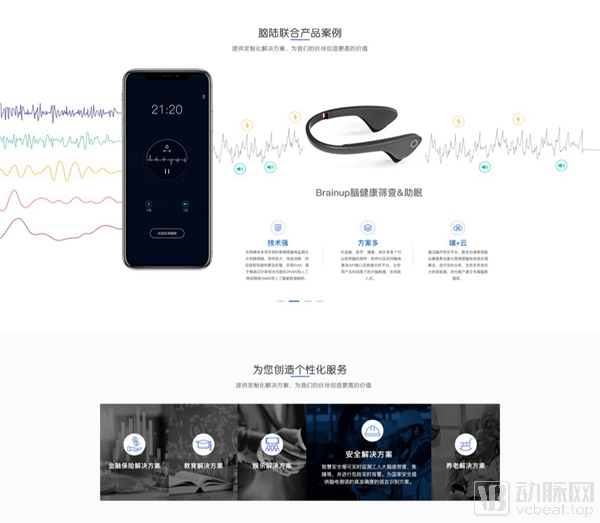
In May 2019, BrainUp launched another product—a brain health screening solution. By monitoring resting-state electroencephalogram (EEG) signals, this product can screen for brain disorders such as cerebral chaos, anxiety, and Alzheimer's disease.
Develop Comprehensive Industry-Wide Solutions
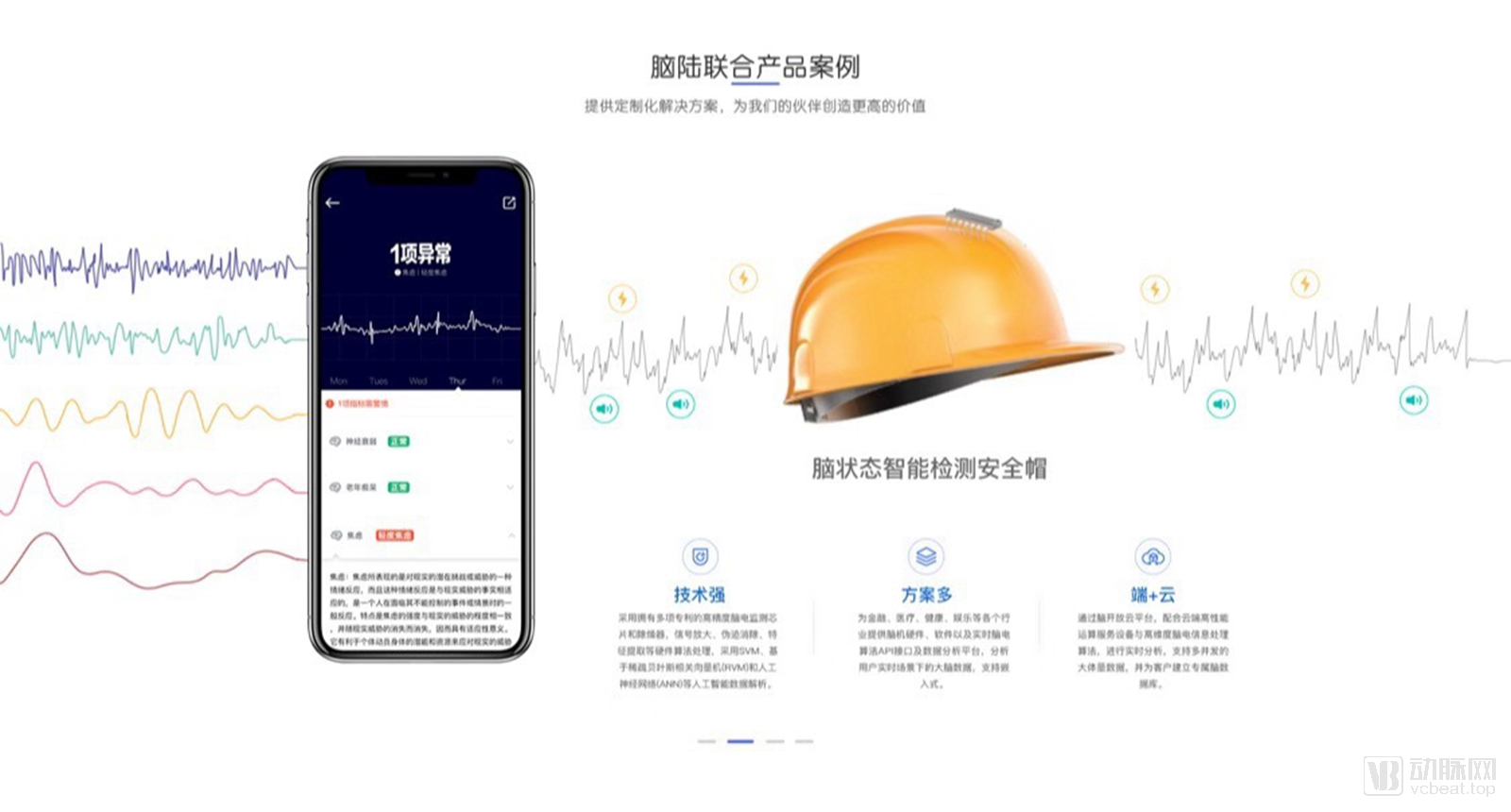
BrainUp has established an open brain cloud platform, providing API interfaces for brain-computer interaction hardware and software devices, as well as a data analytics platform, to industries such as finance, insurance, security, healthcare, and entertainment, with the aim of becoming China's largest provider of brain technology and brain data development platform.
For instance, it provides services such as brain-computer interaction, brain health screening, customer acquisition for business development, and customization of health-related insurance products to the financial and insurance industry; it offers biometric assessments of users’ viewing emotions and boredom levels to film companies, aiding in film editing, material selection, and casting; it monitors players’ biometric signals for esports and gaming companies to support game design and experience optimization; and it assesses elderly individuals’ brain health, records brain data, and conducts current brain status evaluations along with early screening for Alzheimer’s disease.
Dr. Lu Shuqiang stated, “Currently, hardware, software, and artificial intelligence algorithms related to brain-computer interfaces (BCIs) have become relatively mature, capable of processing and interpreting many electroencephalogram (EEG) signals. The biggest barrier to brain-computer interaction lies in the scarcity of brain data; apart from psychiatric departments in hospitals, few other places are able to collect users’ EEG data. We believe that brain data is a key driver propelling the development of this industry.”
Through several implemented B-side collaborations, BrainUp has collected nearly 100,000 user EEG data records. The company aims to leverage this data for scientific research, enhance understanding of the brain, and facilitate the deployment of brain-computer interfaces in a wider range of application scenarios.
Currently, BrainUp has secured over 10 core independent patents, covering areas such as brain signal detection systems, real-time brain data processing algorithms, brain health monitoring and early screening, sleep-assistance interventions, intelligent EEG sleep monitoring systems, the Brain Platform, and industrial design.
Thanks to BrainUp’s deep technological expertise, the company’s products and solutions have been rapidly deployed. Within just over a year of its founding, the company has already achieved profitability.
The United States and China launched their respective “Brain Initiatives” in 2013 and 2015. In July 2016, Elon Musk founded Neuralink, focusing on the development of invasive brain-computer interfaces (BCIs). In January 2018, Facebook achieved typing by thought. These developments indicate that the era of brain-computer interfaces has arrived. Wang Xiaoan stated, “The market size for brain-computer interfaces is limitless. In the long run, BCIs could fundamentally transform human interaction.”
Regarding the company’s future plans, Wang Xiaoan stated, “BrainUp will focus on building a world-leading Chinese independent brand in brain science, enhancing human well-being through brain science, and pioneering the next generation of human-computer interaction.”