

Roche Launches VENTANA PD-L1 (SP142) Assay as First Companion Diagnostic to Identify PD-L1-Positive Triple-Negative Breast Cancer Patients for Tecentriq Therapy
Aug 30, 2019 10:48
CST Updated
10:48

Roche
Oncology Drug Research, Development, and Manufacturing

August 30, 2019 /BioValleyBIOON/ -- Swiss pharmaceutical giant Roche recently announced the launch of the VENTANA PD-L1 (SP142) Assay Kit in the CE-marked market, which is used to determine triple-negativeBreast Cancer(TNBC) patients’ eligibility for the first companion diagnostic for combined treatment with PD-L1 tumor immunotherapy Tecentriq (atezolizumab) and chemotherapy (nab-paclitaxel, albumin-bound paclitaxel)DiagnosisTest kit, which evaluatesTumorPD-L1 in Infiltrating Immune CellsBiomarkersStatus identifies patients most likely to benefit from treatment.
This product launch marks a significant step in Roche’s personalized healthcare strategy, aimed at providing appropriate treatments to patients who stand to benefit the most from specific medications. Globally, more than 300,000 patients areDiagnosisFor TNBC, an aggressive form of breast cancer with very limited treatment options, the VENTANA PD-L1 (SP142) Assay helps identify TNBC patients most likely to benefit from Tecentriq in combination with chemotherapy.
This March, this companion diagnostic kit received U.S.FDAApproval, the first in the U.S. market to determine whether TNBC patients are eligible for the Tecentriq + chemotherapy regimenDiagnosisStandard. A confirmed diagnosis of TNBC in a patient means that the three most common proteins associated with breast cancer growth—estrogen receptor (ER), progesterone receptor (PR), and HER2/neu—are all absent inTumorExpressed above.
The VENTANA PD-L1 (SP142) Assay Kit enhances the visual contrast of staining for tumor-infiltrating immune cells. In TNBC, PD-L1 is primarily expressed on tumor-infiltrating immune cells, rather thanTumorThe cell itself.

VENTANA PD-L1 (SP142) Assay Kit can be used forTumorSpecific staining of cells and immune cells. This product has previously obtainedFDAand CE approval, as adjuvant therapy for urothelial carcinoma (UC)Diagnosis, and can also serve as a predictive test for the use of Tecentriq in the treatment of non-small cell lung cancer (NSCLC). For more information on PD-L1 expression levels in treatment guidelines for various cancer indications, please refer to the Tecentriq product label.
The VENTANA PD-L1 (SP142) Assay Kit, launched in 2016, was the primaryDiagnosisAssay kit for patient enrollment and stratification in Tecentriq clinical trials. The kit was used in IMpassion130.Clinical Trialpatients enrolled for testing; this study is the first positive Phase III immunotherapy regimen trial conducted in the field of triple-negative breast cancer (TNBC). This kit is the first to adopt immune cell staining andTumorPD-L1 Assessment in Patients Based on Microenvironment ScoringBiomarkersStatus.
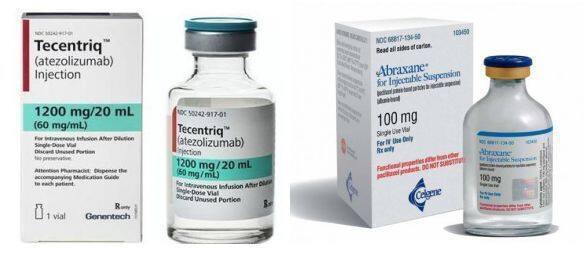
Most recently, based on data from the IMpassion130 clinical study, the combination regimen of Tecentriq and chemotherapy (nab-paclitaxel, albumin-bound paclitaxel) received approval in the European Union as an initial therapy for adult patients with unresectable locally advanced or metastatic triple-negative breast cancer (TNBC) whose tumors express PD-L1 (≥1%) and who have not previously received chemotherapy for metastatic disease (chemotherapy-naïve). In the United States, the Tecentriq + Abraxane combination regimen has been approvedFDAApproved for use inTumorPatients with PD-L1-expressing unresectable locally advanced or metastatic triple-negative breast cancer (TNBC).
In the United States and the European Union, the combination of Tecentriq plus chemotherapy (nab-paclitaxel) is the first cancer immunotherapy regimen approved by regulatory authorities for the treatment of PD-L1-positive metastatic triple-negative breast cancer (TNBC). (Bioon.com)