

Merck and Pfizer's Keytruda + Inlyta Combination Approved in EU as First-Line Immunotherapy Plus Targeted Therapy for Advanced Renal Cell Carcinoma
Sep 05, 2019 09:58
CST Updated
09:58

MSD
Pharmaceutical R&D and Manufacturer

Pfizer
Pharmaceutical R&D Developer

European Commission
The European Commission, abbreviated as the EU Commission, is a supranational body under the European Union. Within the EU political system, the European Commission primarily undertakes executive tasks, thus being roughly equivalent to the government in a national system. However, the European Commission has other functions as well. In particular, except for the few circumstances specified in the treaties, the European Commission is the only institution with legislative power in the EU legislative process.
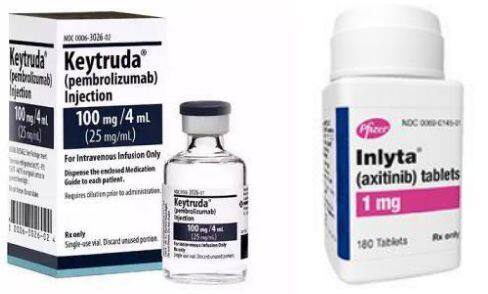
September 05, 2019 News /Bio ValleyBIOON/ -- Tumor immunotherapy giant Merck & Co. recently announced that the European Commission (EC) has approved PD-1TumorImmunotherapy Keytruda (Keyruida, generic name: pembrolizumab) combined withPfizerThe new generation of targeted therapy drug for kidney cancer, Inlyta (axitinib; tyrosine kinase inhibitor [TKI]), is used for the first-line treatment of patients with advanced renal cell carcinoma (RCC). This approval includes patients from all IMDC risk groups. The approval applies to all 28 EU member states as well as Iceland, Liechtenstein, and Norway. In the United States,FDAApproved Keytruda in combination with Inlyta as first-line treatment for patients with advanced RCC this April, two months ahead of the expected approval timeline.
Notably, Keytruda is the first anti-PD-1 therapy approved in Europe as part of a combination regimen for the treatment of renal cell carcinoma (RCC) across all International Metastatic RCC Database Consortium (IMDC) risk groups. This approval is based on the results of the pivotal Phase III clinical study KEYNOTE-426 (NCT02853331), which demonstrated that, in patients with advanced RCC, the Keytruda plus Inlyta regimen reduced the risk of death by 47% (HR=0.53 [95% CI: 0.38, 0.74], p=0.00005) compared with Sutent (sunitinib), the standard-of-care first-line treatment for advanced RCC, while also improving progression-free survival (PFS) and objective response rate (ORR).
KEYNOTE-426 is a randomized, multicenter, open-label study in 861 patients with advanced RCC who had not previously received systemic therapy (regardless ofTumorThe study was conducted in patients with PD-L1 expression status, comparing the Keytruda plus Inlyta regimen with Sutent, the standard-of-care first-line therapy for advanced renal cell carcinoma (RCC). Patients were randomized into two treatment groups: (1) the Keytruda plus Inlyta group, receiving 200 mg of Keytruda via intravenous infusion every three weeks, along with 5 mg of Inlyta orally twice daily; and (2) the Sutent group, receiving 50 mg of Sutent once daily for four weeks followed by a two-week drug-free interval. All patients continued treatment until confirmed disease progression or unacceptable toxicity. Keytruda treatment was administered for up to 24 months.
Detailed results from the study were presented in February this year at the 2019 American Society of Clinical Oncology Genitourinary Cancers Symposium.Tumorpresented at the ASCO-GU symposium. The data showed that, in patients with previously untreated advanced or metastatic renal cell carcinoma (RCC), the Keytruda plus Inlyta regimen demonstrated statistically significant improvements in overall survival (OS), progression-free survival (PFS), and objective response rate (ORR) compared with Sutent, the standard-of-care first-line therapy for advanced RCC, with a manageable safety profile. These findings suggest that the Keytruda plus Inlyta regimen should become the new standard of care for this patient population.
The detailed data presented at the ASCO-GU meeting are as follows: The study met its primary endpoints of overall survival (OS) and progression-free survival (PFS), as well as the key secondary endpoint of objective response rate (ORR): (1) Compared with the Sutent arm, the Keytruda plus Inlyta arm demonstrated a statistically significant improvement in OS, with a 47% reduction in the risk of death (HR=0.53 [95% CI: 0.38, 0.74], p=0.0005); 59 events (14%) were observed in the Keytruda plus Inlyta arm (n=432), and 97 events (23%) were observed in the Sutent arm (n=429). Median OS was not reached in either treatment arm. (2) Compared with the Sutent arm, the Keytruda plus Inlyta arm also showed improved PFS, with a 31% reduction in the risk of disease progression or death (HR=0.69 [95% CI: 0.57, 0.84], p=0.00012); 183 events (42%) were observed in the Keytruda plus Inlyta arm, and 213 events (50%) were observed in the Sutent arm. The median PFS was 15.1 months (95% CI: 12.6, 17.7) in the Keytruda plus Inlyta arm and 11.0 months (95% CI: 8.7, 12.5) in the Sutent arm. (3) The ORR was 59% (95% CI: 54, 64) in the Keytruda plus Inlyta arm versus 36% (95% CI: 31, 40) in the Sutent arm (p<0.0001). The complete response rate was 6% and the partial response rate was 53% in the Keytruda plus Inlyta arm, compared with 2% and 34%, respectively, in the Sutent arm. (4) The median duration of response (DOR) was not reached in the Keytruda plus Inlyta arm (range: 1.4+ to 18.2+ months), whereas it was 15.2 months (range: 1.1+ to 15.4+ months) in the Sutent arm. (5) Treatment benefits with Keytruda plus Inlyta were observed across all patient subgroups, including all IMDC risk and PD-L1 expression subgroups. (6) The incidence of grade 3–5 treatment-related adverse events was 76% in the Keytruda plus Inlyta arm and 71% in the Sutent arm.
Professor Thomas Powles, Principal Investigator of KEYNOTE-426 and Director of the Barts Cancer Centre, stated: “Advanced renal cell carcinoma is one of the most lethal types of cancer, with most patients initiallyDiagnosisdeath within 5 years. Encouragingly, we can now offer the Keytruda + Inlyta combination as a first-line treatment option for patients in Europe.”
Dr. Scot Ebbinghaus, Vice President of Clinical Research at MSD Research Laboratories, stated: “The approval in Europe of the Keytruda + Inlyta combination regimen for the treatment of advanced renal cell carcinoma (RCC) marks a significant milestone. Providing an additional treatment option is particularly important for patients with advanced RCC and underscores our commitment to developing Keytruda for areas of unmet medical need.”
Keytruda is a PD-1 cancer immunotherapy, a highly regarded class of cancer immunotherapies that harnesses the body’s own immune system to combat cancer by blocking the PD-1/PD-L1 signaling pathway, thereby inducing cancer cell death and demonstrating potential for treating multiple types of tumors. Inlyta, developed by Pfizer, is an oral therapy designed to inhibit tyrosine kinases, including vascular endothelial growth factor (VEGF) receptors 1, 2, and 3, which may promote tumor growth, angiogenesis, and cancer progression.Tumordiffusion). Sutent, also developed by Pfizer, is a multi-receptor tyrosine kinase inhibitor and has been the standard-of-care first-line treatment for RCC over the past decade.
Renal cell carcinoma (RCC) is by far the most common type of kidney cancer, accounting for approximately 90% of all kidney cancer cases. The incidence of RCC in men is twice that in women. Modifiable risk factors include smoking, obesity, and occupational exposure to certain substances.HypertensionIn 2018, there were approximately 403,000 newly diagnosed cases of kidney cancer worldwide, with about 175,000 deaths. In Europe, it is estimated that there were 136,500 new cases of kidney cancer diagnosed in 2018, and approximately 54,700 people died from the disease. (Bioon.com)
Original Source:Merck & Co., Inc.