

European Commission Approves Roche’s Tecentriq Plus Chemotherapy as a First-Line Treatment for Metastatic Non-Squamous NSCLC
Sep 07, 2019 11:00
CST Updated
11:00

Roche
Oncology Drug Research, Development, and Manufacturing

European Commission
The European Commission, abbreviated as the EU Commission, is a supranational body under the European Union. Within the EU political system, the European Commission primarily undertakes executive tasks, thus being roughly equivalent to the government in a national system. However, the European Commission has other functions as well. In particular, except for the few circumstances specified in the treaties, the European Commission is the only institution with legislative power in the EU legislative process.
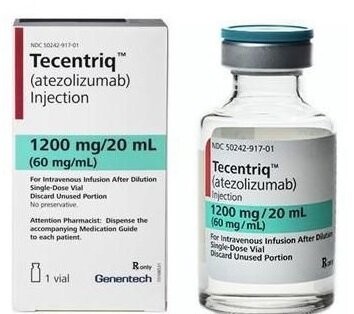
September 07, 2019 /Bio ValleyBIOON/ -- Swiss pharmaceutical giant Roche recently announced that the European Commission (EC) has approved PD-L1TumorTecentriq (atezolizumab) in combination with chemotherapy (carboplatin and Abraxane [nab-paclitaxel, albumin-bound paclitaxel]) as first-line treatment for adult patients with metastatic non-squamous non-small cell lung cancer (NSq NSCLC) without EGFR or ALK genomic tumor aberrations. In the United States, the FDA extended the review period for the above indication application of Tecentriq by three months earlier this month to allow time for the review of additional information supporting the indication application.FDAThe final review decision is expected to be made on December 2, 2019.
Notably, in March this year, the European Union approved Tecentriq in combination with Avastin (generic name: bevacizumab) and chemotherapy (paclitaxel plus carboplatin) as a first-line treatment for adult patients with metastatic non-squamous non-small cell lung cancer (NSq NSCLC). For NSCLC patients harboring EGFR mutations or ALK positivity, the regimen of Tecentriq combined with Avastin and chemotherapy (paclitaxel plus carboplatin) is indicated only after failure of appropriate targeted therapy. In the United States, this triple-drug regimen of Tecentriq was approved in December 2018 for use in patients without EGFR or ALK genomicTumorFirst-line treatment for adult patients with metastatic NSq NSCLC harboring aberrations.
This new approval is based on data from the Phase III clinical study IMPOWER130 (NCT02367781). The study demonstrated that, in the intent-to-treat (ITT) population, Tecentriq in combination with chemotherapy significantly prolonged overall survival (median OS: 18.6 months vs. 13.9 months; HR=0.79; 95% CI: 0.64–0.98; p=0.033) and significantly reduced the risk of disease progression or death by 36% (median progression-free survival [PFS]: 7.0 months vs. 5.5 months; HR=0.64; 95% CI: 0.54–0.77; p<0.0001) compared with chemotherapy alone. In this study, the safety profile of the combination therapy was consistent with the known safety profiles of each individual component. Serious or life-threatening adverse events occurred in 73.2% of patients receiving Tecentriq in combination with chemotherapy, compared with 60.3% in the chemotherapy group.
Dr. Sandra Horning, Chief Medical Officer and Head of Global Product Development at Roche, stated: “Today’s approval marks another step forward for patients with non-squamous non-small cell lung cancer (NSCLC), providing a new treatment option for patients in Europe. This Tecentriq-based combination expands treatment choices and offers physicians flexibility in selecting regimens that combine immunotherapy with chemotherapy—an important consideration given the complexity of lung cancer.”
According to the World Health Organization (WHO), lung cancer is the leading cause of cancer-related deaths worldwide, resulting in nearly 1.8 million deaths annually, which translates to more than 4,800 deaths globally each day. There are two main types of lung cancer, with non-small cell lung cancer (NSCLC) accounting for approximately 85% of all cases. Although progress has been made in the treatment of NSCLC in recent years, new therapeutic options are still needed to support tailored approaches for this complex disease.
Tecentriq is a PD-(L)1 cancer immunotherapy that targets and binds to tumor cells andTumorPD-L1, a protein expressed on infiltrating immune cells, is blocked from interacting with the PD-1 and B7.1 receptors. By inhibiting PD-L1, Tecentriq can activate T cells. Tecentriq has the potential to serve as a foundational combination therapy in cancer immunotherapy, targeted drug regimens, and various chemotherapy protocols for cancer. To date, Tecentriq has been approved in the United States, the European Union, and other countries worldwide as monotherapy, as well as in combination with targeted therapies and/or chemotherapy, for the treatment of various types of non-small cell lung cancer (NSCLC) and small cell lung cancer (SCLC), certain types of metastatic urothelial carcinoma (mUC), and PD-L1-positive triple-negativeBreast Cancer(TNBC)。
In lung cancer, Roche is conducting nine Phase III studies evaluating Tecentriq as a monotherapy or in combination with other agents for the treatment of various types of lung cancer. The company has established an extensive development program for Tecentriq, comprising multiple ongoing and planned Phase III trials across lung cancer, genitourinary cancers, skin cancer, breast cancer, gastrointestinal cancers, gynecologic cancers, and head and neck cancers.
In the Chinese market, Merck’s PD-1 cancer immunotherapy Keytruda (pembrolizumab) received conditional approval in late March this year for use in combination with pemetrexed and platinum-based chemotherapy as a first-line treatment for patients with metastatic non-squamous non-small cell lung cancer (NSCLC) who are negative for epidermal growth factor receptor (EGFR) gene mutations and anaplastic lymphoma kinase (ALK), regardless of PD-L1 tumor expression status. This approval makes Keytruda the first therapy approved in the Chinese market for multiple typesTumoranti-PD-1 therapy, and it is also the first anti-PD-1 therapy for first-line treatment of metastatic non-squamous NSCLC. In China, Keytruda was first approved in July 2018 for unresectable or metastaticMelanoma(Bioon.com)