

Novartis' Lucentis Becomes First and Only Drug Approved in EU for Retinopathy of Prematurity (ROP) as Seventh Indication
Sep 09, 2019 11:33
CST Updated
11:33

Novartis
Drug Development and Manufacturing

European Commission
The European Commission, abbreviated as the EU Commission, is a supranational body under the European Union. Within the EU political system, the European Commission primarily undertakes executive tasks, thus being roughly equivalent to the government in a national system. However, the European Commission has other functions as well. In particular, except for the few circumstances specified in the treaties, the European Commission is the only institution with legislative power in the EU legislative process.
September 09, 2019 News /BioonBIOON/ -- Swiss pharmaceutical giantNovartisNovartis’ ophthalmic drug Lucentis (ranibizumab) has recently received positive regulatory news in the European Union. The European Commission (EC) has approved Lucentis (10 mg/mL) for the treatment of retinopathy of prematurity (ROP), a rare eye disease and a leading cause of childhood blindness. Notably, Lucentis is the first and only medicine approved in the EU for the treatment of ROP. At a dose of 0.2 mg, it is indicated for the treatment of Stage 1+, 2+, 3, or 3+ ROP in Zone I; Stage 1+, 2+, 3, or 3+ ROP in Zone II; and aggressive posterior ROP (AP-ROP) in premature infants.
Currently, the standard of care for retinopathy of prematurity (ROP) is laser surgery, which works by destroying ocular tissues that lead to elevated levels of vascular endothelial growth factor (VEGF), potentially causing severe complications such as myopia and high myopia. Although laser surgery is an effective treatment, there is a clear need for innovative approaches to treat ROP without damaging retinal tissue. Unlike laser surgery, Lucentis directly targets and reduces elevated intraocular VEGF levels, addressing the underlying cause of ROP.
The approval of the new indication for Lucentis in the treatment of retinopathy of prematurity (ROP) is based on data from the Phase III clinical trial RAINBOW (NCT02375971). This was a randomized, open-label, controlled, multicenter clinical study conducted across 26 countries, enrolling a total of 225 patients with ROP to compare the efficacy and safety of intravitreal injections of Lucentis versus laser surgery. In the study, two different concentrations of Lucentis (0.1 mg and 0.2 mg) were compared against laser surgery, the current standard of care. Efficacy was assessed at Week 24 after the start of the study. The results demonstrated that Lucentis is an effective, safe, and well-tolerated medication for infants with ROP. Although the study slightly missed statistical significance for the primary endpoint (p=0.0254; note: p<0.025 is considered statistically significant), the differences in treatment success rates between the Lucentis groups (0.2 mg and 0.1 mg) and the laser surgery group (80%, 75%, and 66.2%, respectively) were clinically meaningful.
Given the vulnerabilities of these pediatric patient populations and the limitations of current treatments, it is crucial to ensure the safe and effective use of pharmacotherapy in these patients. Lucentis will serve as a valuable alternative to laser therapy.
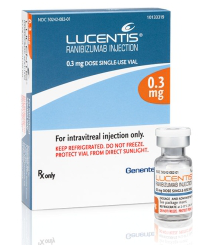
Lucentis is a humanized therapeutic antibody fragment designed to block all biologically active forms of vascular endothelial growth factor A (VEGF-A), whose levels are elevated in wet AMD and various other ophthalmic conditions, such asDiabetesdiabetic macular edema (DME) and retinal vein occlusion (RVO). Lucentis was launched in 2006 and was co-developed by Genentech, a subsidiary of Roche, and Novartis. Roche holds the commercialization rights for Lucentis in the United States, while Novartis holds exclusive rights for the drug in countries and regions outside the United States. In 2018, Lucentis generated revenue for both Roche andNovartisGenerated sales of CHF 1.659 billion and USD 2.046 billion.
Lucentis is the first anti-VEGF therapy approved for ophthalmic use, which has revolutionized the treatment of neovascular age-related macular degeneration (nAMD) and helped reduce nAMD-related blindness by 50% worldwide. After more than a decade of innovation, Lucentis has been approved for up to six indications. Currently,NovartisRoche continues to explore the potential of Lucentis for treating the youngest and most vulnerable patient populations.
As of now, Lucentis has been marketed in more than 110 countries worldwide for the treatment of up to seven indications: neovascular age-related macular degeneration (nAMD),DiabetesDiabetic macular edema (DME), branch retinal vein occlusion (BRVO), central retinal vein occlusion (CRVO), myopic choroidal neovascularization (mCNV), choroidal neovascularization (CNV) associated with other etiologies, and retinopathy of prematurity (ROP). (Bioon.com)
Original Source: Novartis' Lucentis Secures Europeanapproval for infants with rare eye disease