

YouNao Galaxy Secures $6 Million in Series Angel Funding to Accelerate R&D for Brain Disorder Solutions

Neural Galaxy
Neurological Diagnosis and Treatment Equipment Developer

FreeS Fund
Venture Capital Firms

BOHE Angel Fund
Pharmaceutical and Healthcare Angel Investment Fund
On September 10, VCBeat (WeChat ID: vcbeat) learned that Beijing Neural Galaxy Technology Co., Ltd., a brain science company, announced today that it had secured RMB 42 million in angel financing. The company will use these funds to accelerate its mission of addressing brain disorders. This round of financing was led by FreeS Fund, with participation from Peppermint Angel Fund, Tsingyuan Ventures (US), Ray Stata (US), and others.
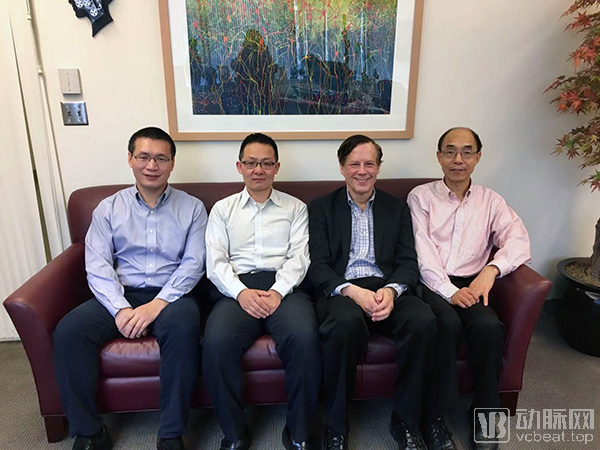
From left to right: Liu Hesheng, Wei Kecheng, Robert Desimone, and Feng Guoping
Incurable: Brain Diseases Have Become a Major Challenge for Human Society
Brain research remains an unmet challenge for the scientific community. As population aging intensifies, diseases such as Alzheimer’s disease and Parkinson’s disease have become unavoidable social issues. Gaining a deeper understanding of the brain not only aids in comprehending these disorders but also represents a key focus of scientific efforts.
Data released by Alzheimer’s Disease International in 2018 showed that in 2017, the global number of people with dementia was 50 million, equivalent to the population of South Korea or Spain. Approximately two-thirds of these cases were Alzheimer’s disease; the remaining one-third included vascular dementia, mixed dementia, dementia with Lewy bodies, and frontotemporal lobar degeneration. All of these conditions cause irreversible damage to the brain. Worldwide, a healthy person develops dementia every three seconds. It is projected that by 2050, the global number of people with dementia will reach 152 million, equivalent to the population of Russia or Bangladesh. Globally, the total cost of caring for people with dementia in 2017 was estimated at $1 trillion, and this figure is expected to double to $2 trillion by 2030.
Currently, China has over 10 million Alzheimer’s disease patients, ranking first worldwide. If left uncontrolled, the number of Alzheimer’s patients in China is projected to reach 14.1 million by 2020 and 23.3 million by 2030, imposing an economic burden of up to $114.2 billion on the Chinese economy.
Since 1998, the global community has launched successive offensives against dementia. A total of 100 drug candidates have entered clinical trials, yet only four have received regulatory approval, and their indicated populations and symptomatic applications remain highly restricted. Although there are currently no interventions capable of halting disease progression in its late stages, evidence suggests that early detection of Alzheimer’s disease enables effective pharmacological management and control. Such treatment can help improve patients’ cognitive function and delay clinical progression by 10 to 15 years.
It is for this reason that the United States, the European Union, and Japan have successively launched brain science initiatives since 2013. The EU took the lead by launching the €1 billion “Human Brain Project”; subsequently, the United States introduced the $4.5 billion “BRAIN Initiative.” Ray Stata, a member of the U.S. National Academy of Engineering and the founder and chairman of Analog Devices (NASDAQ: ADI), considers brain science to be one of the two most important frontiers for humanity in the next century. “Advances in brain science will profoundly impact our lives and society, and even influence the evolution and development of humans as a species,” he commented on the field. In 2016, “Brain Science and Brain-Inspired Research” was designated as one of the major scientific and technological innovation projects and initiatives in China’s 13th Five-Year Plan Outline.
Representing a Major Breakthrough in Brain Science, Neural Galaxy’s Core Technology Gains Recognition
Neural Galaxy is a brain science company co-founded in late 2018 by Professor Liu Hesheng of Harvard Medical School, Academician Robert Desimone of the Massachusetts Institute of Technology (MIT), Academician Feng Guoping of MIT, and entrepreneur Wei Kecheng. Building on scientific breakthroughs achieved over more than a decade of research at the Martinos Center for Biomedical Imaging, a joint center established by Harvard Medical School and MIT, Neural Galaxy aims to become a world-class platform enterprise in brain science. The company seeks to leverage groundbreaking findings in brain science, along with novel hardware and software technologies, to deepen human understanding of the brain and address the significant challenge posed by brain disorders to society.
According to forecasts, Neural Galaxy’s market opportunity in China exceeds $10 billion annually, with the global market surpassing $40 billion. Robert Desimone, founder of Neural Galaxy, member of both U.S. National Academies, and Director of the McGovern Institute for Brain Research at MIT, stated, “After decades of accumulation, brain science is entering an explosive period of application. A entirely new trillion-dollar industry based on brain science is taking shape.”
By conducting a 15- to 30-minute resting-state MRI scan on an individual, Neural Galaxy can precisely quantify more than 200 functional regions across the entire brain (generating a precise individual functional brain map), with clinically validated reproducibility and accuracy as high as 95%. This technology has been successfully applied in 46 clinical surgical cases and is regarded as a “turning point in neuroimaging.” Neural Galaxy’s current representative research achievements include 80 SCI-indexed papers published in prominent neuroscience journals such as Nature Neuroscience, Neuron, JAMA Psychiatry, Molecular Psychiatry, PNAS, and PLoS Biology, with a cumulative impact factor exceeding 300 and over 8,000 total citations.
Within just a few months of its founding, Neural Galaxy has established a global team comprising scientists, clinical researchers, engineers, and designers. The company has set up offices in Boston, USA, and Beijing, China, and plans to open additional branches worldwide in the near future. In May 2019, Neural Galaxy participated in the second “Entrepreneurship Beijing” Innovation and Entrepreneurship Competition. Among more than 1,000 teams competing over a three-month period, Neural Galaxy secured the First Prize by ranking first.
Professor Liu Hesheng, founder of Neural Galaxy, believes that degenerative neurological diseases such as Alzheimer’s disease, mental disorders such as depression, and developmental disorders such as pediatric autism are major challenges facing society. Over the past few decades, numerous efforts have been made to address these issues, but unfortunately, they have all failed. He believes that Neural Galaxy will forge a new path toward solving this problem: “We are making excellent progress on our journey, and our first product will be launched soon.”
Neural Galaxy’s technology has garnered strong recognition from investors. They all regard brain disorders as a monumental challenge for humanity. For nearly all brain diseases, there are currently no effective diagnostic or therapeutic options, and little progress has been made over many years. With more than one billion people affected by brain disorders worldwide, the medical community remains largely helpless in addressing this crisis. Precisely because of this unmet need, it represents a tremendous opportunity. “Through more than a decade of dedicated efforts, the Neural Galaxy team has achieved scientific breakthroughs, with its technology already demonstrating significant clinical success. This will help address this major challenge,” said Li Feng, Managing Partner at FreeS Fund, expressing strong confidence in Neural Galaxy. Liu Yuwen, Founder of Peppermint Angel Fund, stated, “Neural Galaxy has assembled the world’s most suitable team to tackle this problem—interdisciplinary, multicultural, and top-tier globally in both research and entrepreneurial execution.”