

Roche's Twice-Yearly MS Therapy Ocrevus Shows Sustained Disability Reduction with Early and Continuous Treatment
Sep 17, 2019 10:53
CST Updated
10:53

Roche
Oncology Drug Research, Development, and Manufacturing

September 17, 2019/Bio ValleyBIOON/--Swiss pharmaceutical giant Roche recently at the 35th Congress of the European Committee for Treatment and Research in Multiple Sclerosis (ECTRIMS)MeetingLong-term data from the Phase III open-label extension (OLE) studies of Ocrevus (ocrelizumab)—OPERA I, OPERA II, and ORATORIO—were published. These data indicate that in patients with relapsing forms of multiple sclerosis (RMS) and primary progressive multiple sclerosis (PPMS), continuous treatment with Ocrevus for six years or longer was associated with a reduced risk of disability progression. These findings suggest that early initiation of Ocrevus therapy can lower the risk of disability progression, with this benefit sustained over time. Furthermore, new safety data as of January 2019, encompassing 4,611 patients with RMS and PPMS across all Ocrevus clinical studies and representing 14,329 patient-years of exposure, remain consistent with the drug’s favorable benefit-risk profile.
In the OPERA OLE study, among patients with relapsing multiple sclerosis (RMS), those who received continuous Ocrevus treatment (total Ocrevus treatment duration of 6 years) had a significantly lower proportion of patients with 24-week confirmed disability progression (CDP) compared to those who switched to Ocrevus after 2 years of interferon β-1a treatment during the double-blind phase (total Ocrevus treatment duration of 4 years) (19% vs. 24%, p < 0.05).
In the ORATORIO OLE study, compared with PPMS patients who switched from placebo to Ocrevus treatment after the double-blind period, PPMS patients who continued Ocrevus treatment for more than 6.5 years had a significantly lower proportion of patients with 24-week confirmed disability progression (CDP) (52% vs 65%; p=0.002) and a significant reduction in upper limb disability progression (assessed by the Nine-Hole Peg Test [9-HPT]) (31% vs 43%, p=0.004). The data also showed that, compared with patients who started Ocrevus treatment after the double-blind period, PPMS patients who received early intervention with Ocrevus had a 42% reduced risk of requiring a wheelchair (EDSS ≥7) within 6.5 years (p=0.0112).
Furthermore, data from the open-label Phase IIIb CASTING study were presented at the conference. This study evaluated Ocrevus in patients with relapsing-remitting multiple sclerosis (RRMS) who had exhibited an inadequate response to one or two prior disease-modifying therapies (DMTs) for at least six months. An interim analysis showed that 87% of patients who switched to Ocrevus achieved no evidence of disease activity (NEDA) after 48 weeks of treatment. A new independent analysis of the same study demonstrated that patients who switched from another DMT to Ocrevus reported higher satisfaction with Ocrevus after one year of treatment. Patients reported satisfaction with efficacy, side effects, convenience, and overall treatment experience.
Furthermore, results from two Phase IIIb studies, CHORDS (treating RRMS) and SaROD (treating PPMS and RMS), demonstrated that Ocrevus administered with a shorter infusion time did not increase the risk of severe or life-threatening infusion-related reactions. Currently, the infusion time for Ocrevus is approximately 3.5 hours, whereas most patients in these studies completed their infusions within 2.5 hours. Dosing frequency is highly important to patients and their healthcare providers; therefore, the semi-annual administration of Ocrevus with a shorter infusion time may improve the overall treatment experience.
In addition to consistent overall safety results, OcrevusClinical TrialNew data from 267 MS pregnancy patients in real-world applications are also consistent with previous reports, and the cases reviewed so far do not indicate an increased risk of adverse pregnancy outcomes in cases of accidental exposure to Ocrevus within one year of pregnancy or during pregnancy.
Multiple Sclerosis (MS) is a chronic inflammatory, demyelinating disease of the central nervous system that affects approximately 2.3 million people worldwide, with no curative medication currently available. MS occurs when the body’s immune system abnormally attacks the myelin—the insulating layer and supportive structure surrounding nerve cells in the brain, spinal cord, and optic nerves—causing inflammation and associated damage. This damage can lead to a range of symptoms, including visual impairment, muscle weakness, speech difficulties, severe fatigue, and cognitive dysfunction; in severe cases, it can result in mobility impairments and disability. The average age of onset for multiple sclerosis is typically between 20 and 40 years, making it a leading cause of non-traumatic disability among young and middle-aged adults.
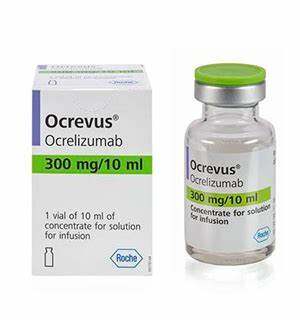
Ocrevus is a humanized monoclonal antibody that selectively targets CD20-positive B cells, a specific type of immune cell considered to be a key factor in causing myelin and axonal damage, which can lead to disability in patients with multiple sclerosis (MS). Preclinical studies have confirmed that Ocrevus selectively binds to the CD20 cell surface protein expressed on specific B cells, but does not bindStem Cellsand CD20 protein on the surface of plasma cells, thus preserving important functions of the immune system.
Ocrevus was first approved in the United States in March 2017FDAApproved for marketing, it has so far been approved in 89 countries worldwide. This drug is the first and only one approved for the treatment of RMS (including relapsing-remitting MS [RRMS], active or recurrent secondary progressive MS [SPMS], and clinically isolated syndrome [in the US market]) as well as PPMS. Administered via intravenous infusion every six months, with only two infusions required annually, it significantly improves patient adherence. Real-world experience with Ocrevus is rapidly expanding, with over 120,000 MS patients globally having received treatment with this drug. (Bioon.com)