

BriTonics: Leading China's Brain-Computer Interface Industrialization Across Multiple Sectors

Neuracle
Developer and Manufacturer of Brain-Computer Interface Systems and Related Equipment
How Far Are We Really from the “Mind Control” Seen in Sci-Fi Movies?
Two months ago, Elon Musk, known as the "Iron Man of Silicon Valley," announced that the latest brain-computer interface system developed by his company Neuralink had been tested on monkeys, enabling them to control computers with their brains. If approved by the FDA, human trials would commence in 2020. This signifies that transmitting information through "thought" alone is no longer a dream for humanity.
"The future is here.Brain-Computer Interfaces Have Become a New Technological Hotspot.“An industry insider commented thus.”
The rapid momentum of brain-computer interface (BCI) technology development abroad is evident. So, how is the progress of BCI technology in China? Recently, VCBeat had the privilege of interviewingChina's First to Industrialize Brain-Computer InterfacesNeuracle Technology (Changzhou) Co., Ltd. (hereinafter referred to as “Neuracle”), CEO Huang Xiaoshan provided insights into the company’s brain-computer interface products and research achievements.
Brain-Computer Interface, also known as "Brain Port" or "Brain-Machine Fusion Perception,"It is a direct connection pathway established between the human or animal brain and external devices.
Brain-Computer Interface: A High-Threshold, Complex Systematic Engineering Project, involving not only core disciplines such as neuroscience, cognitive science, and neural engineering, but also knowledge support from multidisciplinary fields including materials science, electronic engineering, and artificial intelligence.
The basic implementation steps of brain-computer interfaces can be divided into two stages: 1. Signal acquisition; 2. Data analysis and feedback. Brain-computer interfaces are classified as invasive and non-invasive.
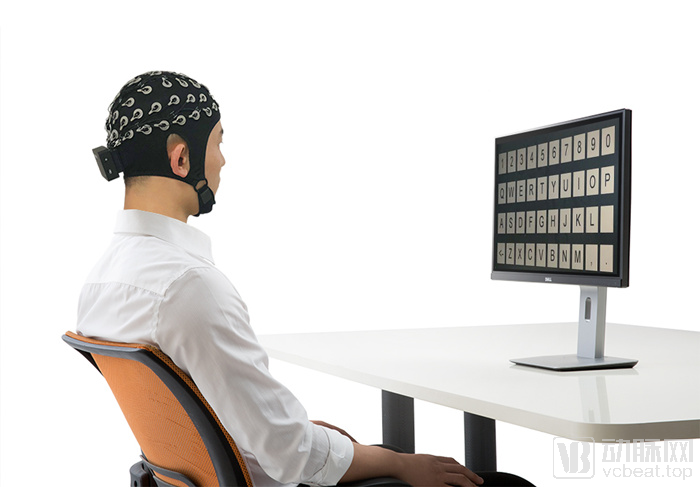
(Figure caption: SSVEP-controlled drone)
Invasive means the interface is directly implanted into the gray matter of the brain., thereby yielding neural signals of relatively high quality. However, its drawback is that it tends to trigger immune responses and the formation of scar tissue (glial scarring), which in turn leads to a decline or even complete loss of signal quality. Nevertheless, it is undeniable that“Invasive” acquisition yields the most direct EEG signals.
Non-invasive brain-computer interfaces do not penetrate the brain and are typically worn on the head in the form of EEG caps., but due to the attenuation of signals by the skull and the dispersion and blurring effects on electromagnetic waves emitted by neurons, the resolution of the recorded signals is not high, making it difficult to determine the precise brain region emitting the signals or the firing of individual related neurons.
"Invasive procedures carry higher risks than non-invasive ones, but they capture more accurate information."Currently, both invasive and non-invasive brain-computer interfaces (BCIs) are predominantly applied in the healthcare and medical sectors. Furthermore, compared to invasive BCIs, non-invasive BCIs are more readily applicable in the consumer electronics domain."Huang Xiaoshan told VCBeat."
He pointed out that, to date, research on brain-computer interfaces (BCIs) both domestically and internationally has spanned nearly half a century. Leading foreign technologies include BrainGate and Neuralink’s “brain chips,” as well as Facebook’s real-time thought-to-speech conversion system.
Although China started later in the field of brain-computer interfaces (BCIs), it has already achieved world-renowned accomplishments in non-invasive BCIs. Neuracle relies on the Neural Engineering Laboratory at Tsinghua University,Developed the world's fastest non-invasive brain-computer interface system in terms of communication speed., securing China a place in the international brain-computer interface field.
Furthermore, at this year’s World Robot Conference “BCI Brain-Controlled Robot Competition and the 3rd China Brain-Computer Interface Competition,” Wei Siwen from Tianjin University achieved a performance of 691.55 bits per minute on the computer screen (equivalent to outputting 69 Chinese characters per minute),Set a New Record in China for Typing Using Brain-Computer Interface TechnologyNeuracle is responsible for providing brain-computer interface signal acquisition devices and data analysis platforms for this competition.
In addition to the aforementioned outstanding achievements, Neuracle, as a pioneer in brain-computer interface technology in China, has also yielded highly encouraging R&D outcomes in the medical field.
Neuracle is a well-known enterprise in China’s neurotechnology sector. Leveraging Tsinghua University’s independently developed, internationally leading “brain-computer interface” technology,Neuracle is dedicated to innovative research in the fields of neuroscience, psychology, and neural engineering., providing professional and comprehensive solutions for the diagnosis, treatment, and rehabilitation of clinical neurological disorders.
Neuracle’s core team comprises high-caliber talents from Tsinghua University’s Neuroengineering Laboratory, who have devoted decades to the field of brain-computer interfaces (BCI), as well as medical market experts specializing in clinical neurology. Researchers account for more than half of the company’s total workforce.In the early stages, we focused on laboratory-based technological development. Following our undertaking of the National 12th Five-Year Plan’s Science and Technology Support Program, the company gradually advanced toward product commercialization."Huang Xiaoshan told VCBeat."
“In recent years, brain-computer interfaces have shown promising application prospects in the healthcare sector, with significant market potential and relative ease of industrialization. Therefore, our R&D focus is also placed on this field,” introduced Huang Xiaoshan.
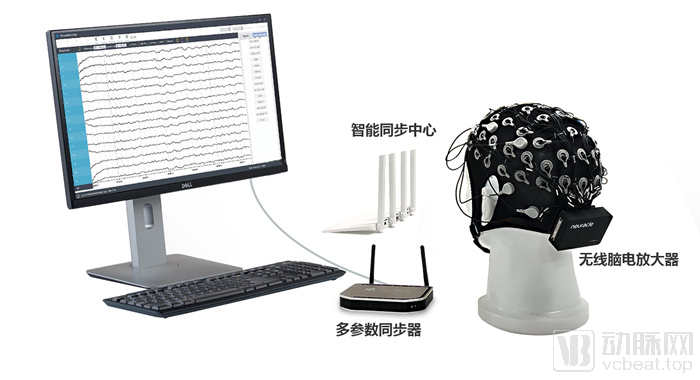
(Figure Caption: Intelligent Synchronization Center - Multi-Parameter Synchronizer - Wireless EEG Amplifier)
The company’s independently developed wireless EEG acquisition system and digital electroencephalograph (which has obtained medical device registration certificates) have been widely applied in brain science research and the medical field.Products such as the high-frequency, high-density EEG acquisition system and the brain function monitor have also completed product development, and medical device registration certificates are expected to be obtained in the near future.
“The high-frequency, high-density EEG acquisition system is used for intraoperative localization in neurosurgery, with core specifications such as channel count and sampling rate meeting or even surpassing those of leading international products.”"Huang Xiaoshan stated,"As a key special project on medical devices under the Ministry of Science and Technology’s 12th Five-Year Plan, this product is currently being widely adopted.
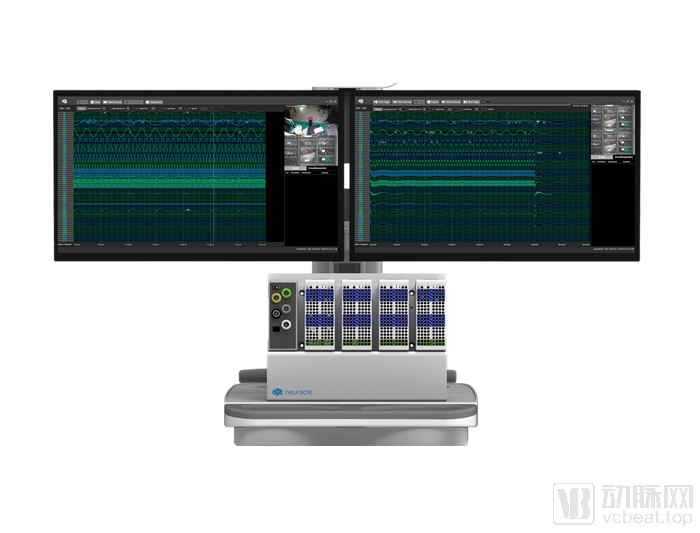
(Figure Caption: Close-up of a high-frequency digital electroencephalograph)
“We plan to expand the application of brain-computer interfaces in the therapeutic field and accelerate the process of industrialization,” said Huang Xiaoshan.
Currently, Neuracle is developing a minimally invasive closed-loop brain feedback stimulation system.This system employs minimally invasive implantation to prevent infection, meets the requirements for long-term use, and establishes a closed-loop acquisition and stimulation framework to achieve intelligent regulation. Taking epilepsy treatment as an example, the system detects characteristic warning signals prior to seizure onset and triggers electrical stimulation, thereby effectively suppressing epileptic seizures.
“This technology will complete animal trials in the near future,” added Huang Xiaoshan. The minimally invasive closed-loop brain feedback stimulation system has received support from the Ministry of Science and Technology’s Key Special Project under the 13th Five-Year Plan.
In addition,The company is also developing a brain-computer intelligent active rehabilitation system, which will be applicable to the rehabilitation of neurological damage such as stroke and intervention treatment for ADHD.therapy.“We have already launched clinical trials for our brain-computer intelligent active rehabilitation system with the CFDA/FDA. The preliminary trial results are significant, and we look forward to bringing it to market in the future,” said Huang Xiaoshan.
Driven by its robust R&D capabilities and broad market prospects, Neuracle has attracted investment from various sectors, securing multiple rounds of financing. The most recent round was completed in August 2019, raising RMB 60 million.
Huang Xiaoshan stated that although Neuracle has achieved certain accomplishments in the field of brain-computer interfaces (BCI) in China, this is merely the beginning for the company. “Our continuous endeavor is to facilitate the deployment of BCI technology across a wider range of application scenarios. Future technological innovations in BCI will truly bring science-fiction scenarios into reality,” said Huang Xiaoshan.
Finally, Huang Xiaoshan told VCBeat, “The brain-computer interface (BCI) sector is broad enough to be a lifelong career endeavor. We look forward to seeing China’s BCI technology compete on the global stage.”