

WeQiang Medical Files for IPO: A Pioneer in Peripheral Vascular Intervention with Four NMPA-Approved Products

Wei Qiang Medical
Vascular Interventional Device R&D and Manufacturer
Peripheral vasculature refers to blood vessels other than those of the heart and brain, comprising arteries, veins, and lymphatic vessels. As a crucial component of the human circulatory system, peripheral vasculature primarily affects blood supply to peripheral tissues and organs. Pathological changes mainly manifest as aneurysmal dilatation diseases and stenotic diseases. Peripheral vascular disease has a high incidence rate, and related conditions significantly impact patients' quality of life, with a high probability of severe outcomes such as amputation and paralysis, as well as high mortality rates. For example, in cases of dissecting aneurysm, the case fatality rate increases by 1% per hour within the first 48 hours after onset, reaching 70% within one week.
In China, the number of patients with peripheral vascular disease is large, and as the aging population increases, the prevalence of peripheral vascular disease continues to rise. According to the "White Paper on the Industry of Aortic and Peripheral Vascular Interventional Devices in China" published by Frost & Sullivan, the prevalence of peripheral artery disease among people aged 35-44 is 6%, while it reaches as high as 11.8% among those over 75 years old.
Currently, the main treatment methods for peripheral vascular disease include pharmacological therapy, surgical intervention, and endovascular therapy. Endovascular therapy can restore blood flow by using interventional devices to open up blocked vessels. Compared with traditional treatments, endovascular therapy is characterized by its simplicity, safety, minimal invasiveness, and faster patient recovery. As a result, it has gained increasing favor among both physicians and patients in the market.
Taking endovascular aortic intervention as an example,According to Frost & Sullivan statistics, the United States started early and developed rapidly in endovascular aortic intervention therapy,In 2018, the penetration rate of endovascular interventional therapy had already reached 3.1%, while the corresponding figure in China was only 1.6%.
Nowadays, with the overall improvement of China's medical standards, increasingly abundant medical resources, and enhanced patient payment capacity, the detection rate of peripheral vascular diseases in China will continue to rise, treatment penetration rates will converge toward those of mature international markets, and there is enormous potential for market expansion.
According to Frost & Sullivan data, in 2017, the number of endovascular aortic procedures in China reached 25,621, including 16,984 thoracic aortic procedures and 8,637 abdominal aortic procedures, with a ratio of approximately 7:3. With the continuous increase in the number of patients with aortic diseases in China, it is predicted that the volume of endovascular aortic procedures will continue to grow in the future, reaching 50,570 by 2022, among which thoracic endovascular aortic procedures will reach 32,117. The interventional therapy market holds promising prospects for the future.
In the Chinese market, such products are still predominantly supplied by multinational corporations such as Medtronic, W. L. Gore & Associates, and Cook Medical. Currently, numerous domestic enterprises are striving to localize high-end interventional medical devices, including Hangzhou Wei Qiang Medical Technology Co., Ltd. (hereinafter referred to as “Wei Qiang Medical”). Established in May 2016 and headquartered in Hangzhou, Wei Qiang Medical is an innovative enterprise under Deno Medical, specializing in peripheral vascular interventional medical devices.
“Wei Qiang Medical combines China’s vascular interventional technology with the advantages of high-efficiency, low-cost innovation, focusing on the R&D, manufacturing, sales, and technical support of interventional medical devices. Our current main products include aortic series products, lower extremity arterial series products, venous series products, balloons, catheters, and more,” introduced Wang Yongsheng, General Manager of Wei Qiang Medical.
For interventional therapy of peripheral vascular diseases, Wei Qiang Medical offers a complete and comprehensive full-line product portfolio.. Wang Yongsheng introduced:“We strive to provide comprehensive solutions, and have alreadyDeveloped a range of peripheral vascular interventional products that are first-of-their-kind either internationally or domestically. As ofIn 2019, weIt has a presence in the fields of aortic, venous, and lower extremity arterial products, as well as accompanying catheter products.
“For example, aortic arch stent systems, thoracic aortic stent systems, abdominal aortic stent systems, inferior vena cava filters, iliac vein stents,”Drug-coated balloons (DCB), steerable catheters, catheter sheaths, and retrieval devices (vascular foreign body removal devices) correspond to the aforementioned fields, respectively.” It is understood thatWei Qiang MedicalFusmart®Steerable Catheter,VasabreSheath,VsnareThe vascular foreign body retrieval device has been approved by the National Medical Products Administration (approved by the NMPA) and successfully launched. Wei Qiang Medical's Fabulous Thoracic Aortic Stent Graft System has successfully completed clinical enrollment of more than 130 cases.
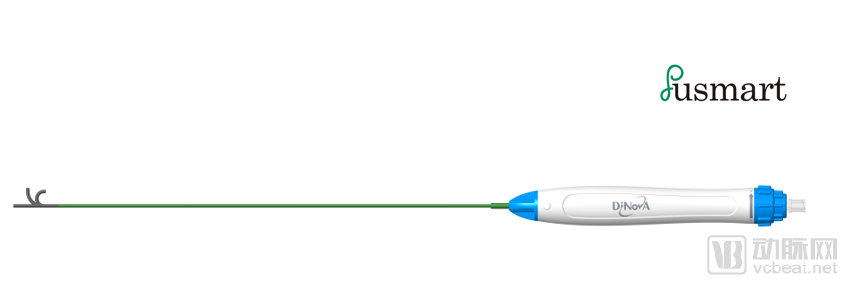
(Steerable Catheter)
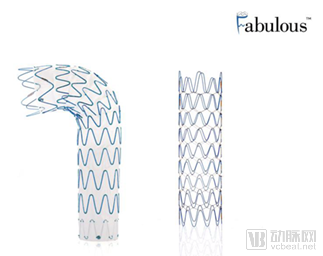
(Thoracic Aortic Stent)
“Wei Qiang Medical not only has a comprehensive layout, but its products also possess unique advantages. For instance, we have developed an endovascular stent graft with embedded modules for the aortic arch through medical-engineering collaboration. Diseases of the aortic arch include pathologies such as true aneurysms, pseudoaneurysms, and dissecting aneurysms involving the aortic arch.”
“The incidence of aortic arch diseases is relatively high, and the anatomical structure of the aortic arch is complex. The main vessels of the aortic arch exhibit a curved morphology and serve as the primary conduits for blood supply to the viscera and lower extremities; the branch vessels arising from the aortic arch are the channels maintaining blood supply to the brain and upper limbs, with significant inter-individual variability in branch diameter and spacing.”
“The challenge of endovascular intervention for the aorta lies in ensuring patency of the supra-aortic branch vessels while excluding aortic arch pathology; prolonged cerebral ischemia can cause fatal harm to patients. Wei Qiang Medical’s modular endovascular graft system for the aortic arch comprises multiple modular stent components, and the implantation process does not compromise blood supply to the main vessel or branch vessels. The dimensions of each modular stent can be freely selected to meet the needs of clinical individualization. Furthermore, the procedure is safe and controllable.”
On September 5, 2019, the Institute for Minimally Invasive Vascular Disease Treatment (hereinafter referred to as the “Vascular Institute”), established by Wei Qiang Medical, was founded in Hangzhou. Professor Wang Jian’an, President of The Second Affiliated Hospital of Zhejiang University School of Medicine (SAHZU), serves as the Director of the Vascular Institute; Mr. Zhao Yiwei, CEO of Deno Medical Group, serves as Executive Director; and Professor Chen Bing, Director of the Department of Vascular Surgery at SAHZU, serves as Deputy Director. Prominent vascular surgery experts, including Professor Chen Zhong, Director of the Department of Vascular Surgery at Beijing Anzhen Hospital, Capital Medical University; Professor Fu Weiguo from Zhongshan Hospital, Fudan University; Professor Guo Wei from the Chinese PLA General Hospital; Professor Zhang Xiaoming from Peking University People’s Hospital; and Professor Li Ming from The First Affiliated Hospital of Zhejiang University School of Medicine, serve as Chairmen of the Vascular Institute. Additionally, the Vascular Institute comprises more than 20 researchers with extensive expertise in the field of vascular disease treatment.
Zhao Yiwei stated, “Wei Qiang Medical possesses Chinese-style innovative capabilities that meet China-specific needs. Medical research and innovation serve as a crucial pillar for corporate development, aligning with both the current national context and the future trends of the healthcare industry in China. Wei Qiang Medical aims to create a new model of medical-engineering integration tailored to the Chinese context, build a new bridge for such integration, and achieve the seamless translation of Chinese-style innovation.”
In fact, Wei Qiang Medical has already achieved successful experience and results in exploring the model of integrating medicine with engineering. As stated: “All solutions provided by Wei Qiang Medical originate from clinical practice, particularly from the needs of clinical settings in China. In terms of workflow, we first identify clinical needs, including unmet needs related to existing diseases and areas where products require optimization. Next, we collaborate with clinical experts to jointly develop innovative solutions. Finally, we complete product development, clinical trials, and market approval registration through the integration of medicine and engineering.”
In the model of integrating medicine and engineering, the expert team from the medical community is indispensable, as is the engineering team from enterprises.
“Wei Qiang’s team comprises the management team, clinical expert team, R&D team, and production and operations team. Among the company’s more than 130 employees, over 40% are engaged in research and development. The team is the core competitiveness of Wei Qiang Medical; a robust team ensures our capabilities in innovation, research and development, commercial translation, and market promotion.”
It is reported that Mr. Zhao Yiwei, Chairman of Wei Qiang Medical, has 21 years of management experience in multinational medical device companies and previously held senior executive positions at industry giants such as Johnson & Johnson. Wang Yongsheng serves as the General Manager and R&D Director of Wei Qiang Medical. With 12 years of experience in medical device research and development, he has overseen the development of three products that have been approved through the National Innovative Medical Device Green Channel.
Wang Yongsheng cited two reasons for choosing the peripheral vascular field. First, peripheral vascular diseases have a high incidence rate, and existing products do not fully meet clinical needs. Second, China’s peripheral vascular interventional product market is dominated by imports, necessitating faster development for domestic manufacturers.
Regarding future plans, Wang Yongsheng stated: “Wei Qiang Medical will continue to focus on the peripheral vascular field. Currently, we will prioritize the commercial launch of our existing products to help more patients. Additionally, we are continuously conducting research and analysis, aiming to foster greater medical-engineering collaboration for the development of new products. Wei Qiang Medical is not merely a product provider; rather, we aspire to deliver comprehensive innovative solutions in the peripheral vascular field.”