

Eisai and Meiji Announce Approval of Novel Selective MAO-B Inhibitor Equfina (Safinamide) for Parkinson’s Disease in Japan
Sep 21, 2019 14:39
CST Updated
14:39

Eisai
Pharmaceutical Product R&D and Manufacturer

Meiji
Dairy, Candy, Nutritional Products, and Pharmaceutical Manufacturers

September 21, 2019/BioonBIOON/--Japanese pharmaceutical companies Eisai and Meiji Seika Pharma Co., Ltd. (hereinafter referred to as "Meiji") recently jointly announced that the new Parkinson's disease drug Equfina tablets (safinamide) have been approved in Japan for improving wearing-off phenomena in Parkinson's disease patients who are receiving treatment with levodopa-containing medications. Meiji holds the manufacturing and marketing authorization for safinamide, while Eisai has exclusive rights to sell safinamide.
In the United States, safinamide was approved in March 2017, becoming the first new chemical entity (NCE) approved in over a decade for the treatment of Parkinson’s disease in the U.S. market. Additionally, safinamide has been approved for marketing in more than ten European countries. In both the U.S. and European markets, safinamide is marketed under the brand name Xadago. It is recommended for use in combination with levodopa or other Parkinson’s disease medications for the treatment of mid-to-late stage idiopathic Parkinson’s disease.
This approval in Japan is based on data from a Phase II/III clinical study conducted in Japanese patients with Parkinson’s disease. The study was a multicenter, double-blind, placebo-controlled, randomized, parallel-group trial conducted in Japanese patients with Parkinson’s disease who were currently receiving levodopa (L-dopa) therapy but experiencing wearing-off phenomena. It evaluated the efficacy and safety of two doses of safinamide (50 mg and 100 mg, once daily for 24 weeks) as an oral adjunctive therapy. The primary endpoint was the change in mean daily ON time without troublesome dyskinesia from baseline to the end of the 24-week treatment period. ON time refers to the period during which patients with Parkinson’s disease experience optimal therapeutic effect from levodopa without developing motor complications.
The results showed that, compared with the placebo group, both safinamide treatment groups (50 mg and 100 mg) demonstrated statistically significant increases in ON-time. In terms of safety, the four most common adverse events in the safinamide treatment groups were nasopharyngitis, dyskinesia, falls, and contusions.
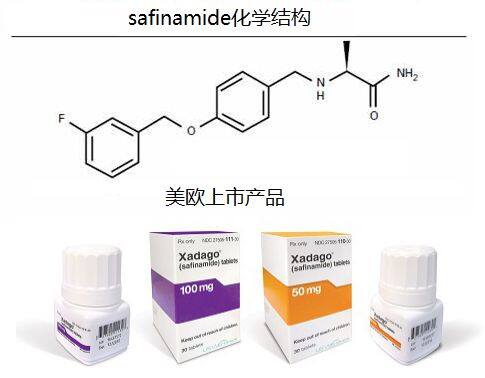
Parkinson’s disease (PD) is a neurodegenerative disorder that causes motor impairments, including tremors in the limbs, muscle rigidity, and gait disturbances. The disease is caused by the degeneration of the dopaminergic nervous system, leading to a deficiency of the neurotransmitter dopamine in the brain. According to internal estimates by Eisai, there are approximately 300,000 patients with Parkinson’s disease in Asia (excluding China and India). Based on data from the Japanese Ministry of Health, Labour and Welfare (MHLW), there were approximately 163,000 patients with Parkinson’s disease in Japan in 2014, and this number has been steadily increasing in recent years due to population aging.
Levodopa is currently the most effective and widely used medication for the treatment of Parkinson’s disease, with up to 75% of patients receiving this therapy. Levodopa effectively replenishes dopamine levels in the brain; however, as the disease progresses, the duration of its therapeutic effect (i.e., ON-time) gradually shortens. In some patients, Parkinsonian symptoms reemerge before the next dose of levodopa is administered, a phenomenon known as “wearing-off.” To prevent the occurrence of wearing-off, levodopa is often combined with other medications that have different mechanisms of action.
Safinamide is a novel, selective monoamine oxidase B (MAO-B) inhibitor that reduces the degradation of secreted dopamine, helping to maintain dopamine concentrations in the brain. Additionally, safinamide blocks voltage-dependent sodium channels on neurons, thereby inhibiting glutamate release. Consequently, this medication represents a novel therapeutic agent for Parkinson’s disease with both dopaminergic and non-dopaminergic mechanisms. Several previously conducted global clinical studies have demonstrated that safinamide, in combination with levodopa for the treatment of mid-to-late stage Parkinson’s disease, prolongs ON-time and improves motor function.
Safinamide was discovered and developed by the Italian pharmaceutical company Newron. In 2011, Meiji entered into a licensing agreement with Newron, securing exclusive rights to develop, manufacture, and market safinamide in Japan and other Asian countries. In March 2017, Eisai partnered with Meiji Seika Pharma Co., Ltd. to obtain the exclusive rights to safinamide in Japan and Asian countries.(Bioon.com)