

Pfizer and Merck's Bavencio + Inlyta Combination Receives CHMP Positive Opinion for First-Line Treatment of Advanced Renal Cell Carcinoma in the EU
Sep 21, 2019 14:40
CST Updated
14:40
Pfizer
Pharmaceutical R&D Developer

Merck Group
Pharmaceutical R&D Developer

European Medicines Agency
The European Medicines Agency (EMA) is a decentralized agency of the European Union (EU), located in London. It began operations in 1995. The agency is responsible for the scientific evaluation, supervision, and safety monitoring of medicines developed by pharmaceutical companies for use in the EU. By ensuring that all medicines available on the EU market are safe, effective, and of high quality, the EMA protects public and animal health in the 28 EU Member States and countries of the European Economic Area.
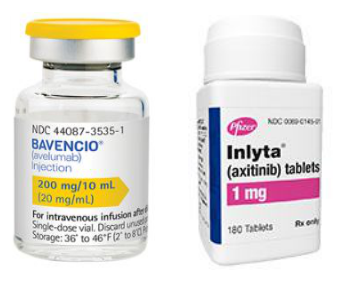
September 21, 2019/BioValleyBIOON/--US Pharmaceutical GiantPfizer(Pfizer) and its partner Merck KGaA recently jointly announced that the Committee for Medicinal Products for Human Use (CHMP) of the European Medicines Agency (EMA) has issued a positive opinion, recommending approval of PD-L1TumorType II variation application for the immunotherapy Bavencio (avelumab) in combination with the tyrosine kinase inhibitor Inlyta (axitinib) for the first-line treatment of adult patients with advanced renal cell carcinoma (RCC). This opinion is based on data from the Phase III JAVELIN Renal 101 study, which demonstrated that, across all prognostic risk groups, the Bavencio plus Inlyta combination significantly prolonged progression-free survival (PFS) and achieved a clinically meaningful improvement in overall response rate (ORR) compared with sunitinib. The CHMP opinion will now be submitted to the European Commission (EC) for review, with a decision expected in the fourth quarter of this year.
In the United States, the Bavencio + Inlyta combination regimen was approved by the FDA in May this year for the first-line treatment of patients with advanced RCC. The approval was granted through priority review, previouslyFDAThe combination has been granted Breakthrough Therapy Designation for first-line treatment of advanced RCC. Furthermore, Pfizer and Merck KGaA submitted a supplemental application in Japan this January for the Bavencio + Inlyta combination in patients with unresectable or metastatic RCC.
It is worth mentioning that in April and September this year, Merck & Co.’s PD-1TumorThe combination of immunotherapy Keytruda and Inlyta has been approved in the United States and the European Union, respectively, for first-line treatment of RCC patients. This approval includes patients across all IMDC risk groups.
Despite the availability of current treatment options, the prognosis for patients with advanced renal cell carcinoma (RCC) remains poor. It is estimated that approximately 20%–30% of patients present with metastatic disease at initial diagnosis, and the 5-year survival rate for patients with metastatic RCC is approximately 12%.
The CHMP’s positive opinion is based on data from the JAVELIN Renal 101 study. This was a global, multicenter, randomized Phase III study conducted in 886 patients with newly diagnosed advanced renal cell carcinoma (RCC) to evaluate the efficacy and safety of Bavencio in combination with Inlyta (axitinib) as first-line therapy compared with Sutent (sunitinib). Sutent, developed by Pfizer, has been the standard-of-care drug for first-line treatment of RCC over the past decade. The primary objective of the study was to demonstrate whether the Bavencio plus Inlyta combination regimen was superior to Sutent in prolonging progression-free survival (PFS) or overall survival (OS) in patients with PD-L1–positive advanced RCC.
The complete results of the study have been presented at the 2018 EuropeanTumorEuropean Society for Medical Oncology (ESMO)Meetingpublished. The results showed that, compared with Sutent, the Bavencio + Inlyta combination therapy significantly reduced the risk of disease progression or death by 39% in patients with PD-L1–positive tumors (expression level ≥1%) (median PFS: 13.8 months vs. 7.2 months; HR=0.61 [95% CI: 0.475–0.790], p<0.0001), and by 31% in the overall study population (median PFS: 13.8 months vs. 8.4 months; HR=0.69 [95% CI: 0.563–0.840], p=0.0001). In terms of objective response rate (ORR), the Bavencio + Inlyta combination therapy was more than twice that of Sutent (55.2% vs. 25.5%). Importantly, the efficacy of the Bavencio + Inlyta combination therapy was independent of patient prognosis, demonstrating consistent benefits across favorable-, intermediate-, and poor-prognosis subgroups.
The JAVELIN Renal 101 study is part of the JAVELIN clinical development program, which encompasses at least 30 clinical trials, more than 15 different types of tumors, and over 9,000 patients. In addition to ovarian cancer, theseTumorTypes include:Breast Cancer, gastric cancer/gastroesophageal junction cancer and head and neck cancer, Merkel cell carcinoma, non-small cell lung cancer, renal cell carcinoma, and urothelial carcinoma.
Inlyta, developed by Pfizer, is an oral therapy designed to inhibit tyrosine kinases, including vascular endothelial growth factor (VEGF) receptors 1, 2, and 3, which may promote tumor growth, angiogenesis, and cancer progression.Tumordiffusion). In the United States and the European Union, Inlyta is approved for second-line treatment of advanced RCC.
Bavencio belongs to the class of PD-(L)1 tumor immunotherapies, a highly prominent category of cancer immunotherapy aimed at leveraging the body’s own immune system to combat cancer. By blocking the PD-1/PD-L1 signaling pathway, it induces cancer cell death and offers therapeutic potential for multiple typesTumorpotential.
Pfizer signed an agreement worth up to $2.85 billion with Merck in November 2014 to enter the PD-(L)1 field. In March 2017, Bavencio received U.S.FDAAccelerated approval for the treatment of metastatic Merkel cell carcinoma (mMCC) in pediatric patients aged 12 years and older and adults, making this drug the first globally approved therapy for mMCC.TumorImmunotherapy, a type of therapy that is moreMelanomaMore aggressive skin cancers with a poorer prognosis. In May 2017, Bavencio received further approval from the U.S.FDAAccelerated approval for: (1) patients with locally advanced or metastatic urothelial carcinoma (mUC) who have disease progression during or after platinum-containing chemotherapy; (2) patients with locally advanced or metastatic urothelial carcinoma (mUC) who have disease progression within 12 months of receiving platinum-containing chemotherapy in the neoadjuvant (pre-surgical) or adjuvant (post-surgical) setting. (Bioon.com)