

Merck’s PIFELTRO and DELSTRIGO Receive FDA Approval Expansion for Virologically Suppressed HIV-1 Patients
Sep 21, 2019 14:39
CST Updated
14:39

MSD
Pharmaceutical R&D and Manufacturer

FDA
U.S. Food and Drug Administration

September 21, 2019/BioonBIOON/---Merck & Co. recently announced that the U.S. Food and Drug Administration (FDA) has approved the supplemental New Drug Applications (sNDAs) for Pifeltro (in combination with other antiretrovirals) and Delstrigo (as a complete regimen), expanding their indications to include adults with HIV-1 infection who are virologically suppressed (HIV RNA <50 copies/mL) on a stable antiretroviral regimen, have no history of treatment failure, and have no mutations associated with resistance to the individual components of Pifeltro or Delstrigo.
Advances in HIV science have led to an increasing number of treatment options that meet the medical needs of people living with HIV. With this expanded indication, Delstrigo or Pifeltro, in combination with other antiretroviral agents, offers a new treatment option for patients considering switching their HIV antiretroviral therapy regimen.
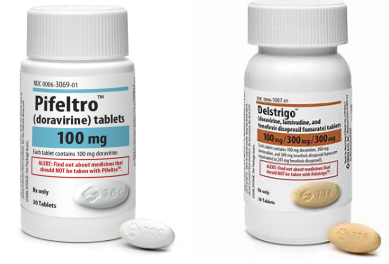
Pifeltro (doravirine, 100 mg) is a novel, once-daily non-nucleoside reverse transcriptase inhibitor (NNRTI) indicated for use in combination with other antiretroviral agents for the treatment of HIV-1 infection in adults with no evidence of resistance to NNRTIs, either historically or currently.
Delstrigo is a three-in-one combination medication composed of fixed-dose doravirine (DOR, 100 mg), a novel non-nucleoside reverse transcriptase inhibitor (NNRTI), lamivudine (3TC, 300 mg), and tenofovir disoproxil fumarate (TDF, 300 mg). This once-daily tablet is indicated as a complete regimen for the treatment of HIV-1 infection in adults with no evidence of resistance to NNRTIs, 3TC, or TDF, either historically or currently.
In the United States, Pifeltro and Delstrigo were approved in late August 2018 for adults with HIV-1 infection who had not previously received antiretroviral therapy. Both medications are administered orally once daily, with or without food. The labeling for Delstrigo includes a boxed warning regarding the risk of acute exacerbation of hepatitis B virus (HBV) infection following treatment discontinuation.
This sNDA approval is based on data from the Phase III clinical study DRIVE-SHIFT. This study was a multicenter, open-label, randomized, active-controlled, non-inferiority Phase III trial that enrolled 670 HIV-1-infected adults who had achieved virologic suppression for at least six months on an antiretroviral regimen (baseline regimen). The study evaluated the non-inferiority of switching from the baseline regimen to Delstrigo versus continuing the baseline regimen. In the study, patients were randomized into two groups: (1) the Immediate Switch Group (ISG, n=447), which switched to Delstrigo treatment on Day 0; and (2) the Delayed Switch Group (DSG, n=223), which switched to Delstrigo treatment after Week 24. The primary endpoint was the rate of virologic suppression. The primary comparison was between the virologic suppression rate in the Delstrigo ISG at Week 48 and that in the baseline regimen DSG at Week 24, followed by a comparison of the virologic suppression rates between the Delstrigo ISG and the baseline regimen DSG at Week 24.
The results showed that virologic control was maintained in the Delstrigo ISG treatment group at Week 48: the virologic suppression rate was 90.8% (406/447) and the virologic failure rate was 1.6% in the Delstrigo ISG treatment group at Week 48; in the baseline DSG treatment group, the virologic suppression rate was 94.6% (211/223) and the virologic failure rate was 1.8% at Week 24 (treatment difference in virologic suppression: -3.8%, 95% CI: -7.9 to 0.3; treatment difference in virologic failure: -0.2%, 95% CI: -2.5 to 2.1).
Furthermore, the Delstrigo ISG treatment group maintained virologic control at Week 24: the virologic suppression rate was 93.7% (419/447) and the virologic failure rate was 1.8% in the Delstrigo ISG group at Week 24, compared with a virologic suppression rate of 94.6% and a virologic failure rate of 1.8% in the baseline DSG regimen group at Week 24 (treatment difference in virologic suppression: -0.9%, 95% CI: -4.7 to 3.0; treatment difference in virologic failure: -0.0%, 95% CI: -2.3 to 2.3).
No genotypic or phenotypic resistance to the study drug was observed in patients receiving Delstrigo during the 48-week treatment period. (Bioon.com)