

CHMP Issues Positive Opinion to Expand Trulicity (dulaglutide) Label in EU Based on REWIND Trial Cardiovascular Benefits
Sep 23, 2019 16:38
CST Updated
16:38

Eli Lilly
Global Pharmaceutical R&D and Production Company

European Medicines Agency
The European Medicines Agency (EMA) is a decentralized agency of the European Union (EU), located in London. It began operations in 1995. The agency is responsible for the scientific evaluation, supervision, and safety monitoring of medicines developed by pharmaceutical companies for use in the EU. By ensuring that all medicines available on the EU market are safe, effective, and of high quality, the EMA protects public and animal health in the 28 EU Member States and countries of the European Economic Area.

September 23, 2019/BioValleyBIOON/--U.S. pharmaceutical giantEli Lilly(Eli Lilly) recently announced that the Committee for Medicinal Products for Human Use (CHMP) of the European Medicines Agency (EMA) has issued a positive opinion recommending updates to the labeling and indications statement for Trulicity (dulaglutide), a once-weekly glucagon-like peptide-1 receptor agonist (GLP-1RA) antidiabetic medication. The committee unanimously agreed that the drug label for Trulicity should incorporate data from the treatment of type 2DiabetesResults from the REWIND study on cardiovascular (CV) outcomes in patients showed that, compared with placebo, Trulicity reduced major adverse cardiovascular events (MACE-3: non-fatalMyocardial Infarction[Myocardial infarction], non-fatal stroke, and cardiovascular death) risk was significantly reduced by 12%, with consistent MACE effects in patients with or without CV disease, and CV risk continued to decrease throughout the study.
CHMP recommends updating the indications for Trulicity to reflect glycemic control and its impact on cardiovascular events in type 2DiabetesImportant considerations in patient treatment. Furthermore, the updated label will reflect the consistency of Trulicity in reducing the risk of MACE across major demographic and disease subgroups.
Eli LillyDr. Dawn Brooks, Global Development Leader for Trulicity, stated, “There are millionsDiabetesPatients have a higher risk of cardiovascular disease. “The REWIND study found that Trulicity significantly reduces major cardiovascular events, with consistent benefits in individuals both with and without established cardiovascular disease. We are pleased with the CHMP’s opinion, which recognizes the importance of these data and demonstrates the efficacy of Trulicity across a broad population of patients with type 2Diabetesbenefits to the patient.”
Based on the results of the REWIND study, Trulicity is the first type 2 diabetes medication to significantly reduce major adverse cardiovascular events (MACE) in a study population where the majority of enrolled patients had cardiovascular risk factors but no established cardiovascular disease. Adding Trulicity to treatment regimens for type 2 diabetes will benefit a broad patient population.
REWIND was a multicenter, randomized, double-blind, placebo-controlled study designed to evaluate the effect of once-weekly Trulicity 1.5 mg versus placebo (both added to standard care) on cardiovascular (CV) events in adult patients with type 2 diabetes. The primary CV endpoint was major adverse cardiovascular events (MACE-3: including cardiovascular death, non-fatalMyocardial Infarction, non-fatal stroke) as the time to first occurrence. Secondary endpoints included each component of the primary cardiovascular (CV) composite endpoint, a composite clinical microvascular outcome encompassing retinopathy or nephropathy, hospitalization for unstable angina, heart failure requiring hospitalization, urgent visits for heart failure, and all-cause mortality. The study enrolled 9,901 patients with type 2 diabetes from 24 countries worldwide. These patients had a mean disease duration of 10.5 years and a mean baseline A1C of 7.2%. Although all patients had cardiovascular risk factors, only 31% had established CV disease at baseline.
The results demonstrated that the study met its primary efficacy endpoint: in the overall study population, Trulicity significantly reduced the risk of major adverse cardiovascular events (MACE) compared with placebo (HR=0.88; 95% CI: 0.79–0.99). This treatment effect was consistent across all subgroups: (1) patients with established cardiovascular disease (HR=0.87; 95% CI: 0.74–1.02) and those without established cardiovascular disease (HR=0.87; 95% CI: 0.74–1.02); (2) patients with baseline A1C ≥7.2% (HR=0.86; 95% CI: 0.74–1.00) and those with baseline A1C <7.2% (HR=0.90; 95% CI: 0.76–1.06); and (3) females (HR=0.85; 95% CI: 0.71–1.02) and males (HR=0.90; 95% CI: 0.79–1.04).
All components of MACE 3 demonstrated risk reduction, including cardiovascular death (HR=0.91, 95% CI: 0.78–1.06), non-fatal myocardial infarction (HR=0.96, 95% CI: 0.79–1.16), and non-fatalStroke(HR=0.76, 95% CI: 0.61-0.95). Furthermore, Trulicity further demonstrated a reduction in composite microvascular outcomes (HR=0.87, 95% CI: 0.79-0.95). Analysis of renal outcomes indicated that long-term use of Trulicity was associated with a reduced progression of kidney disease in patients with type 2 diabetes.
In addition to long-term follow-up assessments of cardiovascular outcomes, the REWIND study provided further evidence of the efficacy of Trulicity in the treatment of diabetes. Compared with placebo, Trulicity reduced A1C from a median baseline of 7.2% in the overall study population (A1C: −0.46% [Trulicity] vs. +0.16% [placebo]; body weight: −2.95 kg [Trulicity] vs. −1.49 kg [placebo]). The safety profile of Trulicity in this study was consistent with that of the GLP-1 receptor agonist class. The most common adverse events leading to discontinuation of Trulicity were gastrointestinal events.
The REWIND study differs markedly from other cardiovascular (CV) outcome trials in that it enrolled a smaller proportion of patients with pre-existing CV disease, thereby enabling the evaluation of the CV effects of Trulicity in a broader population of patients with type 2 diabetes. Importantly, the REWIND study had a median follow-up duration of 5.4 years, exceeding five years and representing the longest follow-up among all GLP-1 receptor agonist (GLP-1RA) CV outcome trials. Furthermore, this trial featured the lowest baseline HbA1c (7.2%) and a more balanced sex distribution (46.3% female and 53.7% male) among all diabetes CV outcome studies conducted to date. This patient population is more representative of individuals with type 2 diabetes commonly encountered in clinical practice. In contrast, other CV outcome trials included higher proportions of patients with elevated baseline HbA1c levels and a greater prevalence of established CV disease at baseline.
Hertzel Gerstein, Chair of the REWIND study, Associate Director of the Population Health Research Institute at McMaster University and Hamilton Health Sciences, and Professor of Medicine, previously stated: “REWIND was an ambitious study that evaluated whether Trulicity could protect patients without cardiovascular (CV) disease from experiencing their first CV event, and whether it could prevent subsequent CV events in patients with existing CV disease. The study results demonstrated that Trulicity effectively reduced the risk of major adverse cardiovascular events (MACE) in a broad population of individuals with type 2 diabetes, and these data are highly compelling.”
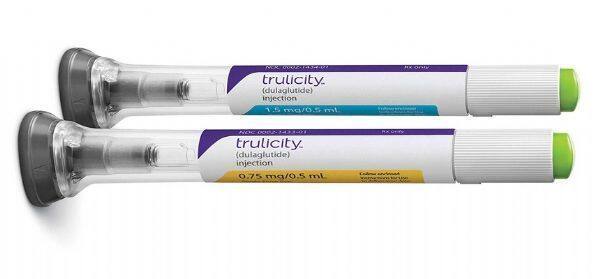
Trulicity is a glucagon-like peptide-1 (GLP-1) receptor agonist (RA), administered as a once-weekly subcutaneous injection, indicated to improve glycemic control in adult patients with type 2 diabetes mellitus in conjunction with diet and exercise.
GLP-1 RAs are a class of diabetes medications that have garnered significant attention. GLP-1 RAs are not insulin; rather, they are a novel class of insulin secretagogues. Their mechanism of action is similar to that of the endogenous hormone GLP-1, promoting the secretion of the patient’s own insulin in response to food intake. They offer potent glucose-lowering effects, a lower risk of hypoglycemia, and also possessWeight LossEfficacy and Advantages in Conferring Cardiovascular Benefits.
In the field of GLP-1 RAs, Novo Nordisk’s Victoza (liraglutide) is currently the best-selling product, with global sales reaching $3.861 billion in 2018.Eli LillyTrulicity’s sales stood at $3.199 billion. However, the industry believes that Trulicity is bound to replace Victoza in the coming years. Pharmaceutical market research firm EvaluatePharma predicts that Trulicity’s sales will reach $7.13 billion in 2024, making it the best-selling antidiabetic drug globally.
However, semaglutide, another GLP-1 RA antidiabetic drug from Novo Nordisk, is a formidable contender. Its subcutaneous injection formulation, Ozempic (administered once weekly via subcutaneous injection), was approved for market launch in December 2017, with sales reaching $562 million in the first half of this year; full-year sales are projected to surpass the $1 billion mark. Additionally, the oral formulation of semaglutide, Rybelsus (taken orally once daily), has recently received U.S.FDAApproved, becoming the world’s first oral GLP-1 RA antidiabetic drug.
According to EvaluatePharma’s forecasts, Ozempic and Rybelsus are projected to achieve sales of $5.28 billion and $3.23 billion, respectively, in 2024, totaling $8.51 billion, thereby becoming the best-selling GLP-1 receptor agonist (GLP-1 RA) antidiabetic drugs globally. (Bioon.com)