

DeJin Medical Launches China's First Transcatheter Mitral Valve Repair Device, Minimally Invasive System Mirrors Surgical 'Gold Standard' for Mitral Regurgitation

Valgen Medtech
Minimally Invasive Interventional Device Developer
In 2015, Valgen Medtech Co., Ltd. was established in Hangzhou High-Tech Industrial Development Zone (Binjiang).
Surprisingly, as an emerging enterprise, Valgen Medtech developed China’s first transcatheter mitral valve repair product for clinical application—the MitralStitch® Mitral Valve Repair System—within just four years of entering the mitral valve therapy field, rapidly establishing itself as an industry “benchmark.”
“OurMitralStitch® Mitral Valve Repair SystemYesThe world’s first device capable of both ‘artificial chordae implantation’ and ‘edge-to-edge repair’, effectively treating mitral regurgitation."The product boasts independent intellectual property rights, with over 40 patents currently applied for both domestically and internationally," said Zhang Tingchao, General Manager of Valgen Medtech.
How Was the MitralStitch® Mitral Valve Repair System Developed? What New Surprises Lie Ahead for Valgen Medtech as It Accelerates into Its Next Phase? Recently, VCBeat conducted an exclusive interview with Zhang Tingchao, General Manager of Valgen Medtech, and found the answers in their conversation.
Mitral Regurgitation DiseaseCurrent Status:Large patient population, complex etiology, and difficult to treat.
The mitral valve is located between the left atrium and the left ventricle of the heart, and its function is to prevent blood in the left ventricle from regurgitating into the left atrium.. If pathological changes such as mitral annular dilation or chordae tendineae elongation occur, mitral regurgitation will result, causing blood from the left ventricle to flow back into the left atrium through the mitral valve.Mitral Regurgitation, also commonly referred to as Mitral Insufficiency, primarily involves pathological and physiological changes wherein mitral regurgitation exacerbates the load on the left atrium and the diastolic load on the left ventricle.
Mitral regurgitation is classified into mild, moderate, and severe based on the severity of symptoms.Mild mitral regurgitation can lead to symptoms such as reduced cardiac function and arrhythmias. Moderate to severe mitral regurgitation can result in conditions such as heart failure and sudden cardiac death.Mild mitral regurgitation has minimal impact on the human body, is not life-threatening, and rarely requires surgical intervention; moderate to severe mitral regurgitation significantly affects health and necessitates surgical treatment.
In China, there are over 10 million patients with moderate-to-severe mitral regurgitation, yet the total number of surgical mitral valve procedures performed is only 40,000 (<0.4%).. This data indicates that the majority of patients with mitral regurgitation are not receiving effective treatment.
“According to feedback from clinicians, many patients are unaware that they have mitral regurgitation and do not understand the dangers of this disease. By the time symptoms become apparent, heart failure is often already present; if heart failure is severe, it can be difficult to treat,” said Zhang Tingchao. Furthermore, because the causes of mitral valve disease are complex and varied—such as congenital malclosure, mitral valve prolapse, myxomatous degeneration of the valve, and rheumatic heart disease—all of which can lead to mitral regurgitation, infective endocarditis can also affect the normal function of the mitral valve.Mitral regurgitation is currently primarily treated with surgical intervention.
Zhang Tingchao introduced that there are currently more than 50 mitral valve interventional repair devices under development globally, with over 20 of them having entered clinical trials. Looking at the industry as a whole, including in developed countries such as those in Europe and the United States, there is currently no minimally invasive device on the market that has been proven to be truly effective for treating mitral regurgitation.
In light of the aforementioned pain points, a market “gap” in the field of mitral regurgitation treatment is gradually emerging.
“Against this backdrop, Valgen Medtech aims to take the lead in the field of mitral valve therapy by developing leading-edge interventional medical device products,” said Zhang Tingchao.
Treatment for mitral regurgitation is categorized into medical therapy, surgical intervention, and transcatheter intervention. Surgical intervention remains the "gold standard" for the treatment of mitral regurgitation; transcatheter intervention serves as an alternative therapeutic option for patients at high surgical risk or those who are not suitable candidates for surgery.The "gold standard" surgical treatments for mitral regurgitation fall into three categories: 1. Annuloplasty, 2. Chordae tendineae repair, and 3. Surgical valve replacement. Edge-to-edge repair is also performed in select cases.
“After targeting the interventional device sector, we engaged in discussions with domestic and international cardiology and cardiac surgery experts to understand their insights into the pathological anatomy of mitral regurgitation and their requirements for interventional treatment devices. We synthesized the opinions of multiple experts,”They proposed a concept—the ideal device should achieve the gold standard surgical procedure via a minimally invasive approach."Zhang Tingchao told VCBeat."
To achieve the “gold standard” of surgical procedures through minimally invasive surgery, stringent requirements are inevitably imposed on the interventional devices used during the minimally invasive process.
In the second half of 2016, Zhang Tingchao and his team began developing the MitralStitch® mitral valve repair system. “OurThe core team comprises R&D engineers and cardiac surgeons from Anzhen Hospital and Fuwai Hospital.“During the research and development of the MitralStitch® product, we adopted a collaborative approach between medical professionals and engineers, dedicating over a year to exploratory R&D. In January 2018, the product successfully entered the clinical stage for new technologies,” said Zhang Tingchao.
MitralStitch® is an interventional device that enables both “chordal repair” and “edge-to-edge repair,” aligning with standard surgical techniques. Patients undergoing MitralStitch®-guided minimally invasive procedures can receive mitral valve repair without the need for conventional sternotomy, cardiac arrest, cardiopulmonary bypass, or X-ray exposure.
Why Choose “Chordae Tendineae Repair” and “Edge-to-Edge Repair”?
Zhang Tingchao explained that, first, in terms of surgical complexity, both procedures can be readily performed using interventional devices. Furthermore, for mitral regurgitation, early intervention is optimal; waiting until the late stage, when heart failure develops, offers virtually no therapeutic recourse. Chordae tendineae repair is a favorable early-intervention strategy, having undergone decades of clinical validation with significant efficacy. Moreover, it preserves the patient’s native anatomical structure, thereby preserving the possibility for subsequent minimally invasive reinterventions. Therefore, combining chordae tendineae repair with edge-to-edge repair as an adjunct can achieve favorable therapeutic outcomes.
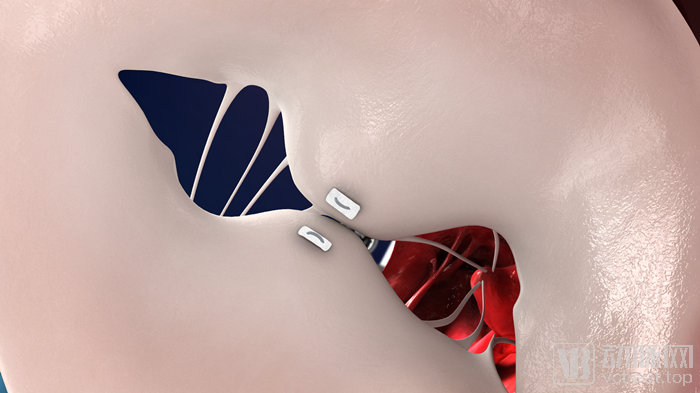
(Figure caption: MitralStitch® Mitral Valve Repair System)
Furthermore, he revealed that considerable effort was devoted to the product’s initial design to enable both surgical approaches.
“For minimally invasive surgery, this device must first be compact in size; second, upon entering the human body, it must effectively grasp the extremely thin valve leaflets that undergo high-frequency, large-amplitude motion, and then implant artificial chordae tendineae. This places exceptionally high demands on the ergonomic design of the device and imaging conditions,” said Zhang Tingchao.
Where there is demand, there are challenges.
“The product appears deceptively simple in design, yet its internal structure is exceptionally precise. Each component underwent rigorous testing and iterative refinement before finalization, ultimately achieving flawless realization:”One Set of Instruments + Two Surgical Techniques + Three Clinical Solutions Provided.“Zhang Tingchao said.
It is reported that the MitralStitch® mitral valve repair system has undergone more than 20 clinical implantations to date. Most of these patients presented with severe mitral regurgitation and impaired cardiac function prior to surgery. Postoperative feedback from all patients indicated effective improvement in their condition, with echocardiographic findings showing no or only mild regurgitation.
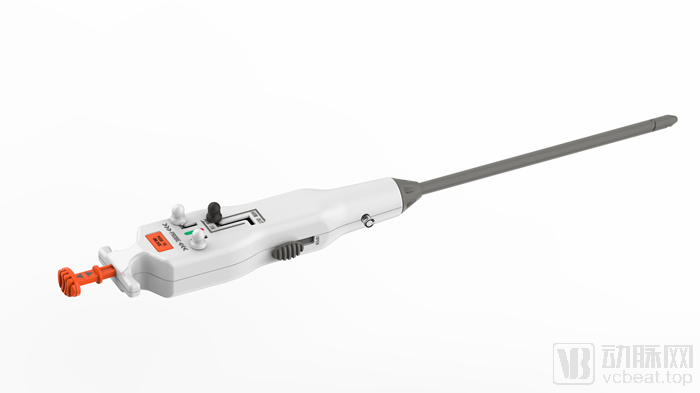
(Product Image)
Zhang Tingchao told VCBeat that the MitralStitch® product has four main advantages:I. Two surgical approaches are available.Adopt more flexible surgical approaches to treat different patients.II. Preservation of the Body's Natural Physiological and Anatomical Structures。For patients with mitral valve prolapse, the foreign MitraClip device employs an edge-to-edge technique by implanting a metal clip in the human body to secure the two leaflets together, forming a double-orifice structure. In contrast, MitralStitch® corrects regurgitation via a single small artificial chorda tendinea, thereby preserving the native anatomical structure.
3. No impact on the patient's subsequent treatment.Following chordae tendineae implantation, patients may undergo minimally invasive mitral valve repair or replacement surgery in subsequent years if clinically indicated.IV. Simpler and safer surgical procedures.The artificial chordae tendineae design of the MitralStitch® product surpasses two similar foreign competitors, offering strong leaflet attachment, a simplified surgical procedure that effectively reduces time costs for intraoperative imaging localization, and minimal patient blood loss.
“Valgen Medtech has currently established partnerships with many renowned hospitals in China, including Beijing Fuwai Hospital, Beijing Anzhen Hospital, Shanghai Changhai Hospital, Xi’an Xijing Hospital, Chengdu West China Hospital, the Second Affiliated Hospital of Zhejiang University School of Medicine, and the Second Xiangya Hospital,” said Zhang Tingchao.
He stated,MitralStitch® is expected to receive CFDA approval for market launch in the second half of 2021; the second-generation product, MitraStitch® II, has already commenced animal studies.
“The second-generation product has been upgraded and optimized, adopting a transfemoral puncture approach to minimize trauma to the greatest extent, making it suitable for higher-risk patients,” revealed Zhang Tingchao. In addition, Valgen Medtech is developing a series of products targeting the diverse etiologies of mitral regurgitation.