

Janssen's INVOKANA (Canagliflozin) Receives FDA Approval as First New Treatment in Two Decades for Diabetic Kidney Disease in Adults with Type 2 Diabetes
Oct 02, 2019 12:00
CST Updated
12:00

Janssen Pharmaceuticals
Pharmaceutical R&D Developer

Johnson & Johnson
Healthcare Product Manufacturers, Health Service Providers

FDA
U.S. Food and Drug Administration

October 02, 2019 /BioValleyBIOON/ -- Janssen Pharmaceuticals, a subsidiary of U.S. pharmaceutical giant Johnson & Johnson (JNJ), recently announced that the U.S. Food and Drug Administration (FDA) has approved a new indication for the glucose-lowering drug Invokana (canagliflozin): for use in patients with type 2Diabetes(T2D) andDiabetesDiabetic nephropathy (DN; also known as diabetic kidney disease, DKD) in adult patients with a certain amount of protein in the urine reduces the risk of end-stage kidney disease (ESKD), worsening renal function, cardiovascular (CV) death, and hospitalization for heart failure.
In the United States, type 2DiabetesIt is the leading cause of kidney disease and the fifth fastest-growing cause of death worldwide. In the United States, one in every three patients with type 2 diabetes (T2D) has diabetic kidney disease (DKD), which increases the risk of cardiovascular complications, including heart failure and cardiovascular death, and places patients on the path to dialysis and kidney transplantation. Furthermore, heart failure is a leading cause of hospitalization, and there is an unmet high demand for effective treatment options.
With this approval, Invokana is the only type 2 diabetes medication indicated to reduce the risk of hospitalization for heart failure in patients with both T2D and DKD.DiabetesThis drug is also the first new medication approved in nearly 20 years to slow the progression of diabetic kidney disease (DKD) in this patient population.
This approval is based on data from CREDENCE, a landmark Phase III clinical study evaluating the renal outcomes of Invokana, which is the only completed renal outcomes study in diabetes medicine. In July 2018, Johnson & Johnson decided to terminate the CREDENCE study early, following the recommendation of the Independent Data Monitoring Committee (IDMC), due to particularly significant efficacy.
CREDENCE was the first rigorously designed renal outcomes study conducted in patients with type 2 diabetes (T2D) and diabetic kidney disease (DKD) receiving standard-of-care background therapy, including angiotensin-converting enzyme (ACE) inhibitors and angiotensin II receptor blockers (ARBs). This randomized, double-blind, placebo-controlled, parallel-group, multicenter clinical trial enrolled 4,400 patients with T2D and chronic kidney disease (CKD) to evaluate the efficacy and safety of canagliflozin versus placebo in preventing clinically important renal and cardiovascular (CV) outcomes. Eligible patients had an estimated glomerular filtration rate (eGFR) ≥30 and <90 mL/min/1.73 m² and albuminuria (urine albumin-to-creatinine ratio >300 mg/g and ≤5,000 mg/g). All patients were required to have been treated with the maximum labeled or tolerated dose of an ACE inhibitor or ARB for at least 4 weeks prior to randomization.
The IDMC reviewed the data from the prespecified interim analysis, which showed that Invokana 100 mg plus standard of care reduced the risk of the primary composite endpoint (end-stage kidney disease [ESKD], doubling of serum creatinine, or renal or cardiovascular death) by 30% compared with placebo plus standard of care. Furthermore, the results demonstrated that Invokana reduced the risk of secondary cardiovascular endpoints, including a 39% reduction in the risk of hospitalization for heart failure. Overall, the incidence of adverse events and serious adverse events was numerically lower in the Invokana treatment group than in the placebo group, while remaining similar between the two groups. The incidences of diabetic ketoacidosis and genital fungal infections were numerically higher in the Invokana treatment group than in the other groups.Clinical Trial. Furthermore, there was no imbalance in lower limb amputations or fractures in this study, and no new safety signals were identified.
Dr. James List, Global Therapeutic Area Head of Cardiovascular & Metabolism at Janssen, a Johnson & Johnson company, stated, “With this approval, Invokana is now the only medication indicated to help reduce the risk of diabetic kidney disease-related outcomes in patients with type 2 diabetes, including the risk of hospitalization for heart failure. This significant advancement addresses a serious unmet medical need and has the potential to alter the care trajectory for millions of patients worldwide living with type 2 diabetes and diabetic kidney disease.”
Canagliflozin (卡格列净): Marketed in China under the brand name Invokana®
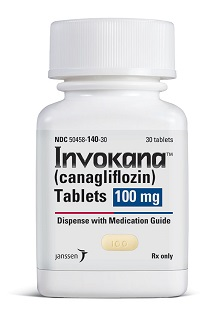
Canagliflozin is a novel glucose-lowering agent belonging to the class of sodium-glucose cotransporter 2 (SGLT2) inhibitors. SGLT2 is a transporter protein involved in glucose reabsorption in the proximal renal tubules of the kidney. Canagliflozin primarily works by inhibiting SGLT2 expressed in the kidneys, thereby reducing renal glucose reabsorption, increasing urinary glucose excretion, and consequently lowering blood glucose levels. This glucose-lowering effect is independent of beta-cell function and insulin resistance. Compared with non-diabetic individuals, patients with type 2 diabetes exhibit enhanced renal glucose reabsorption into the bloodstream, which may contribute to elevated blood glucose levels. In addition to its established glucose-lowering efficacy, canagliflozin offers additional benefits, including weight reduction, slowing the progression of proteinuria, and lowering blood pressure.
Currently, the indications for Invokana are: (1) to lower blood glucose levels in adult patients with type 2 diabetes mellitus, in conjunction with diet and exercise; (2) to reduce the risk of major adverse cardiovascular events, such as myocardial infarction, in adult patients with type 2 diabetes mellitus and established cardiovascular disease;Strokeand death; (3) to reduce the risk of end-stage kidney disease (ESKD), worsening of renal function, cardiovascular death, and hospitalization for heart failure in adult patients with type 2 diabetes and diabetic nephropathy who have a certain amount of protein in their urine.
Invokana is not indicated for patients with type 1 diabetes mellitus or for the treatment of diabetic ketoacidosis. The safety and efficacy of this medication in pediatric patients under 18 years of age have not been established.
In the Chinese market, canagliflozin was approved in September 2017 under the brand name Invokana®. When glycemic control is inadequate with metformin monotherapy or with combination therapy of metformin and a sulfonylurea, Invokana can be used in conjunction with metformin or with metformin and a sulfonylurea, along with diet and exercise, to improve glycemic control in adult patients with type 2 diabetes. (Bioon.com)