

Erleada (Apalutamide) Demonstrates 25% Reduction in Death Risk for Non-Metastatic Castration-Resistant Prostate Cancer in Updated SPARTAN Trial Results
Sep 30, 2019 11:46
CST Updated
11:46

Johnson & Johnson
Healthcare Product Manufacturers, Health Service Providers

September 30, 2019 / BIOON -- The 2019 European Society for Medical Oncology (ESMO) Annual Meeting was held in Barcelona, Spain, from September 27 to October 1. At this conference, US pharmaceutical giant Johnson & Johnson (JNJ) announced the latest long-term results from the SPARTAN Phase III clinical trial of Erleada (Erleada; generic name: apalutamide) for prostate cancer, following its second interim analysis. The data showed that in adult patients with non-metastatic castration-resistant prostate cancer (nmCRPC) at high risk of metastasis, Erleada plus androgen deprivation therapy (ADT) reduced the risk of death by 25% compared with placebo plus ADT. The latest study results indicated that the overall survival (OS) outcomes supported the findings from the first interim analysis, despite patients in the placebo group crossing over to receive Erleada treatment.
At the second interim analysis, with a median follow-up of 41 months, the 4-year overall survival (OS) rate was 72.1% in patients treated with Erleada and 64.7% in those treated with placebo. Overall, treatment with Erleada was associated with a 25% reduction in the risk of death compared with placebo (HR=0.75; 95% CI: 0.59–0.96; p=0.0197; note: statistical significance required p<0.0121). The OS benefit with Erleada was consistent across all baseline subgroups, including race, prior therapy, baseline PSA, and performance status.
This interim analysis was conducted when 67% of the required overall survival (OS) events had been observed, whereas the results of the first interim analysis were reported when only 24% of the required OS events had been observed (HR=0.70; 95% CI: 0.47–1.04; p=0.07). Following unblinding of the study and prior to the second interim analysis, 76 non-progressing patients in the placebo group (representing 19% of all placebo patients) crossed over to open-label Erleada treatment; the OS rates in the placebo group included those patients who received open-label Erleada. In the second interim analysis, the incidence of treatment-emergent adverse events (TEAEs) associated with Erleada was consistent with previously reported rates. The most common adverse events (≥10%) observed in the study were fatigue, hypertension, rash, diarrhea, nausea, weight loss, arthralgia, falls, hot flushes, decreased appetite, fractures, and peripheral edema.
Matthew Smith, MD, Professor of Medicine at Harvard Medical School, Director of the Genitourinary Malignancies Program at Massachusetts General Hospital Cancer Center, and Co-Principal Investigator of the SPARTAN study, stated, “Long-term analyses help provide a more comprehensive understanding of the therapeutic benefits and potential long-term risks of the drug. The latest analysis from the SPARTAN study demonstrates a significant survival benefit. These results add to the evidence supporting Erleada as a standard treatment regimen for patients with non-metastatic castration-resistant prostate cancer (nmCRPC) who remain at high risk of disease progression.”
Margaret Yu, Vice President of Janssen Research & Development and Therapeutic Area Head for Prostate Cancer, stated, “Although progress has been made in the treatment of prostate cancer in recent years, it remains a fatal disease, particularly when patients progress to advanced metastatic disease. As part of the largest clinical development program for androgen receptor inhibitors, Erleada is currently undergoing five Phase III randomized controlled trials. These trials underscore Janssen’s continued commitment to its belief that prostate cancer can become a manageable disease.”
Globally, prostate cancer is the second leading cause of cancer-related death in men, surpassed only by lung cancer. It is estimated that one in seven men will be diagnosed with prostate cancer during their lifetime. The disease predominantly affects older populations and is often driven by an excess of male hormones, including testosterone (androgens). Consequently, standard treatment aims to reduce androgen levels in patients, which can be achieved clinically through surgical castration and/or androgen deprivation therapy (ADT).
Castration-Resistant Prostate Cancer (CRPC) refers to a type of prostate cancer that continues to progress despite testosterone levels reaching castrate levels. Non-metastatic Castration-Resistant Prostate Cancer (nmCRPC) indicates that there is no clinical evidence of cancer cells spreading to other parts of the body (metastasis), and prostate-specific antigen (PSA) levels are elevated. Although these patients have not yet developed metastases, they often eventually succumb to metastatic disease. Delaying metastasis is key to treating advanced prostate cancer, thus creating an urgent need for effective drugs to control the condition.
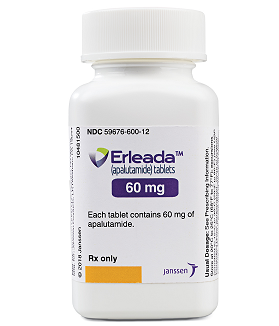
Erleada is a next-generation androgen receptor (AR) inhibitor administered orally, which helps block the activity of male hormones (such as testosterone) and delays disease progression. In the United States, Erleada was first approved by the FDA in February 2018 for the treatment of adult patients with non-metastatic castration-resistant prostate cancer (nmCRPC) at high risk of metastasis. This approval made Erleada the first drug worldwide for the treatment of nmCRPC.
This September, Erleada received further FDA approval for the treatment of patients with metastatic castration-sensitive prostate cancer (mCSPC). mCSPC, also known as metastatic hormone-sensitive prostate cancer (mHSPC), refers to prostate cancer that remains responsive to androgen deprivation therapy (ADT) and has spread to other parts of the body. Data from the Phase III TITAN study demonstrated that, compared with the placebo plus ADT group, the Erleada plus ADT group showed improved overall survival (OS), with a 33% reduction in the risk of death (HR=0.67; 95% CI: 0.51–0.89; p=0.0053), as well as improved radiographic progression-free survival (rPFS), with a 52% reduction in the risk of radiographic progression or death (HR=0.48; 95% CI: 0.39–0.60; p<0.0001). With a median follow-up of 22.7 months, the 2-year OS rate was 84% in the Erleada plus ADT group versus 78% in the placebo plus ADT group.
In China, Erleada® (Ansenke®) received accelerated approval this September for the treatment of adult patients with non-metastatic castration-resistant prostate cancer (nmCRPC) at high risk of metastasis. In May this year, the Center for Drug Evaluation (CDE) of the National Medical Products Administration granted Ansenke® “priority review” status due to its significant clinical advantage and included it in the second batch of overseas new drugs urgently needed for clinical use. Ansenke® is the first approved treatment regimen for nmCRPC in China and represents another innovative solution brought by Janssen Pharmaceuticals to the field of prostate cancer in China, following Zytiga® (abiraterone acetate tablets). Previously, Zytiga® was approved in 2015 and 2018, respectively, for use in combination with prednisone or prednisolone to treat patients with metastatic castration-resistant prostate cancer (mCRPC) and newly diagnosed high-risk metastatic castration-sensitive prostate cancer (mCSPC).
The industry is highly optimistic about the commercial prospects of Erleada. According to a forecast report released by the pharmaceutical market research firm EvaluatePharma, global sales of Erleada are projected to reach $2.115 billion in 2024. (Bioon.com)