

MaidaPace Medical Advances as Neuromodulation Emerges as a New Investment Hotspot

MEDKINETIC
Provider of Implantable or Wearable Neurostimulation Treatment Solutions
Since the United States and the European Union announced their brain research initiatives in 2013, proposing new measures to develop innovative neurotechnologies, research and applications in neuromodulation have rapidly advanced. Over the past decade, hundreds of thousands of patients worldwide have benefited from neuromodulation technologies. Currently, clinically established applications primarily include several key areas: deep brain stimulation for the treatment of Parkinson’s disease and depression; sacral nerve stimulation for urinary incontinence; vagus nerve stimulation for epilepsy; and spinal cord stimulation for pain management.
Experts predict that current mature applications are merely the tip of the iceberg; as basic research advances, the indications for neuromodulation will inevitably expand further. Currently, metabolic diseases, immune disorders, and cardiovascular diseases have emerged as new hotspots for R&D by multinational corporations and for foreign venture capital investment.
Neuromodulation: One of the Hottest Investment Sectors in Europe and the US, and One of the Fastest-Growing Segments within the Medical Device Industry
The rapid development in the field of neuromodulation in recent years is attributed to the active and deep involvement of industry (not only traditional medical device companies but also pharmaceutical giants), academic societies, universities, and government agencies.
In 2013, the head of R&D at pharmaceutical giant GSK published an article titled “Drug discovery: A jump-start for electroceuticals” in Nature, stating, “Imagine a future where electrical pulse stimulation becomes a mainstay of the healthcare industry, with clinicians prescribing electronic therapies that treat a range of conditions by targeting specific nerve fibers or neural circuits.” Meanwhile, the company selected and funded 50 laboratories at top universities worldwide to conduct research on various novel neuromodulation therapies, and established a dedicated global prize for neuromodulation research.
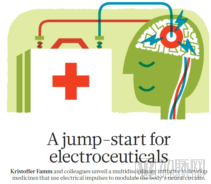
《Drug discovery:A jump-start for electroceuticals》
Shortly thereafter, the U.S. Defense Advanced Research Projects Agency (DARPA) announced an Electroceuticals program, funding seven teams worldwide to conduct research on neuromodulation for the treatment of several major diseases, two of which focused on inflammatory bowel disease. Additionally, the National Institutes of Health (NIH) proposed a research initiative under its BRAIN Initiative, recommending an investment of $4.5 billion over 10 years.
In 2015, the National Institutes of Health (NIH) established a $240 million common fund for the Stimulating Peripheral Activity to Relieve Conditions (SPARC) program, a specialized neuromodulation initiative. The program aims to investigate the neuroanatomy of peripheral organ systems, such as the gut, and to develop novel neuromodulation therapies for various diseases associated with peripheral organs. Currently, the program has recruited more than 100 leading scientists, engineers, and physicians to jointly conduct basic and clinical research on neuromodulation.
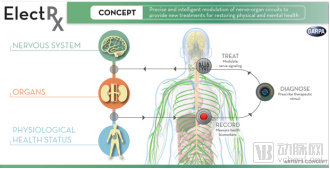
(Research Plan)
In 2019, the U.S. Congress authorized the National Institutes of Health (NIH) to launch the “Helping to End Addiction Long-term” (HEAL) Initiative. This initiative aims to address the major public health crisis of opioid addiction in the United States by seeking alternative approaches to pain management that significantly reduce reliance on opioids. Neuromodulation is one of the core components of this initiative, given its proven success in treating various types of pain. In 2019, the U.S. Congress allocated $1 billion to the initiative, with annual funding of $500 million to follow in subsequent years.
As the U.S. government vigorously supports and promotes frontier research in neuromodulation, novel neuromodulation therapies have become a hotbed for investment and startups. The world’s largest pharmaceutical groupGSK andAlphabet’s life sciences company, VerilyInvestment$700 million was invested to establish the joint venture Galvani Bioelectronics. The joint venture collaborates comprehensively with world-class neuromodulation laboratories and manufacturers, aiming to develop new methods and devices for neuromodulation therapies to treat various diseases, such as inflammation.
Global pharmaceutical giant Johnson & Johnson has invested $113 million in startup CVRx to develop vagus nerve stimulation therapy for heart failure, a treatment that recently received FDA approval.
SETPOINT Medical, a startup dedicated to developing novel neuromodulation therapies for rheumatoid arthritis, Crohn’s disease, and multiple sclerosis, has secured investment from multiple medical device giants since its inception, including GSK, Medtronic, and Boston Scientific. Following the success of its initial clinical trials, the company has attracted heightened interest and attention from additional venture capital firms.
According to incomplete statistics, more than a dozen startups in the field of neuromodulation have recently completed over $570 million in financing, with several others listing on Wall Street and securing substantial investment. For instance, Axonics, which uses rechargeable sacral neuromodulation to treat urinary frequency and urgency, had an initial public offering valuation exceeding $1 billion.
Driven by substantial investments from venture capital firms and medical device giants, scientists have conducted extensive research in this field. Currently, neuromodulation is emerging as one of the fastest-growing sectors within the medical device industry. At the 2019 Annual Meeting of the International Neuromodulation Society, an international panel of experts pointed out that the neuromodulation market will double from its current value of $4.7 billion within the next five years, and reach $11 billion within the next ten years.
Neuromodulation has become one of the hottest investment sectors and the fastest-growing areas within the medical device industry in Europe and the United States.
Current Status of Neuromodulation Development in China
The traditional field of neuromodulation encompassed only central nervous system interventions, such as deep brain stimulation and spinal cord stimulation. In recent years, with technological advancements and deeper research, the definition of neuromodulation has expanded to a broader scope, including vagus nerve stimulation, sacral nerve stimulation, peripheral organ stimulation, and non-invasive transcutaneous autonomic nerve stimulation. Beyond traditional indications such as Parkinson’s disease, epilepsy, and chronic pain, emerging neuromodulation therapies also target inflammatory, metabolic, and cardiovascular diseases, such as rheumatoid arthritis, inflammatory bowel disease, obesity, and diabetes.
Professor Luan Guoming, Chairman of the Neuromodulation Professional Committee of the Chinese Medical Doctor Association, has stated that recent years have constituted a golden age for the development of neuroscience, with neuromodulation technologies playing a pivotal role in the brain science research initiatives launched by various countries. Neuromodulation technology represents a perfect integration of modern medicine and bioengineering, and its emergence marks the advent of a new era in the treatment of neurological disorders. This technology not only plays a crucial and irreplaceable role in the treatment of neuropsychiatric disorders but also holds broad prospects in cutting-edge and fundamental research fields such as brain intelligence development and hybrid intelligence.
In recent years, neuromodulation has seen significant development in China. However, compared to the vigorous basic research and novel clinical applications abroad, domestic efforts in this field remain confined to a few traditional applications, lacking in fundamental research and pioneering innovations. Nevertheless, while searching for companies specializing in neuromodulation, we discovered an innovative enterprise that not only avoids a follow-the-leader strategy but is also committed to competing on the global stage with leading industry players by developing novel neuromodulation therapies. This company is Zhejiang Maida Peisi Medical Technology Co., Ltd. (hereinafter referred to as “MEDKINETIC”), based in Hangzhou. MEDKINETIC is pursuing a distinct development path by building an innovative neuromodulation platform and developing new neuromodulation applications.
Innovative Applications of Neuromodulation in China
Dr. Chen Jianfeng, Co-founder of MEDKINETIC, introduced that the company is developing innovative applications of neuromodulation therapy for inflammatory bowel disease, diabetes, and functional gastrointestinal disorders. Some products are currently seeking FDA approval for market launch, while others are poised to commence clinical trials. The development of these innovative applications is grounded in extensive cutting-edge basic research conducted both domestically and internationally. To date, the efficacy of the products has received preliminary clinical validation.
Chen Jianfeng revealed, “Our innovative neuromodulation platform and applications have attracted the attention of global industry giants. Potential partners currently include major companies such as Medtronic, GSK, and Boston Scientific.”
MEDKINETIC was founded in 2018 by several neuromodulation experts. Its core team includes renowned neuromodulation scientists from world-leading medical schools, Dr. Pikov—an internationally recognized expert in neuromodulation products who previously served as Director of the Neuromodulation Platform at GSK and Galvani Bioelectronics—seasoned entrepreneur Dr. Chen Jianfeng, and an R&D team comprising more than 20 professionals holding doctoral and master’s degrees.
MEDKINETIC stated:“Basic and translational research is conducted in collaboration with internationally renowned universities, led by top global experts in neuromodulation. Years of research into novel methods and applications in neuromodulation have yielded substantial research achievements and intellectual property rights. The technical team comprises formerThe Galvani implantable neuromodulation platform is led by executives who collaborate with top-tier international manufacturers. Clinical studies are conducted at leading university hospitals both domestically and abroad, including Johns Hopkins University School of Medicine and the Cleveland Clinic.
Chen Jianfeng stated, “During his tenure as Director of Research and Development at Galvani Bioelectronics, Dr. Pikov surveyed the leading enterprises and university research institutions in the global neuromodulation field and directly invested in more than 50 neuromodulation research teams. He possesses an in-depth understanding of the dynamics shaping the development of neuromodulation technologies. Dr. Pikov’s joining is crucial to our company’s growth. Through collaboration with international third-party neuromodulation companies, we aim to elevate our technology to a globally leading position and provide clear strategic direction for the company’s development.”
Chen Jianfeng stated that MEDKINETIC remains committed to the independent research and development of core technologies for its neuromodulation products, such as circuits and software, while opting to collaborate with specialized enterprises in other areas.
In terms of R&D, MEDKINETIC collaborated with top medical schools at European and American universities and renowned neuromodulation manufacturers to complete the development.MEDKINETIC collaborates with internationally leading specialized enterprises in areas such as process production design, batteries, and electrodes. Chen Jianfeng stated:“Abroad, MEDKINETIC focuses on technology transfer; in China, it is dedicated to building a neuromodulation platform, laying a solid foundation for the development of innovative applications. Meanwhile, we aim to introduce upstream production technologies into China to achieve localization and domestic substitution.”
When asked why the company chose to develop innovative neuromodulation applications for conditions such as inflammatory bowel disease (IBD), diabetes, and functional gastrointestinal disorders, Chen Jianfeng stated, “These diseases represent significant global challenges, with persistently high prevalence rates that adversely affect the quality of life for many patients. Current treatment options are limited: some conditions are incurable, while others require lifelong medication, creating an urgent need for novel therapeutic approaches. The neuromodulation platform we have built is not limited to these few diseases; it will expand to cover a broader range of conditions in the future.”
Inflammatory bowel disease (IBD) is referred to as a “cancer” that is not cancer. Currently, there is no cure in medical practice, and patients require lifelong medication. The neuromodulation therapy developed by MEDKINETIC enhances vagal nerve activity through neuromodulation, inhibits the release of inflammatory factors, and thereby controls inflammatory bowel disease. Compared with other therapies, neuromodulation therapy offers advantages such as greater safety, cost-effectiveness, and ease of implementation.
Diabetes in China is characterized by a large patient population and rapid growth. According to statistics, there are approximately 114 million diabetes patients in China, making diabetes prevention and control a serious social issue. Currently, long-term pharmacological treatment is the primary approach for managing diabetes, but it cannot provide a complete cure. MEDKINETIC’s neuromodulation therapy regulates gastrointestinal nerves to accelerate small intestinal transit time, thereby reducing nutrient absorption in patients. Simultaneously, it stimulates the distal small intestine to release GLP-1, promoting insulin secretion and achieving blood glucose reduction. Compared with pharmacological treatments, neuromodulation therapy avoids drug-related side effects, is more cost-effective, and imposes a lighter societal burden. Compared with bariatric metabolic surgery, neuromodulation therapy offers the advantages of being minimally invasive, adjustable, and reversible.
Functional gastrointestinal disorders involve a protracted treatment course with no definitive cure, and typically require adjunctive psychological and psychiatric interventions. MEDKINETIC’s wearable, non-invasive neuromodulation therapy has demonstrated excellent clinical efficacy for these conditions. Chen Jianfeng revealed, “The product is currently seeking FDA approval for market launch, and is expected to become available in both the Chinese and U.S. markets within a year.”
In addition to the aforementioned innovative applications, MEDKINETIC has amassed a substantial portfolio of original research achievements slated for gradual commercialization. “Our team not only comprises members with overseas educational backgrounds but also collaborates with top-tier international enterprises, endowing us with a global perspective. Furthermore, we are committed to conducting rigorous, grounded scientific research, thereby accumulating a wealth of original outcomes. Finally, the Ministry of Science and Technology is prioritizing support for the introduction of neuromodulation technologies to accelerate their localization in China. As a technology-driven enterprise dedicated to authentic original innovation, we align with national development objectives and have received policy support,” stated Chen Jianfeng. He asserted that the next killer application in neuromodulation will emerge from China, with MEDKINETIC poised to become a shining star in the field.
Regarding future plans, Chen Jianfeng introduced:“In addition to implantable platforms, MEDKINETIC has also developed wearable non-invasive neuromodulation therapies that demonstrate excellent clinical efficacy for certain conditions. Furthermore, MEDKINETIC provides holistic innovative solutions for the treatment of inflammatory bowel disease, metabolic disorders, and functional gastrointestinal diseases, aiming to secure a strong position in the burgeoning field of neuromodulation. Our strengths lie in our robust R&D capabilities and global industrialization capacity, leveraged by integrating domestic clinical resources,”Abundant patient resources, collaboration"Numerous KOLs and rapid development. We aim to drive the fast-paced global advancement of neuromodulation in the gastrointestinal and metabolic fields."