

Rishen'an Medical Completes Tens of Millions of Yuan Financing Led by Aipeng Medical and Rongan Venture Capital

Rishena Medical
Implantable Medical Device R&D and Production Manufacturer
VCBeat has learned that Rishena Medical Co., Ltd. (hereinafter referred to as “Rishena Medical”) has announced the completion of a financing round amounting to tens of millions of yuan. The funds raised will be used for clinical trials of implantable spinal cord stimulators, product development, and market promotion. This round of financing was jointly invested by Aipeng Medical, a listed company, and RAYS, with Fangyuan Capital serving as the exclusive financial advisor.
Neuromodulation is currently one of the hottest investment sectors globally and a rapidly growing segment within the medical device industry. According to incomplete statistics, more than a dozen startups in the neuromodulation field have recently secured over $570 million in financing, with several others listing on Wall Street. For instance, Axonics, which uses rechargeable sacral neuromodulation to treat urinary frequency and urgency, had an initial public offering valuation exceeding $1 billion. Other companies that have obtained financing include NeuSpera Medical Inc., Stimwave, Cefaly, and Cadence, among others. This demonstrates the significant opportunities in the neuromodulation sector, attracting attention from numerous top-tier funds.
As one of the most rapidly advancing technologies in contemporary medicine, neuromodulation has been employed to treat a variety of diseases. Clinically, it has evolved into an effective therapeutic approach for conditions such as Parkinson’s disease, epilepsy, depression, and chronic pain, while also serving as a key area of research in brain science. At the 2019 Annual Meeting of the International Neuromodulation Society, an international panel of experts stated: “Within the next five years, the neuromodulation market will double from its current value of $4.7 billion, and within the next ten years, it will grow to $11 billion.”
As a leading enterprise in the field of neuromodulation in China, Rishena Medical has accumulated substantial strength through years of development, and this financing round has attracted significant attention from numerous investors.
Mr. Cao Qi, Strategic Development Center, Aipeng Medical: “The implantable spinal cord stimulator (SCS), led by Rishena Medical as part of the 2016 National Key R&D Program, is currently recognized worldwide as one of the key approaches for treating refractory pain. It is also a flagship product in the pain management portfolios of globally renowned medical companies such as Medtronic and Boston Scientific. Aipeng Medical has long been dedicated to the research, development, and manufacturing of medical products focused on pain treatment and management. Rishena Medical’s research, development, and expansion of neuromodulation-based pain therapies align perfectly with Aipeng Medical’s strategic focus and direction. Therefore, we are confident in joining forces with Rishena Medical to work together towards alleviating patients’ pain.”
Dr. Xin Xiaoxiong, Investment Director at RAYS, stated, “Neuromodulation therapy has consistently remained a key focus of research and investment both in China and globally. The market is experiencing rapid growth worldwide, while China is on the verge of an explosive expansion. Rishena Medical specializes in active implantable neuromodulation products, leveraging resources from universities and medical institutions. With drug-resistant epilepsy as its entry point, the company is expanding and strategically positioning itself into broader therapeutic areas. The company’s currently developed and pipeline products feature leading-edge technologies. We believe that Rishena Medical will continue to provide safe, effective, and affordable solutions for patients in China, contributing to the localization of high-end medical devices.”
Rishena Medical’s team began the research and development of implantable neurostimulators as early as 2010, originating from a collaborative research project on gastric electrical stimulators between Tsinghua University’s Institute of Microelectronics and China-Japan Friendship Hospital. After more than three years of technical practice, prototypes of the gastric electrical stimulator and vagus nerve stimulator products reached commercial viability. In 2013, the company was established in the National High-Tech Industrial Development Zone in Changzhou, Jiangsu Province. Thus, from its inception, the company started with a high threshold and maintained close collaboration with Tsinghua University.
After settling in Changzhou and establishing a cleanroom facility in 2013, the company completed the commercial development of its implantable gastric electrical stimulator and implantable vagus nerve stimulator, submitting them to the Beijing Medical Device Testing Institute for testing. Upon receiving the test reports in 2015, the implantable vagus nerve stimulator promptly initiated clinical trials. Following three years of clinical trials, the product is currently awaiting approval from the National Medical Products Administration (NMPA).
Meanwhile, Rishena Medical has also developed products such as deep thermal coagulation brain electrodes and implantable spinal cord stimulators, which have successively entered clinical trials. Du Yuhui, the company’s general manager, stated, “Over the past few years, Rishena Medical has progressed steadily, continuously launching new products and advancing them into clinical application. Our pragmatic approach has gained recognition from medical experts and investors.”
Du Yuhui stated, “Our company established its headquarters in Changzhou, where we have received strong support from the local government. Compared to Beijing, Shanghai, and Guangzhou, our operational costs are significantly lower. Furthermore, as Changzhou is a manufacturing hub, it provides a more favorable environment for product development. Over the past few years, we have successively secured funding support from various programs, including the National Key R&D Program, the Jiangsu Province Mass Innovation and Entrepreneurship Team and Individual initiatives, and the Changzhou Longcheng Talent Program. With an investment of only tens of millions of yuan, we successfully developed three implantable products. In contrast, some companies require investments exceeding hundreds of millions of yuan to develop a single product. Therefore, we hold a substantial advantage in cost control.”
Rishena Medical’s core team members all hail from prestigious Chinese universities; for instance, General Manager Du Yuhui graduated from Tsinghua University, while the R&D team members are alumni of top-tier institutions such as Zhejiang University. As a startup, the company established an employee stock option incentive plan from its inception, fostering stronger team cohesion. The stability of the team over the years has also become one of the company’s key advantages.
“Our goal is to create high-quality products that are affordable for the general public. Currently, imported products are expensive, deterring many potential users. Against the backdrop of import substitution, this vision will become a reality more quickly,” said Du Yuhui emotionally.
Rishena Medical’s current product portfolio is primarily focused on the fields of epilepsy and pain management. According to epidemiological data, there are approximately 9 million epilepsy patients in China, including around 3 million with drug-resistant epilepsy, predominantly among children and adolescents. Poorly controlled epilepsy can severely impair patients’ quality of life, increase the risk of physical and psychological comorbidities, and may even lead to sudden unexpected death in epilepsy (SUDEP), thereby imposing a substantial burden on families and society.
For patients with drug-resistant epilepsy, surgical treatment is an important option. Surgical treatment mainly involves craniotomy to resect the epileptogenic focus; however, for patients who are not candidates for craniotomy, implantation of a vagus nerve stimulator (VNS) is the most appropriate therapeutic approach.
Du Yuhui stated, “The VNS products provided by Rishena Medical not only surpass imported products in performance but also incorporate remote programming capabilities. Patients can simply hold a handheld external programmer shaped like a mobile phone to receive remote adjustments from physicians at home. This greatly facilitates patient care and has been praised by both doctors and patients.”
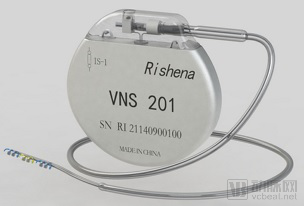
(Implantable Vagus Nerve Stimulator)
For patients eligible for surgical resection of epileptic foci, the core of the procedure lies in precisely locating these foci. Localization requires a comprehensive approach integrating clinical features, neuroimaging, and electrophysiological data. However, in clinical practice, approximately 50% of patients cannot have their epileptic foci effectively localized through non-invasive examinations alone, necessitating invasive monitoring with implanted subdural cortical electrodes for precise localization.
Du Yuhui stated, “Over the past two decades, the common practice has been to perform craniotomy and implant strip-shaped subdural cortical electrodes. This method of electrode implantation is highly invasive and carries significant risks, with complications such as infection and hematoma occurring frequently. More importantly, these cortical electrodes are most sensitive only to epileptic foci on the exposed surface of the cerebral cortex, but lack sensitivity to extensive cortical regions located deep within the cerebral cortex and at the bottoms of sulci, thus failing to precisely localize epileptic foci in these areas.”
In recent years, stereoelectroencephalography (SEEG) electrode implantation technology has rapidly advanced. SEEG is a method that involves precisely implanting multiple deep brain electrodes, each less than 1 millimeter in diameter, into different cortical regions of the brain using minimally invasive techniques. This procedure is based on three-dimensional reconstruction of brain structures from magnetic resonance imaging (MRI) and guided by hypothesized epileptogenic networks derived from various non-invasive diagnostic data, allowing for the recording of interictal and ictal electroencephalograms in patients.
Du Yuhui stated, “SEEG electrode implantation technology offers advantages such as precise localization, minimal invasiveness, low complication rates, and extensive monitoring coverage. It demonstrates significant superiority in accessing nearly all regions of the cerebral cortex, particularly those cortical areas that are inaccessible to subdural strip electrodes for monitoring. Due to these advantages, the SEEG electrode implantation technique has rapidly gained acceptance among physicians and patients, leading to its widespread clinical application.”
“The SEEG electrodes developed by Rishena Medical not only fulfill the function of stereotactic EEG monitoring but also incorporate temperature sensors, enabling radiofrequency thermocoagulation under temperature control. Currently, no other company worldwide offers this capability.”
“Initially, clinicians approached Rishena Medical to provide temperature-controlled radiofrequency thermocoagulation capabilities for patients who had undergone SEEG electrode implantation but were not suitable for craniotomy. In response to this request, we collaborated with Beiqi Medical, a company specializing in the manufacture of radiofrequency thermocoagulation devices. After repeated trials, we successfully developed SEEG electrodes capable of temperature-controlled thermocoagulation. The product underwent clinical trials at Xuanwu Hospital of Capital Medical University, PLA General Hospital (301 Hospital), the Second Affiliated Hospital of Zhejiang University School of Medicine, Shanghai Renji Hospital, and Qilu Hospital. Currently, the clinical trials are nearing completion, and we are preparing to submit an application for market approval.”
SEEG Electrodes with Temperature-Controlled Radiofrequency Thermocoagulation Offer Dual Functions of Localization Diagnosis and Radiofrequency Therapy, Providing a Minimally Invasive and Precise Treatment Option for Patients with Refractory Epilepsy.
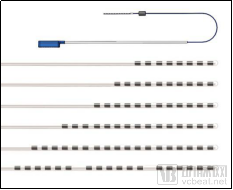
(SEEG Electrodes)
In the field of pain management, Rishena Medical has developed an implantable spinal cord stimulator (SCS). In 2016, this product was included in the special project for the research and development of digital diagnostic and therapeutic equipment under the National Key R&D Program. Led by Rishena Medical, with the participation of Tsinghua University, the Institute of Semiconductors of the Chinese Academy of Sciences, Xuanwu Hospital, Peking University People's Hospital, and Beijing Beiqi Medical, the project received expert approval and support after successful application and defense.
Du Yuhui stated, “SCS products are a solution for refractory pain. With over 100 million pain patients in China, the market is enormous. In foreign countries, SCS products account for half of the neuromodulation device market share, whereas annual sales volume in China is only in the hundreds. The reason is that imported products cost more than 200,000 yuan, and there is currently no domestic alternative, which has deterred many patients from trying this therapy.”
“Rishena Medical’s R&D does not simply replicate the form of foreign products; rather, it applies the latest technologies to its independently developed spinal cord stimulation (SCS) products. This approach not only expands the range of stimulation parameters and offers various electrode configurations, but also incorporates remote programming capabilities, enabling the product’s performance and functionality to surpass those of other international competitors.”
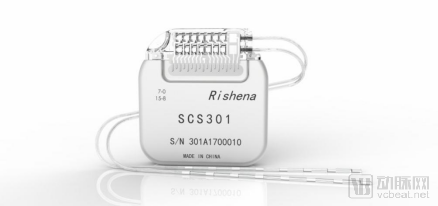
(Implantable Spinal Cord Stimulator)
Rishena Medical has always been committed to learning advanced medical device technologies, but places greater emphasis on innovation and surpassing existing standards. “Our goal is certainly not to constantly trail behind foreign products,” said Du Yuhui. Rooted in scientific research, Rishena Medical has consistently supported R&D efforts. Starting with collaborative research experiments on gastric electrical stimulators and colonic stimulators conducted with China-Japan Friendship Hospital, Rishena Medical has subsequently partnered with numerous hospitals across China to advance multiple projects, including esophageal stimulators, vocal cord paralysis stimulators, and brain stimulators. By providing unconditional support for physicians’ scientific exploration, Rishena Medical aims to develop domestically originated neurostimulators in the future.
“We collaborated with Xuanwu Hospital of Capital Medical University to develop a brain stimulator for the treatment of Alzheimer’s disease. This project received support from the National Key R&D Program of China in 2018. This research is a global first, led by Professor Wang Yuping, Director of the Department of Neurology at Xuanwu Hospital. We hope to improve the current situation where there are no effective drugs available for treating Alzheimer’s disease.”
Regarding future plans, Du Yuhui stated, “Our company is characterized by pragmatism and dedicated customer service; empty slogans serve no purpose. Our goal is to build an enterprise that delivers social value, embodies humanistic spirit, and offers meaningful product worth. Currently, we are strategizing the development of new products, with the aim of creating more internationally innovative offerings in the future.”
About Aipeng Medical
Jiangsu Aipeng Medical Technology Co., Ltd. (Stock Code: 300753), established in 2001, currently owns Aipu Scientific Instrument (Jiangsu) Co., Ltd. and Shanghai Nuosiqing Biotechnology Co., Ltd. As a high-tech enterprise specializing in the research, development, production, and sales of medical devices in the field of pain management, Aipeng Medical’s main products include microcomputer-controlled infusion pumps, disposable infusion pumps, and wireless analgesia management systems. In particular, its pain management products have been widely applied in clinical treatment, supporting countless healthcare professionals and alleviating pain for millions of patients.
About RAYS
RAYS, established in Beijing in September 2014, specializes in incubating and supporting innovative startups in the healthcare sector. The medical funds initiated and managed by RAYS are positioned as professional early-stage venture capital vehicles focused on the healthcare industry, investing in high-potential enterprises in medical devices, biotechnology, innovative drug development, and healthcare services. Striving to become China’s most competitive healthcare venture capital management firm, RAYS has been recognized as one of the Top 10 Emerging Investment Institutions in China’s Healthcare Sector by 36Kr and ranked among the Top 50 Early-Stage Investment Institutions Most Favored by LPs in China.
About Optimas Capital | Optimas Capital
Fangyuan Capital specializes in financial advisory services within the healthcare sector, positioning itself as an entrepreneurial partner to founders. Established in 2016, the firm focuses on niche segments including high-value consumables, in vitro diagnostics (IVD), healthcare services, and innovative pharmaceuticals. The team has facilitated financing for companies such as Wuse Technology, Linjia Haoyi, Huopu Medical, Qian Dafu, Boying Medical, Rishena Medical, and Zhicheng Youyuan.