

Roche Announces Positive Phase III IMvigor130 Trial Results: Tecentriq Plus Platinum-Based Chemotherapy Significantly Improves Progression-Free Survival in First-Line Advanced Bladder Cancer
Oct 08, 2019 09:10
CST Updated
09:10

Roche
Oncology Drug Research, Development, and Manufacturing
October 08, 2019 /BioValleyBIOON/ -- Swiss pharmaceutical giant Roche recently announced PD-L1TumorPositive Results from the Phase III IMvigor130 Clinical Study of Immunotherapy Tecentriq (atezolizumab) for Urothelial Carcinoma. Notably, this study is the first positive Phase III trial to evaluate an immune combination therapy as first-line treatment for patients with advanced bladder cancer. The data showed that Tecentriq in combination with chemotherapy reduced the risk of disease progression or death compared with chemotherapy alone.
IMvigor130 is a multicenter, partially blinded, randomized study conducted in patients with locally advanced or metastatic urothelial carcinoma (mUC) who had not previously received systemic therapy for metastatic disease. The study evaluated the efficacy and safety of Tecentriq plus chemotherapy, Tecentriq monotherapy, and chemotherapy as first-line (initial) treatment. A total of 1,213 patients were enrolled and assigned to receive: (1) Tecentriq plus platinum-based chemotherapy (gemcitabine combined with cisplatin or carboplatin); (2) Tecentriq monotherapy; or (3) platinum-based chemotherapy (gemcitabine combined with cisplatin or carboplatin) plus placebo (control group). In this study, the co-primary endpoints for the Tecentriq combination therapy group were progression-free survival (PFS) and overall survival (OS), as assessed by study investigators using the Response Evaluation Criteria in Solid Tumors version 1.1 (RECIST v1.1). Secondary endpoints included objective response rate (ORR) and duration of response (DOR) as assessed by study investigators using RECIST v1.1, and PFS as assessed by an independent review facility.
The results demonstrated that, compared with platinum-based chemotherapy, Tecentriq plus chemotherapy yielded a statistically significant improvement in progression-free survival (PFS) (median PFS: 8.2 months vs. 6.3 months; HR=0.82, 95% CI: 0.70–0.96, p=0.007). In the intent-to-treat (ITT) population, Tecentriq plus chemotherapy also showed encouraging results in overall survival (OS) compared with chemotherapy alone; however, these data did not reach statistical significance at the interim analysis (median OS: 16.0 months vs. 13.4 months, HR=0.83, 95% CI: 0.69–1.00). The safety profile of the Tecentriq plus chemotherapy group in this study was consistent with the known safety profiles of the individual agents, and no new safety signals were identified.
Roche also announced additional data on Tecentriq monotherapy in the ITT patient population and in patient subgroups with varying PD-L1 expression levels. The results showed encouraging OS outcomes with Tecentriq monotherapy in the PD-L1 high-expression (IC2/3) subgroup; however, these data were not formally tested according to the trial’s stratified design. Follow-up will continue until the next analysis.
Sandra Horning, Chief Medical Officer and Head of Global Product Development at Roche, stated: “We are pleased with the positive results from the IMvigor130 study, which suggest that Tecentriq plus chemotherapy may provide newDiagnosisprovide meaningful benefits to patients with advanced bladder cancer. For patients with advanced bladder cancer, there remains a need for highly effective treatments, and chemotherapy is currently the standard of care. These results reinforce the role of immunotherapy in treating this aggressive disease.”
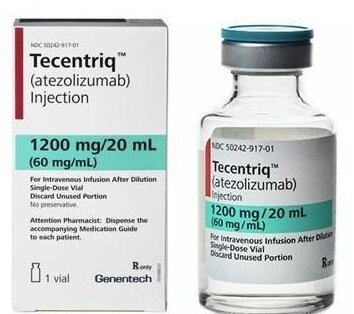
Tecentriq is the first cancer immunotherapy approved for the treatment of advanced bladder cancer. Tecentriq has been approved by the U.S.FDAAccelerated approval for the treatment of patients with locally advanced or metastatic urothelial carcinoma, including those who are ineligible for cisplatin-containing chemotherapy and whose tumors express high levels of PD-L1, as well as those who are ineligible for platinum-containing chemotherapy regardless of PD-L1 expression status. This accelerated approval also includes patients who have experienced disease progression during or following platinum-containing chemotherapy, and patients who have experienced disease progression within 12 months of neoadjuvant or adjuvant chemotherapy. These accelerated approvals are based onTumorResponse Rate and Duration of Response Data. Continued approval in these types of bladder cancer may be contingent upon verification and description of clinical benefit in confirmatory trials.
Currently, Roche is conducting four Phase III clinical trials to evaluate Tecentriq as a monotherapy and in combination with other agents for the treatment of early-stage and advanced bladder cancer. The company has an extensive development program for Tecentriq, encompassing multiple ongoing and planned Phase III studies across lung, genitourinary, skin, breast, gastrointestinal, gynecologic, and head and neck cancers, including trials assessing Tecentriq both as a monotherapy and in combination with other drugs. (Bioon.com)