

Deep Intelligence Pharma and China Pharmaceutical University Forge Strategic Alliance to Co-Develop Innovative Small Molecule Drugs

Deep Intelligent Pharma
AI-Driven Drug Discovery Platform
Recently, Deep Intelligent Pharma (DIP), a Chinese AI-driven drug R&D company, signed a comprehensive strategic cooperation agreement with China Pharmaceutical University to jointly develop innovative small-molecule drugs targeting multiple pathways.
This collaboration will leverage Deep Intelligent Pharma’s AI-powered small-molecule drug discovery platform, along with the extensive expertise in medicinal chemistry and computer-aided drug design (CADD) and the integrated drug R&D experimental platform provided by the research groups of Professor Lu Tao and Professor Chen Yadong from China Pharmaceutical University, to develop globally innovative drugs.
What sparks will fly when artificial intelligence meets top human experts? We wait to see. If all milestones are achieved, the project’s total value is expected to exceed $1 billion.
High-throughput screening and traditional virtual drug screening are time-consuming and suffer from low success rates in drug development. The emergence of artificial intelligence has opened a new avenue for the discovery of innovative small-molecule drugs. Deep Intelligent Pharma’s AI-powered early-stage drug discovery platform can identify 10–100 lead compounds from target discovery within just 7–30 days, significantly enhancing efficiency. The company has collaborated with more than 20 pharmaceutical companies and research institutes both in China and abroad, achieving numerous successful cases.
Meanwhile, Deep Intelligent Pharma leverages its De Novo platform (for de novo drug design) to selectively construct a novel library of druggable compounds, reaching an order of magnitude of 10.20~1025vastly expanding the searchable chemical space and reaching frontiers inaccessible to human experts. AI-driven drug development will help pharmaceutical companies significantly reduce R&D costs, accelerate drug launches, and improve success rates.
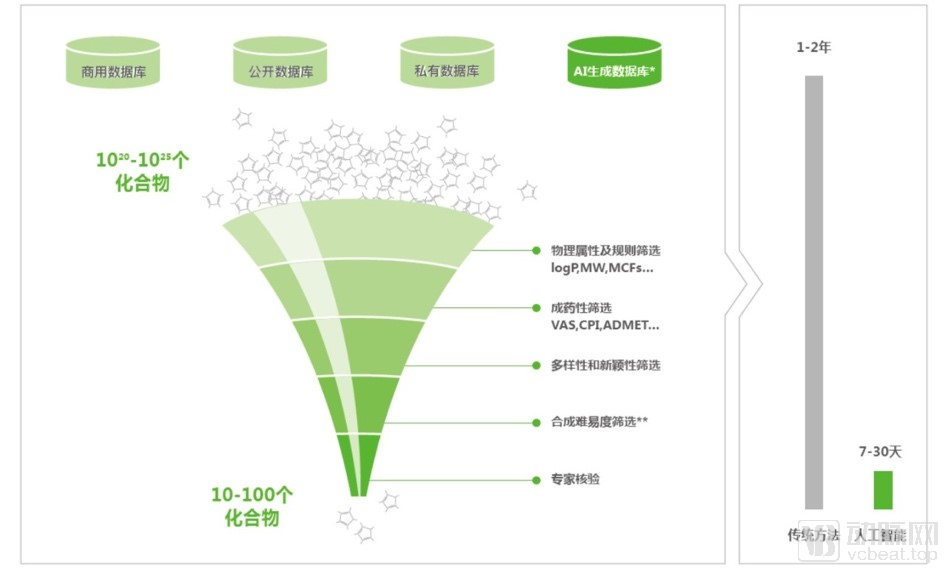
logP: Lipid-water partition coefficient; MW: Molecular weight; MCFs: Medicinal Chemistry Filters; VAS: Virtual screening; CPI: Compound-protein interaction; ADMET: Absorption, distribution, metabolism, excretion, and toxicity; *Using a de novo designed molecular library; **Synthetic accessibility filtering is required only when screening AI-generated databases.
China Pharmaceutical University is a prestigious institution directly under the Ministry of Education, with a long history and high reputation in the pharmaceutical field. It is part of the "211 Project" and the national "Double First-Class" initiative. The university is committed to building an interdisciplinary ecosystem, with its pharmacy and traditional Chinese medicine disciplines leading the way, maintaining a top-tier position nationwide.
Professor Lu Tao’s and Professor Chen Yadong’s research groups at China Pharmaceutical University have established a comprehensive research system and technical platform for the discovery of innovative small-molecule drugs, centered on therapeutic targets for major diseases. This platform integrates drug design, chemical synthesis, and biological evaluation, forming a research consortium led by drug design and extending through chemical synthesis to biological assessment. This approach exemplifies a new paradigm in modern innovative drug research, characterized by multidisciplinary integration and convergence.
In recent years, the research group has published over 100 SCI papers in top-tier journals in the field, including J. Med. Chem., Angew. Chem. Int. Edit., Org. Lett., Adv. Synth. Catal., Eur. J. Med. Chem., and J. Chem. Inf. Model. The group has achieved significant progress in the translational development of new drugs. In 2015, a Class 1.1 anti-tumor clinical candidate compound developed by the group was licensed to Shanghai Fosun Pharmaceutical for RMB 50 million. Currently, this compound is undergoing Phase I clinical trials simultaneously in the United States and China for the treatment of acute myeloid leukemia.
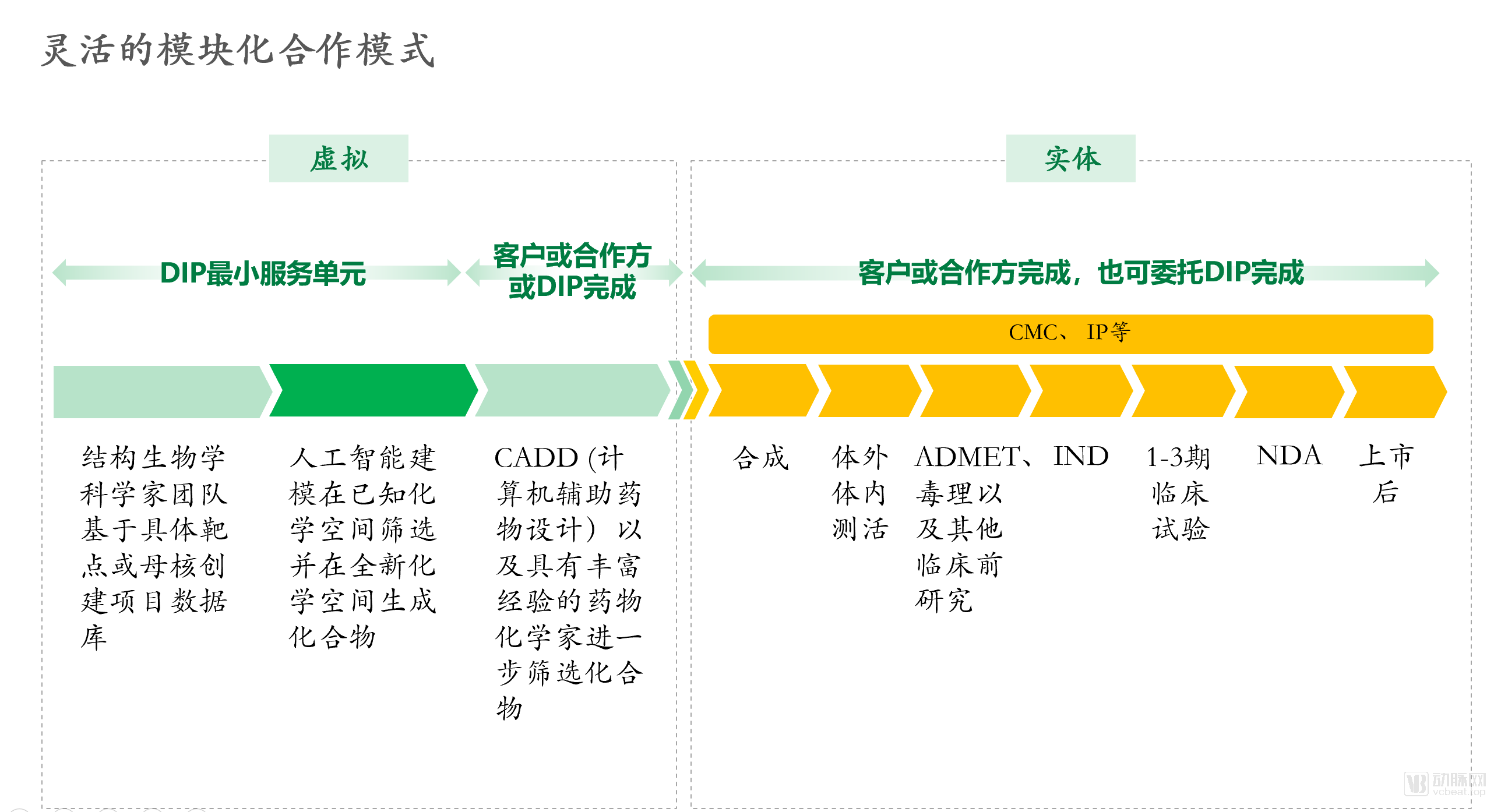
Deep Intelligent Pharma is committed to leveraging artificial intelligence technology to empower the entire process of new drug development globally. In the early stage of drug discovery, it has built a knowledge graph based on AI technology (Di-GraPhMedTM), AI-powered small molecule drug discovery platform (Di-DrugGOESTM), Drug Synthesis Platform (ChemSyntherTM) can provide pharmaceutical companies and research institutions with comprehensive solutions ranging from project initiation and feasibility studies, small-molecule drug design, drug repurposing, to biomarker discovery and validation.
Meanwhile, Deep Intelligent Pharma’s self-developed AI intelligent system and related services cover clinical research, pharmacovigilance, regulatory submissions, medical translation, and other areas. The company currently serves more than 180 pharmaceutical companies worldwide, including well-established multinational corporations such as Bayer and Merck & Co., as well as international innovative biopharmaceutical enterprises like BeiGene.
AI-Accelerated New Drug Development Is an Inevitable Trend. As a rising force in China, Deep Intelligent Pharma will fulfill its mission to “make new drug development accessible to all and bring hope to patients,” serving as the intelligent infrastructure for global pharmaceutical companies and their service providers, delivering safer and more effective products to patients, and offering new hope for curing diseases.