

BeyondBio: Pioneering Domestic Replacement in High-Value Medical Consumables with Aortic Vascular Grafts

BIODALS
Implantable Medical Device Developer and Manufacturer
“This may be the only product in the high-value consumables sector that has not yet been domestically produced in China.“Du Guangwu said in an interview with a VCBeat reporter.”
In the 1950s, artificial blood vessels began to enter public awareness and were widely used in clinical settings, suitable for surgeries involving aneurysms, arterial stenosis, and arterial embolism. According to Du Guangwu, the global annual usage is around 200,000 units, with China exceeding 20,000 units last year, and the number continues to increase.
20,000 units is now a considerable volume; back in 2009, domestic demand in China was only around 3,000 units.“It is very evident from the data that there has been a noticeable change in the market demand for artificial blood vessels, but unfortunately, after several years have passed, China has still not achieved import substitution,” said Du Guangwu.
Why is it difficult? Where do the challenges lie? How far are we from achieving domestic substitution? Recently, a VCBeat reporter interviewedDu Guangwu, Founder of JIANGSU BIODA LIFE SCIENCE Co., LTD., a detailed interpretation of the above questions is provided.
While serving as the Technical Director of Artificial Blood Vessel R&D at Maquet, a U.S. giant in cardiovascular medical devices, Du Guangwu observed a phenomenon: large numbers of Chinese doctors came to visit and procure artificial blood vessels.
“Domestic technology is lacking, making it difficult to localize the production of artificial blood vessels, which thus remain dependent on imports.”Du Guangwu pointed out the source of the problem. He added that the two giants dominating the market areMaquet, capturing 70% of the global/Chinese market;Terumo, accounting for# Lead 20% of the Global/China Market; others account for 10%.
In addition to the core technologies being firmly controlled by foreign giants, the complexity of manufacturing processes has also become a major obstacle to domestic production. Du Guangwu pointed out that,The cost of artificial blood vessel products themselves is not high, but the R&D and manufacturing process costs behind them are extremely high.
“Artificial blood vessels are primarily made of polyester. While this material is easy to use in garment manufacturing, its application in artificial blood vessels is far more complex. Unlike many stent-type devices, which involve relatively fewer processing steps, the fabrication of polyester-based artificial blood vessels entails a multitude of intricate procedures.”First, it requires the use of specialized textile equipment to produce specific materials, which are then processed into shape and subsequently coated. The final product must ensure biological strength while also possessing flexibility, ease of suturing, resistance to intraoperative bleeding, and facilitation of postoperative tissue healing.“Du Guangwu said.”
"Lack of technology, complex processes, and significant equipment investment make few companies willing to invest."Only a few enterprises and hospitals in China are conducting research in this area; however, due to relatively outdated product technology that prevents them from catching up, their applications are limited to small-scale use, failing to achieve industrialization.
“As the demand for artificial blood vessels rises year by year, failure to achieve domestic self-sufficiency in supply and demand will inevitably leave China vulnerable to external control. Any reduction in supplies from abroad would have a significant impact on the country,” said Du Guangwu. In his view, the “localization” of artificial blood vessel production is imperative.
In the face of such market pain points,In 2013, Du Guangwu, who had been deeply engaged in the field of artificial blood vessels for 15 years, chose to return to China and start from scratch.“First and foremost, I am Chinese, and I am also an expert in this field. These phenomena have deeply moved me and serve as the primary driving force behind my desire to effect change,” said Du Guangwu.
Guangwu Du graduated from Donghua University in Shanghai and the University of Manchester in the United Kingdom. He has previously held positions at Pfizer, Datascope, and Maquet in the United States, as well as at Drexel University and the University of Delaware. He possesses extensive experience in the medical device and fiber composite materials sectors, with expertise spanning the design, research and development, and technology of artificial blood vessels, stent grafts, textile-based medical products, textile structural composites, three-dimensional woven fabrics, novel industrial textiles, and specialty fibers and yarns.
“After returning to China in 2013, I was invited by Shanghai MicroPort Medical to serve as Vice President of MicroPort’s vascular surgery business,” Du Guangwu told VCBeat.In 2016, Du Guangwu left MicroPort Medical to establish Jiangsu Bioda Life Science Co., Ltd., focusing on the industrialization of artificial blood vessels.
Headquartered in the North High-Tech Park of Nantong City, Jiangsu BIODA Life Science Co., Ltd. specializes in the research, development, and manufacturing of implantable medical devices such as artificial blood vessels. The company is dedicated to providing physicians with high-performance medical device products and offering premium OEM and ODM services to medical device R&D and manufacturing enterprises.
Currently, BIODALS has completed two rounds of financing.New Product Development Projects: Stent Graft OEM (Production and Sales); Large Artery Prosthetic Vascular Graft (Clinical Trial Phase); Dialysis Prosthetic Vascular Graft (Submission for Testing/Animal Experiment Phase).
“Returning to China also marks a fresh start for me. Although I had already achieved considerable success abroad, theirThe product still has some clinical pain points, such as significant intraoperative oozing and insufficient flexibility.“Therefore, I aim to achieve the industrialization of artificial blood vessels through technological improvements, making our company the first in China to do so and enabling domestically produced products to replace imports,” said Du Guangwu.
Data indicate thatCurrently, nearly 100 provincial- and municipal-level hospitals in China are performing implantation surgeries for large-vessel synthetic grafts. The Chinese market is projected to exceed 40,000 units in 2022. Aortic surgery is entering a phase of rapid growth, with the annual number of clinical procedures increasing by nearly 20%.
Since the establishment of BIODALS, Du Guangwu has focused its R&D efforts on manufacturing technologies for large-artery synthetic vascular grafts and peripheral/dialysis access synthetic vascular grafts.Among them, the manufacturing technology for large-artery vascular grafts is on par with imported products.
“Our entire R&D team is like a sports team, with me serving as the coach who leads them onto the field. Our team members are all young technical talents from top-tier companies and prestigious academic institutions. In product technology development, we possess cutting-edge and leading capabilities,” said Du Guangwu.
VASOLINETMArtificial Blood VesselWoven from polyester fibers and coated with degradable biomaterials, this vascular graft is designed for arterial replacement, repair, and bypass surgeries. Preclinical studies have confirmed that the graft exhibits minimal blood leakage after implantation, along with excellent handling characteristics and sutureability for surgeons. Six months post-implantation, evaluation results demonstrated that the prosthetic vessel possesses favorable biocompatibility and hemocompatibility.
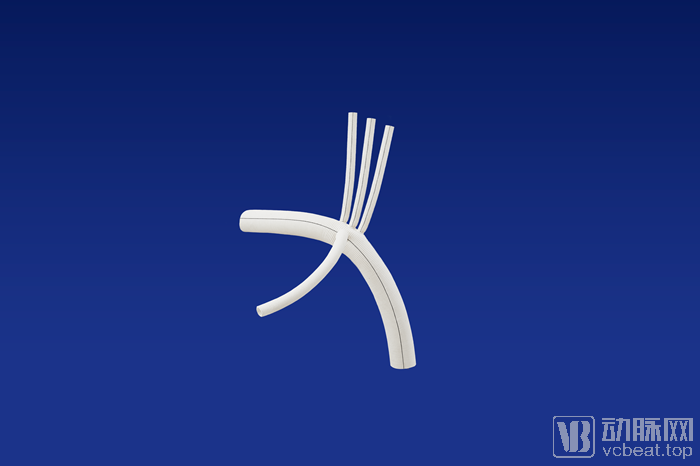
(Figure Caption: VASOLINETMFour-Branched Synthetic Vascular Graft Sample)
“This April, VASOLINETMArtificial Blood Vessel Successfully Implanted in First Clinical Case at Beijing Anzhen Hospital, Capital Medical University; Procedure Performed by Cardiac Surgery Team Led by Sun LizhongThe operating surgeon evaluated the BIODALS artificial vascular graft as having a soft texture, good suturing performance, and effective anti-leakage properties. There was no postoperative bleeding, blood flow within the graft was unobstructed, and the patient’s postoperative condition was favorable; the patient has since been discharged.”Du Guangwu introduced.
Clinical experts have provided feedback: BIODALS artificial blood vessels demonstrate superior performance. As the first domestically developed and manufactured artificial blood vessel in China, its clinical application will fill the gap in this product category within China and break the current monopoly of imported products in clinical use.
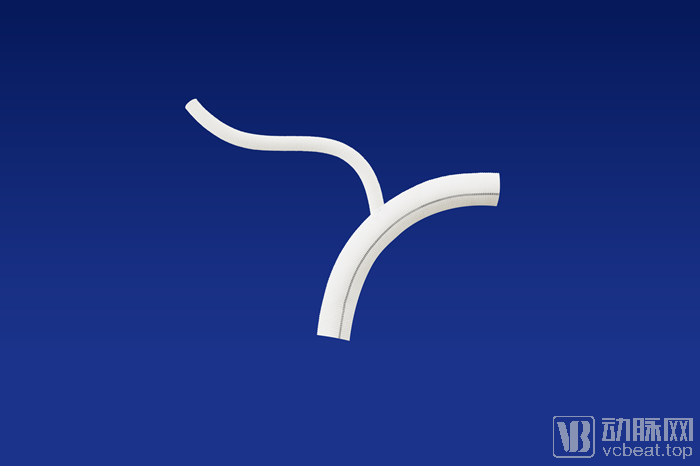
(Figure Caption: VASOLINETMSingle-branch artificial vascular graft sample)
Du Guangwu stated that as of October 8, 2019, VASOLINETMA total of 67 implantations (including 27 cases with competitor controls) were completed across two clinical centers in China. Additionally, five other centers are currently conducting pre-enrollment preparations.
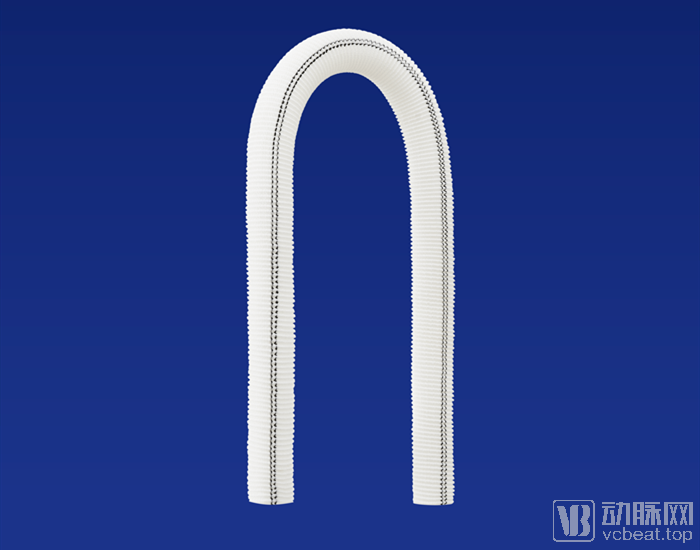
(Figure caption: VASOLINETMArtificial Vascular Graft (Straight Tube Sample)
In addition, currentlyBIODALS has established collaborations with renowned domestic hospitals, including Beijing Anzhen Hospital, Henan Provincial Chest Hospital, and Nanjing First Hospital.. The product is expected to obtain the registration certificate by the end of 2022.
“For future products entering the market, our goal is:Superior performance and lower prices compared to foreign counterparts!” Du Guangwu said confidently.
As the first domestic enterprise to industrialize artificial blood vessels, Du Guangwu revealed that, in addition to the goal of domestic substitution in fields such as artificial blood vessels and stent grafts over the past 2–3 years,Next, BIODALS will continue to launch original high-end implantable consumables to meet more clinical needs.