

SGLT Inhibitor for Type 1 Diabetes: Boehringer Ingelheim and Lilly’s Empagliflozin Faces Setback Following FDA Advisory Committee Vote
Nov 15, 2019 09:48
CST Updated
09:48

Boehringer Ingelheim
Developer of Innovative Drugs and Therapies

Eli Lilly
Global Pharmaceutical R&D and Production Company

FDA
U.S. Food and Drug Administration
November 14, 2019 /BioValleyBIOON/ -- Boehringer Ingelheim -Eli LillyDiabetesThe Alliance recently announced that the U.S. Food and Drug Administration (FDA) The Endocrinologic and Metabolic Drugs Advisory Committee (EMDAC) has convenedConferenceTreatment of Type 1 Diabetes with the SGLT2 Inhibitor Empagliflozin (2.5 mg)DiabetesThe supplemental new drug application (sNDA) for empagliflozin 2.5 mg as an adjunct to insulin for the treatment of adults with type 1 diabetes (T1D) was reviewed and discussed, and by a vote of 14 to 2, it was determined that the benefits do not outweigh the risks and that the data do not support its approval.
Currently, empagliflozin 10 mg and 25 mg have been marketed under the brand name Jardiance for type 2DiabetesTreatment of adult patients. Empagliflozin 2.5 mg is manufactured by Boehringer Ingelheim andEli LillyFor the SGLT2 inhibitor-class glucose-lowering drug developed, both parties have proposed a separate brand name for its use in treating patients with T1D.
During the drug review process, advisory committees provide independent opinions and recommendations to the FDA from external medical experts. The FDA is not obligated to follow the advisory committee’s recommendations but frequently does so. This also means that the sNDA for empagliflozin 2.5 mg in the treatment of T1D is highly likely to ultimately beFDARefusal to Approve.
This sNDA includes data from the EASE Phase III program. The program comprises two multinational, double-blind, placebo-controlled Phase III studies evaluating the efficacy, safety, and tolerability of once-daily empagliflozin as an adjunct to insulin therapy in adult patients with type 1 diabetes (T1D). Specifically: (1) The EASE-2 study (NCT02414958) evaluated empagliflozin at doses of 10 mg and 25 mg versus placebo as an adjunct to insulin over 52 weeks, with the primary endpoint being the change from baseline in glycated hemoglobin (A1C) at Week 26; this study enrolled 720 patients. (2) The EASE-3 study (NCT02580591) evaluated empagliflozin at doses of 2.5 mg, 10 mg, and 25 mg versus placebo as an adjunct to insulin over 26 weeks, with the primary endpoint being the change from baseline in A1C at Week 26; this study enrolled 960 patients.
Results from this study showed that in adult patients with type 1 diabetes (T1D), the empagliflozin 2.5 mg plus insulin group achieved a statistically significant reduction in glycated hemoglobin (A1C) levels (0.28%) compared to the insulin plus placebo group. Secondary endpoints demonstrated reductions in body weight (1.8 kg) and systolic blood pressure (2.1 mmHg) in the empagliflozin 2.5 mg plus insulin group compared to the insulin plus placebo group. Regarding safety, the incidence of adverse events was similar between the two groups, and the number of ketoacidosis events was comparable across both groups.
Mohamed Eid, Vice President of Clinical Development and Medical Affairs for Cardiometabolic & Respiratory Medicine at Boehringer Ingelheim, stated: “In the United States, approximately 40,000 people areDiagnosisDiagnosed with type 1Diabetes, we believe that today’s meeting serves as an important means to enhance discussions on the challenges of managing blood glucose levels in patients with type 1 diabetes and the need for new treatment regimens. We continue to believe that the full dataset from the EASE program demonstrates a favorable benefit–risk profile for empagliflozin 2.5 mg in adults with type 1 diabetes, and we look forward to continuing our engagement withFDAcooperation.”
Eli LillyJeff Emmick, Vice President of Product Development, stated: “EASEClinical TrialThe data provide important information on the use of empagliflozin 2.5 mg for the treatment of adult patients with type 1 diabetes. Currently, fewer than one-third of patients with type 1 diabetes in the United States consistently achieve target blood glucose levels with insulin therapy, thereby increasing their risk of long-term complications. We are committed to engaging in ongoing dialogue aimed at improving health outcomes and treatment options for this patient community.
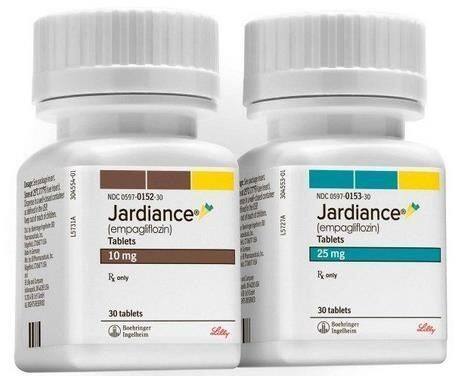
Jardiance (empagliflozin) belongs to the class of sodium-glucose cotransporter-2 (SGLT-2) inhibitors. Emerging SGLT-2 inhibitors have been proven to block glucose reabsorption in the kidneys, excreting excess glucose from the body, thereby achieving blood glucose-lowering effects. Moreover, this hypoglycemic effect is independent of β-cell function and insulin resistance.
Jardiance was approved for marketing in August 2014 for the treatment of patients with type 2 diabetes. In late 2016, Jardiance received further approval to reduce the risk of cardiovascular death in patients with type 2 diabetes and established cardiovascular disease. This approval made Jardiance the first glucose-lowering drug globally approved to reduce the risk of cardiovascular death in patients with type 2 diabetes.
To date, multiple SGLT2 inhibitors have been launched and achieved significant success in the treatment of type 2 diabetes. Jardiance is a blockbuster SGLT2 inhibitor, with global sales reaching $2.12 billion in 2018, accounting for over 50% of the SGLT2 inhibitor market share. In recent years,Eli Lilly- The Boehringer Ingelheim alliance has been committed to expanding the indications for Jardiance, including the treatment of type 1 diabetes and heart failure.
It should be pointed out that Boehringer Ingelheim-Eli LillyThe alliance is not the only player in the field of SGLT inhibitor treatment for type 1 diabetes. In the first half of this year,AstraZenecaFarxiga (Chinese brand name: Andatang; generic name: dapagliflozin, an SGLT2 inhibitor) and Zynquista (sotagliflozin, an SGLT1/2 dual inhibitor), developed in collaboration by Sanofi and Lexicon, have both received European Union approval for the treatment of adult patients with type 1 diabetes (T1D). The indications for both drugs are as oral adjunctive therapies to insulin for improving glycemic control in adult T1D patients who are on insulin therapy but have inadequate glycemic control and have a body mass index (BMI) ≥27 kg/m² (overweight or obese). In addition, Farxiga has also been approved in Japan for the T1D indication. In December 2018, Astellas’ antidiabetic drug Suglat (ipragliflozin L-proline, an SGLT2 inhibitor) was approved in Japan for the treatment of adult T1D patients. Furthermore, Johnson & Johnson is also developing Invokana (canagliflozin, an SGLT2 inhibitor) for the treatment of T1D.
Although several SGLT inhibitors have been approved in the European Union and Japanese markets for the treatment of type 1 diabetes, no SGLT inhibitor has yet been approved for a T1D indication in the United States. In March and July of this year, Zynquista and Farxiga were respectivelyFDAApproval for the treatment of T1D was refused, in all cases due to a higher proportion of patients in the experimental group experiencing diabetic ketoacidosis (DKA) events compared to the placebo group. DKA is a common complication of diabetes, with a higher incidence in patients with T1D than in those with T2D.
This timeFDAThe Endocrinologic and Metabolic Drugs Advisory Committee (EMDAC) issued a strong recommendation against the indication of empagliflozin 2.5 mg for the treatment of type 1 diabetes (T1D), impacting Boehringer Ingelheim-Eli LillyThis is a highly unfavorable outcome for the consortium. Whether empagliflozin can ultimately avert the crisis, break the jinx, and achieve a historic breakthrough remains to be seen! (Bioon.com)