

CHMP Recommends EU Approval of Roche’s Kadcyla for Adjuvant Treatment of HER2-Positive Early Breast Cancer with Residual Invasive Disease
Nov 18, 2019 09:17
CST Updated
09:17

Roche
Oncology Drug Research, Development, and Manufacturing

European Medicines Agency
The European Medicines Agency (EMA) is a decentralized agency of the European Union (EU), located in London. It began operations in 1995. The agency is responsible for the scientific evaluation, supervision, and safety monitoring of medicines developed by pharmaceutical companies for use in the EU. By ensuring that all medicines available on the EU market are safe, effective, and of high quality, the EMA protects public and animal health in the 28 EU Member States and countries of the European Economic Area.

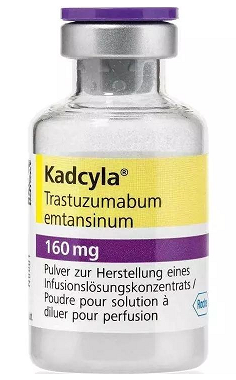
November 18, 2019/BioValleyBIOON/--Swiss pharmaceutical giant Roche recently announced that the Committee for Medicinal Products for Human Use (CHMP) of the European Medicines Agency (EMA) has issued a positive opinion, recommending the approval of the HER2-targeted drug Kadcyla (trastuzumab emtansine) for patients with HER2-positive early-stage breast cancer who have residual invasive disease in the breast and/or lymph nodes after receiving neoadjuvant (preoperative) taxane-based and HER2-targeted therapy.Breast CancerAdjuvant (postoperative) treatment for patients with early breast cancer (eBC). The CHMP opinion will now be reviewed by the European Commission (EC), which is expected to issue a decision within the next two months and provide full details of the approved indication.
In the United States, Kadcyla received accelerated approval from the FDA in May this year for adjuvant (postoperative) treatment of patients with HER2-positive early breast cancer (eBC) who have residual invasive disease after neoadjuvant (preoperative) therapy. Previously, the FDA had granted Kadcyla Breakthrough Therapy Designation for this indication. Notably, this indication was approved throughFDAReal-timeTumorFollowing review under the Real-Time Oncology Review (RTOR) and Assessment Aid pilot programs, the approval process took only 12 weeks from application submission to approval. Kadcyla was also the first drug in Roche’s pipeline to be approved through the RTOR pilot program. This initiative aims to explore a more efficient review process to ensure patients gain timely access to safe and effective therapies.
This latest milestone in the EU review process represents an important step toward bringing this new treatment option to European patients as soon as possible. The CHMP’s positive opinion is based on data from the Phase III KATHERINE clinical trial. The study showed that, among patients with HER2-positive early breast cancer who had residual disease after neoadjuvant therapy, adjuvant treatment with Kadcyla significantly reduced the risk of invasive breast cancer recurrence or death from any cause (invasive disease-free survival, iDFS) by 50% compared with adjuvant Herceptin (HR=0.50, 95% CI: 0.39–0.64, p<0.0001). At three years post-treatment, 83.3% of patients in the Kadcyla group were free from breast cancer recurrence, compared with 77.0% in the Herceptin group, representing an absolute improvement of 11.3%. In this study, the safety profile of Kadcyla was consistent with previous findings. The most common grade 3–4 adverse events (>1%) in the Kadcyla group were thrombocytopenia,Hypertension, radiation-induced skin injury, numbness, tingling, or pain in the hands or feet, neutropenia, hypokalemia, fatigue, and erythrocytopenia.
Levi Garraway, M.D., Ph.D., Chief Medical Officer and Global Head of Product Development at Roche, stated: “Early-stage breast cancer is curable, and it is critically important to do everything possible to prevent disease progression to an incurable, advanced stage. Therefore, the positive recommendation from the CHMP marks a significant step forward toward our goal of providing a potentially transformative treatment option for patients in Europe with HER2-positive early breast cancer who have residual invasive disease after neoadjuvant therapy.”
The treatment goal for early breast cancer (eBC) is to provide patients with the best chance of cure, which may involve preoperative and postoperative therapies as part of a comprehensive treatment approach. Although each step brings us closer to this goal, many patients still experience disease recurrence in the long term. Neoadjuvant therapy administered before surgery aims to shrinkTumorand help improve surgical outcomes, adjuvant therapy is given after surgery to eliminate any remaining cancer cells in the body and help reduce the risk of cancer recurrence.
Kadcyla is one of the three innovative drugs developed by Roche targeting the HER2 signaling pathway, with the other two being Herceptin and Perjeta. The market launch of these three agents has transformed the clinical treatment paradigm for HER2-positive breast cancer. HER2-positive breast cancer is a particularly aggressive subtype that affects approximately 15–20% of patients with breast cancer. For early-stage breast cancer (eBC), the goal of neoadjuvant (preoperative) therapy is to reduceTumorIts size facilitates easier surgical removal, and the purpose of adjuvant (postoperative) therapy is to eradicate any residual cancer cells to reduce the risk of cancer recurrence.
Kadcyla is a HER2-targeted therapy that was approved for marketing in 2013. To date, it has been approved in more than 100 countries worldwide. It is the first and only antibody-drug conjugate (ADC) approved as a single agent for the treatment of patients with HER2-positive metastatic breast cancer who have previously received Herceptin and taxane chemotherapy (either separately or in combination). The drug consists of trastuzumab (the active pharmaceutical ingredient of Herceptin) linked to ImmunoGen’s cytotoxic agent DM1 via a stable linker, thereby delivering DM1 to HER2-positive breast cancer cells. Kadcyla possesses two anticancer properties: the HER2-inhibitory effect of trastuzumab and the cytotoxicity of DM1. (Bioon.com)